
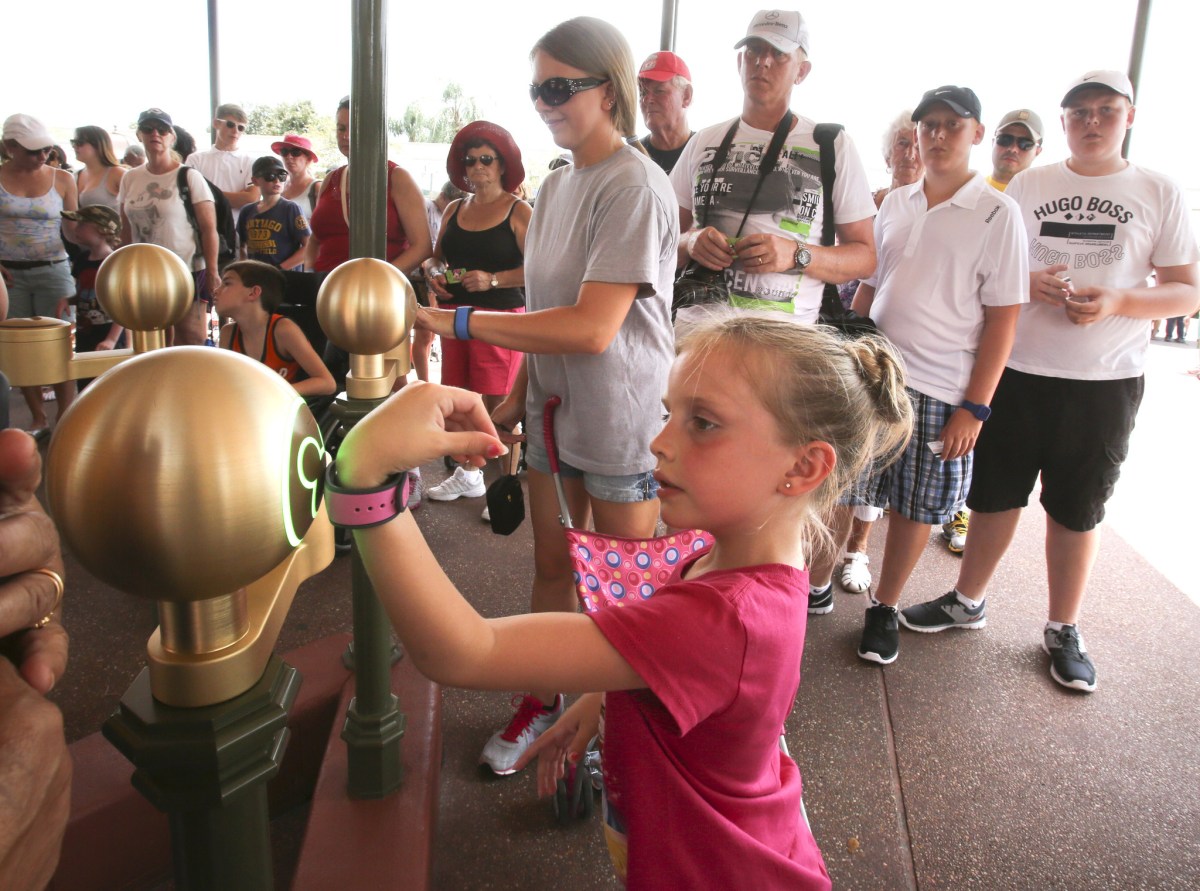
A theme-park ticket can be replaced. Your face cannot. Yet a face is becoming a faster way through Orlando’s attractions, and Florida has not established a clear, statewide set of rules for guests who would rather keep theirs out of a biometric ticket system.
At Universal Orlando, Photo Validation uses a guest’s photo and facial template to verify admission at several parks. At Epic Universe, the company has confirmed its use at individual world portals when virtual-line return times are in effect. The appeal is obvious: fewer repeated ticket checks and less friction for families eager to get inside.
The shift reaches beyond Florida. This spring, Disneyland introduced facial-recognition entry lanes at both of its California parks. Disney says participation is optional, with staffed nonbiometric entrances and parental consent for minors. Universal also offers an opt-out, including deletion of its stored photo and facial template. These are meaningful choices, not evidence that either company is forcing visitors to submit.
But visitors face different retention rules. Universal says it may keep photos and templates for up to six months after the associated ticket or pass expires. Disney says the numerical biometric values used in its California system are generally erased within 30 days of creation, with exceptions for legal and fraud-prevention needs. Those are different types of records on different clocks. Few families can be expected to compare them while waiting in line.
Florida’s Digital Bill of Rights recognizes sensitive biometric information, but its comprehensive access, deletion and opt-out rights target a narrow class of very large advertising and technology businesses. Other state data-security duties still exist. What Florida lacks is a straightforward admission-specific standard that applies whenever a business asks visitors to use their faces as tickets.
This need not become a campaign against innovation. Facial checks can deter ticket sharing and speed reentry. Nor is there evidence in these announcements that either operator has misused guest information. The question is whether families should depend entirely on changing company policies for such a personal choice.
 Burak Oktenli.
Lawmakers should establish four requirements. First, every venue using facial recognition for admission should provide a clearly marked, reasonably accessible alternative, without penalties for declining. Second, it should publish a short retention deadline — 30 days after the last use would be a reasonable starting point — with narrow, documented exceptions for fraud investigations. Third, minors should participate only with affirmative parent or guardian consent. Fourth, biometric records should not be sold or repurposed for marketing or unrelated surveillance; necessary service providers should face strict limits and safeguards.
The rules would carry costs. Fraud investigators may sometimes need records longer, and alternative lanes require staff. Those tradeoffs should be stated openly rather than settled by a privacy notice no one has time to read.
Orlando sells convenience better than almost anywhere in America. A face that opens a gate can improve that experience. Knowing what happens to the face after the gate closes should be part of it, too.
Burak Oktenli is an independent researcher working on technology assurance, artificial intelligence and autonomous systems, and founder of Authrex Systems in Coconut Creek.