
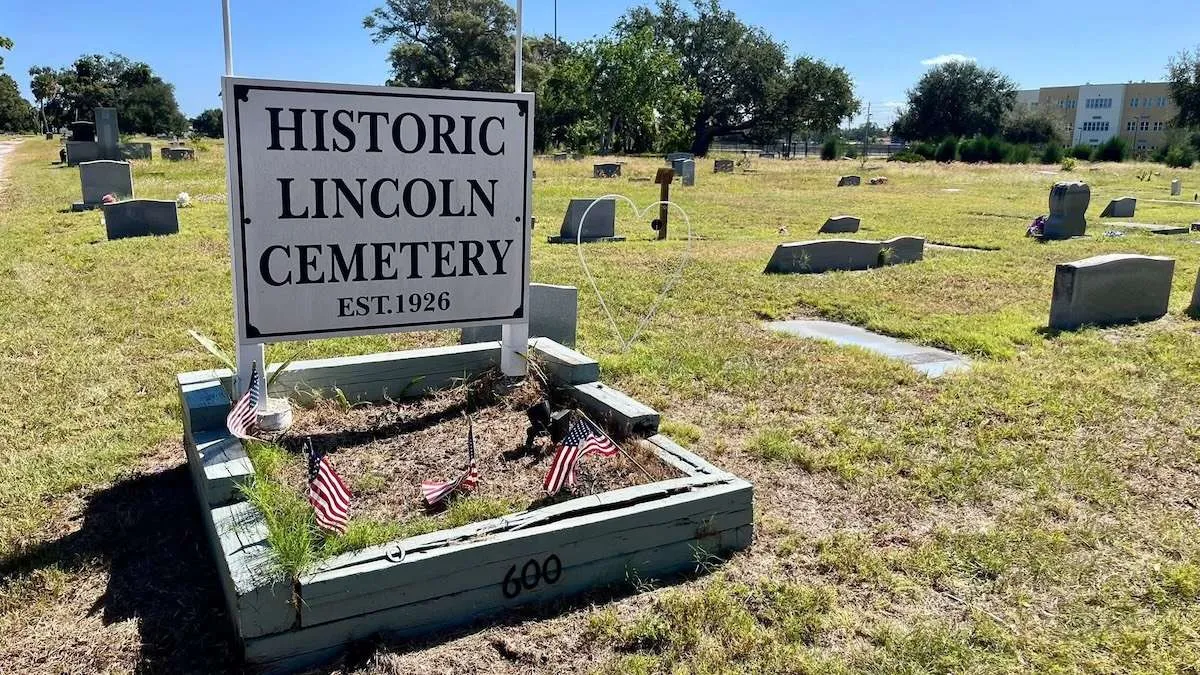
 Descendants of Lincoln Cemetery cleaned up their family’s grave markers on Oct. 25.
Photo by Sierra Clark
Sierra Clark spent her birthday weekend at Lincoln Cemetery, searching for her grandparents. Again.
The cemetery’s uneven ground and missing markers tell a story of neglect.
“White people have photos of their grandmothers and great grandparents on walls,” Clark said. “We didn’t have pictures of great grandma and great granddads. We weren’t allowed to remember them the same way.”
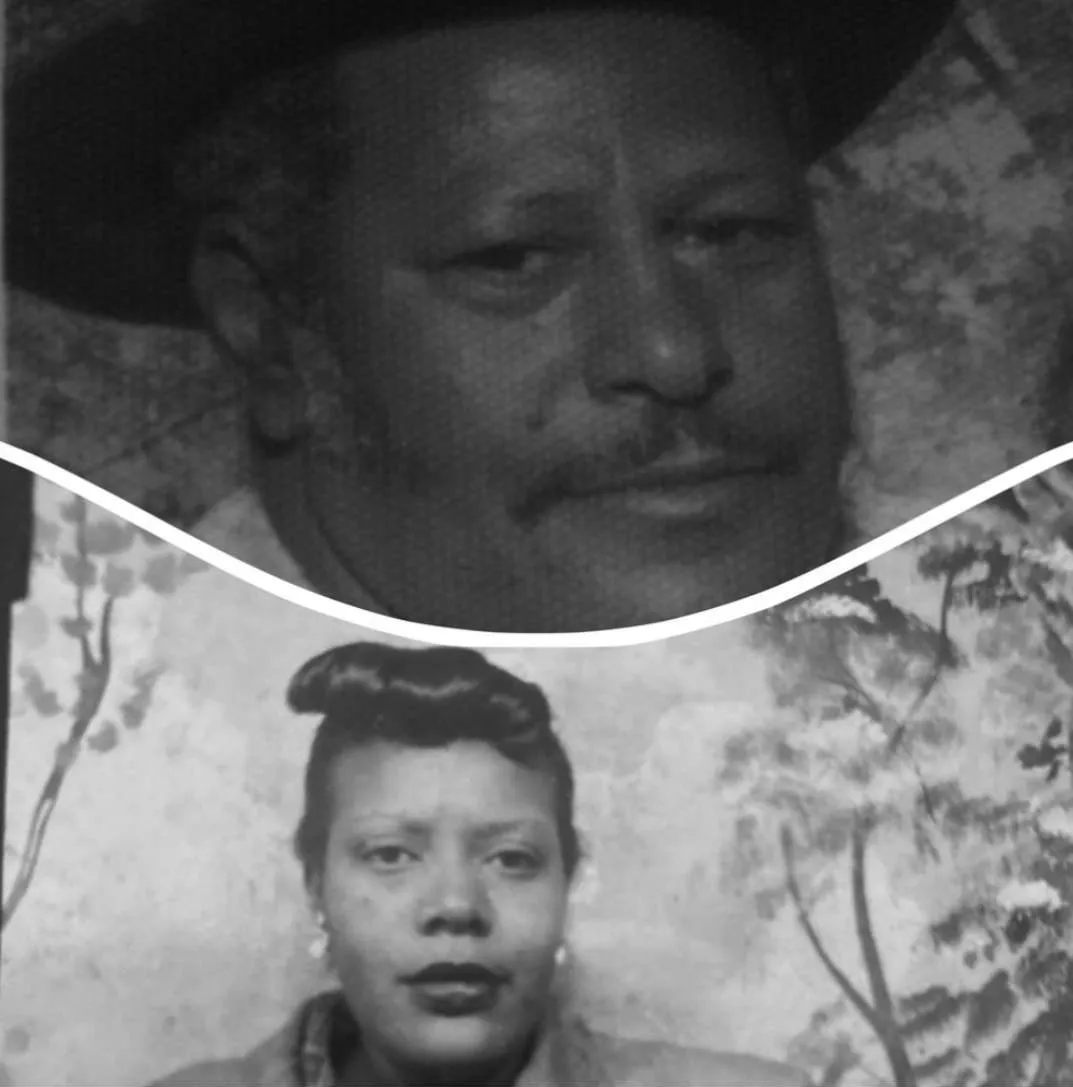 Elnora and Hugh Burgess are buried somewhere in Lincoln Cemetery, but their granddaughter cannot find them.
Photo by Sierra Clark
Lincoln Cemetery holds thousands of Black residents from St. Petersburg and Gulfport. Many were veterans, midwives, and church elders.
Several graves lack headstones. Others disappeared when developers relocated remains from earlier Black cemeteries. This included Evergreen, Oaklawn, and Moffet cemeteries, which were located where Tropicana Field resides now.
As a result, Clark and other descendants now fight not only to find their relatives, but also to restore the dignity history denied them.
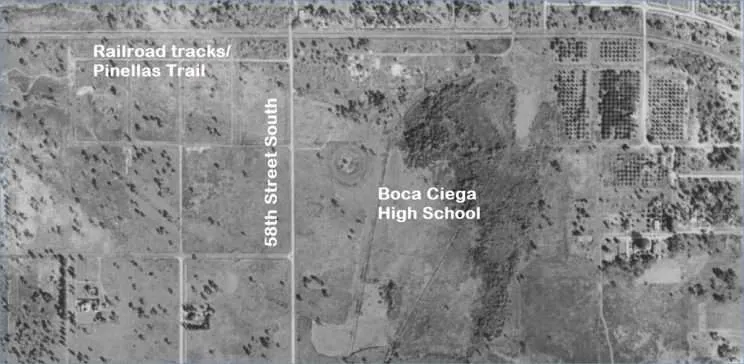 A 1943 aerial map of the site of Lincoln Cemetery.
Photo courtesy of the University of FloridaA Boundary That Divided Responsibility
In 1967, St. Petersburg passed Ordinance 138-E. Records obtained from the City of Gulfport say the measure “detached and excluded from the corporate limits” the land that included Lincoln Cemetery. In October 1967, County officials finalized the change, officially placing the site inside Gulfport’s boundaries.
Since then, both Cities have acknowledged the cemetery’s significance, but disputed who bears responsibility for its care.
While City officials trade legal explanations, descendants continue to ask a simpler question: who will step up to protect their ancestors’ final resting place?
As a result, years of government inaction have left the grounds overgrown and unsafe. Families are still waiting for an answer to a question that was asked years ago; who will do the right thing and take responsibility?
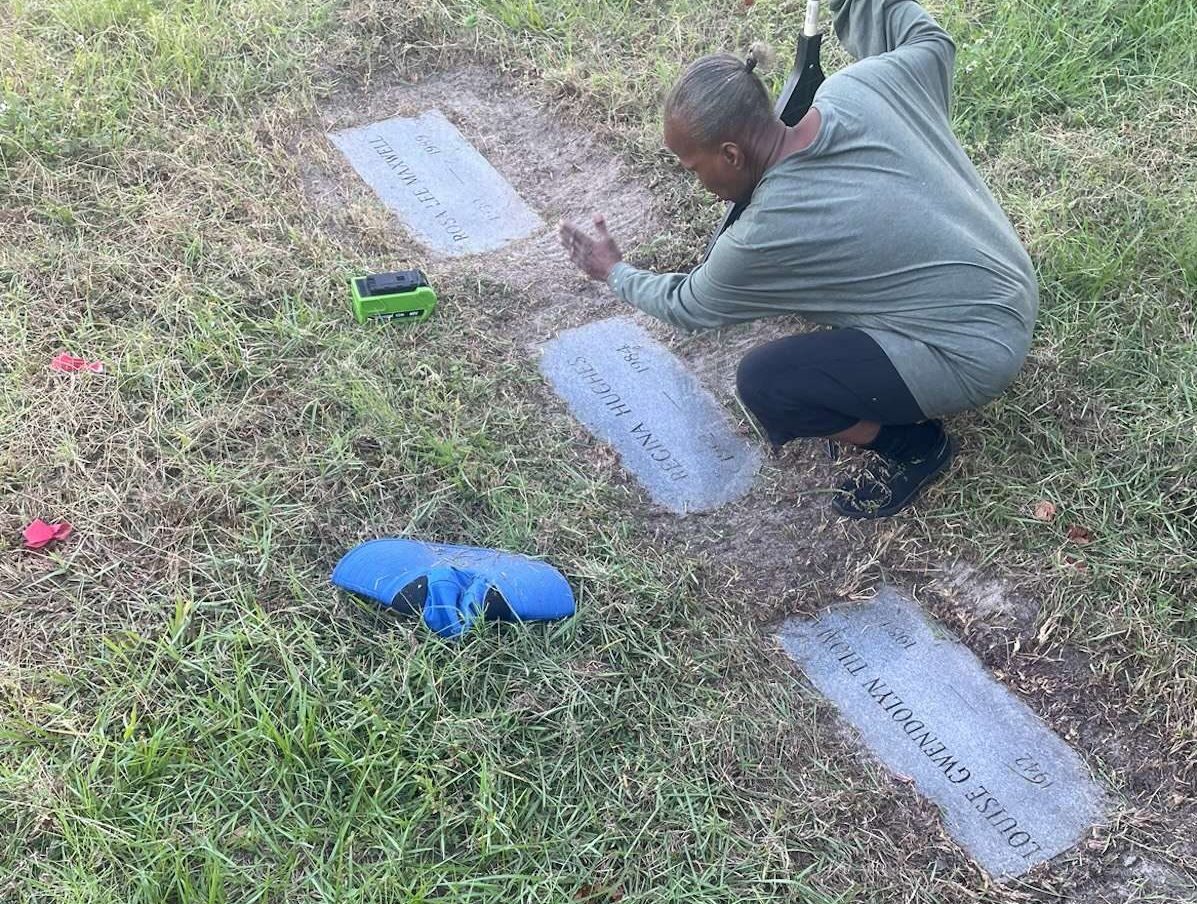 A volunteer helps clean up gravesites at Lincoln Cemetery.
Photo courtesy of Sierra ClarkLincoln Cemetery Descendants
Pastor Clarence Williams, who manages the site through Cross & Anvil Human Services, said segregation laws created this problem from the start.
“Because of Jim Crow, Black [people] could not be buried next to white [people] in the same cemetery,” he said. “So this Jim Crow necessitated that in many communities, there is a Black cemetery and a white cemetery.”
He also explained why Black cemeteries often fell into disrepair.
“When the cemetery is licensed to take bodies, part of what they pay goes into what’s called a perpetual fund,” Williams said. “But any cemetery that is owned by a church or a school or a military institution does not have to have a perpetual fund. So it’s exempt from that.”
Frequent ownership changes made things worse.
Williams said a former owner dissolved the corporation “without conveying the assets,” leaving vital paperwork “hanging around.” When City officials asked him to take over the property, he reluctantly agreed.
Even so, Williams has a plan. He hopes to identify the thousands of unmarked graves, build a learning hub for local students, and create a memorial wall for veterans.
“Tangible support means money, help, equipment,” he said. “Jim Crow’s alive and well. They’re not going to trample on the graves of our forefathers… My job is to speak for those who cannot speak for themselves.”
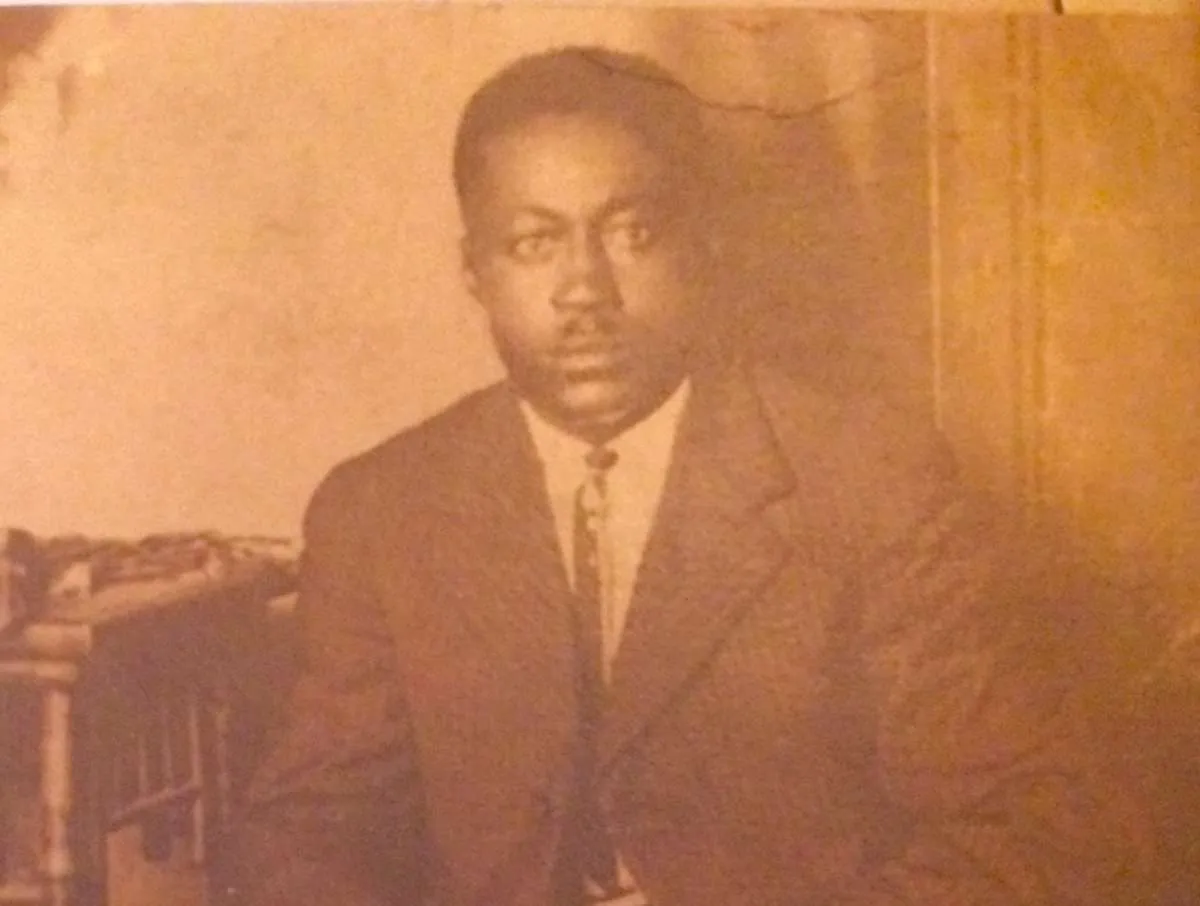 St. Pete City Council member Corey Given’s grandfather, Eugene Givens, Sr.
Photo courtesy of Corey Givens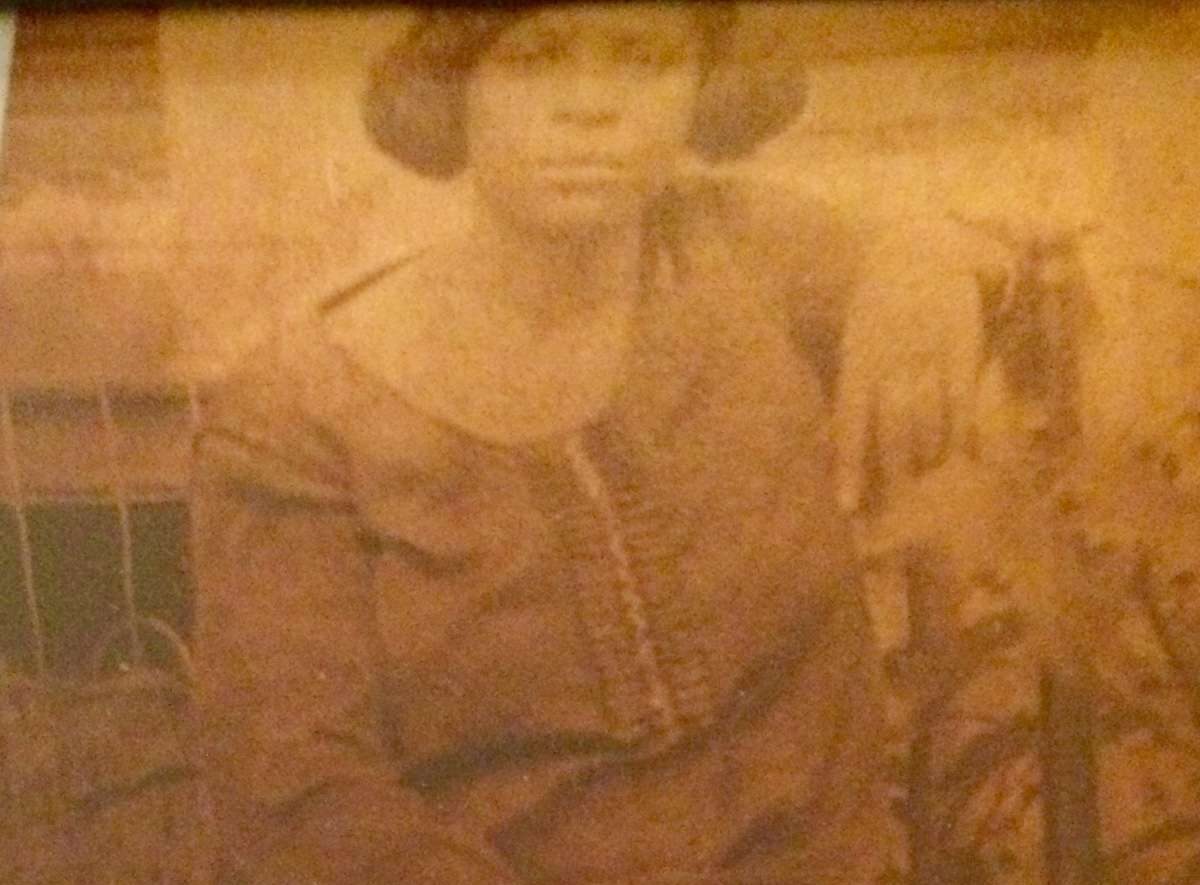 St. Pete City Council member Corey Given’s grandmother, Eula Givens.
Photo courtesy of Corey GivensPushes for Action
As a descendant, St. Petersburg City Council member Corey Givens, Jr. pushes for City involvement. On Sept. 25, his Facebook post reignited debate.
“Next year, Historic Lincoln Cemetery will celebrate its 100th anniversary. Unfortunately, the future of the cemetery remains unknown,” he wrote. “None of my fellow Council members thought this agenda item was worth supporting. It died on the dais. It’s a sad day for Black History in St. Pete.”
The post drew hundreds of reactions and dozens of shares. In addition, residents flooded City officials with comments demanding cooperation between the two Cities. Supporters praised Givens for speaking publicly when others stayed silent.
Givens’ motion to hold a joint meeting between St. Petersburg and Gulfport Councils failed. Still, he said the issue runs deeper than policy.
“We’re not talking about property lines,” he said. “We’re talking about people’s grandmothers and grandfathers.”
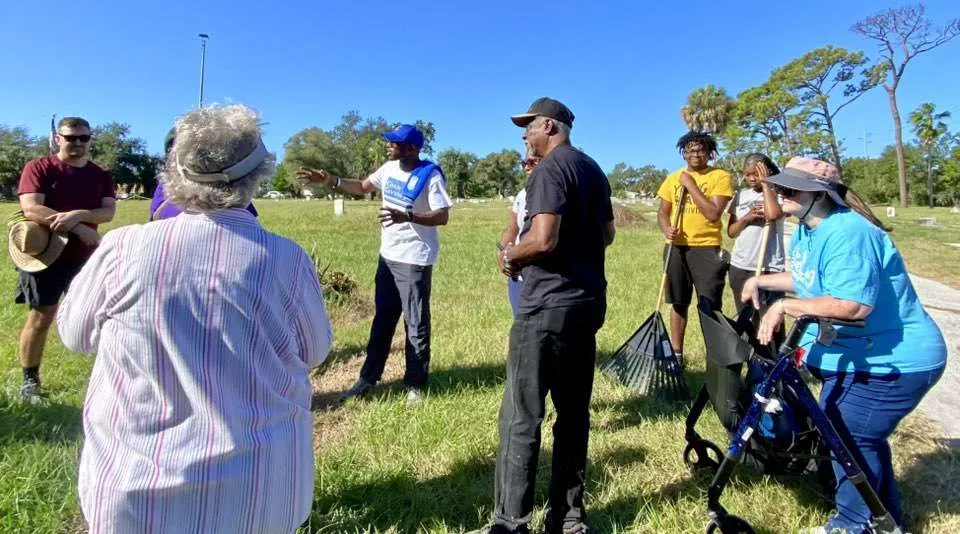 On Oct. 25, volunteers gathered for the Historic Lincoln Cemetery Clean-Up.
Photo courtesy of Corey GivensCommunity Clean-Up
Meanwhile, the community is not waiting for government approval. On Oct. 25, volunteers gathered for the Historic Lincoln Cemetery Clean-Up. They raked, trimmed, and cleared debris around sunken graves.
The Home Depot sponsored the event by donating supplies and equipment. For Clark, the timing was personal.
“I’ll be spending some time there with my grandparents for my birthday weekend,” she said. “That’s where my heart is.”
The cleanup served as more than maintenance. It became a statement of pride and preservation.
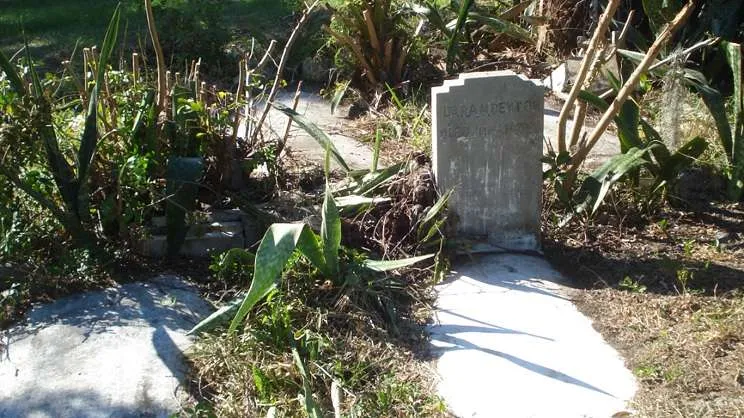 Many graves in Lincoln Cemetery have not been maintained.
Photo by James SchnurFamilies Keep Searching
Clark and other descendants visit the cemetery hoping to locate their loved ones.
“We just want to find them,” she said. “We just want them remembered.”
Pastor Williams said he will keep advocating for Lincoln Cemetery until it receives proper funding and recognition.
“What the cemetery needs is advocacy and funding,” he said. “I’m going to march to Tallahassee and Washington and do whatever I have to do.”
As Lincoln Cemetery approaches its 100th year, descendants, clergy, and council members share a single hope: the community’s ancestors will no longer be hidden beneath legal boundaries and neglect.
Their message remains clear — this isn’t about property. It’s about people, and the promise to remember those who built this community’s Black history.
The Gabber Newspaper? We Go There
In 1968, our founder, George Brann, started The Gabber Newspaper, then called the Gulfport Gabber, to hold Gulfport City Council accountable. Read more of our city council coverage, and learn about our policies on reporting, fact-checking, and funding.