
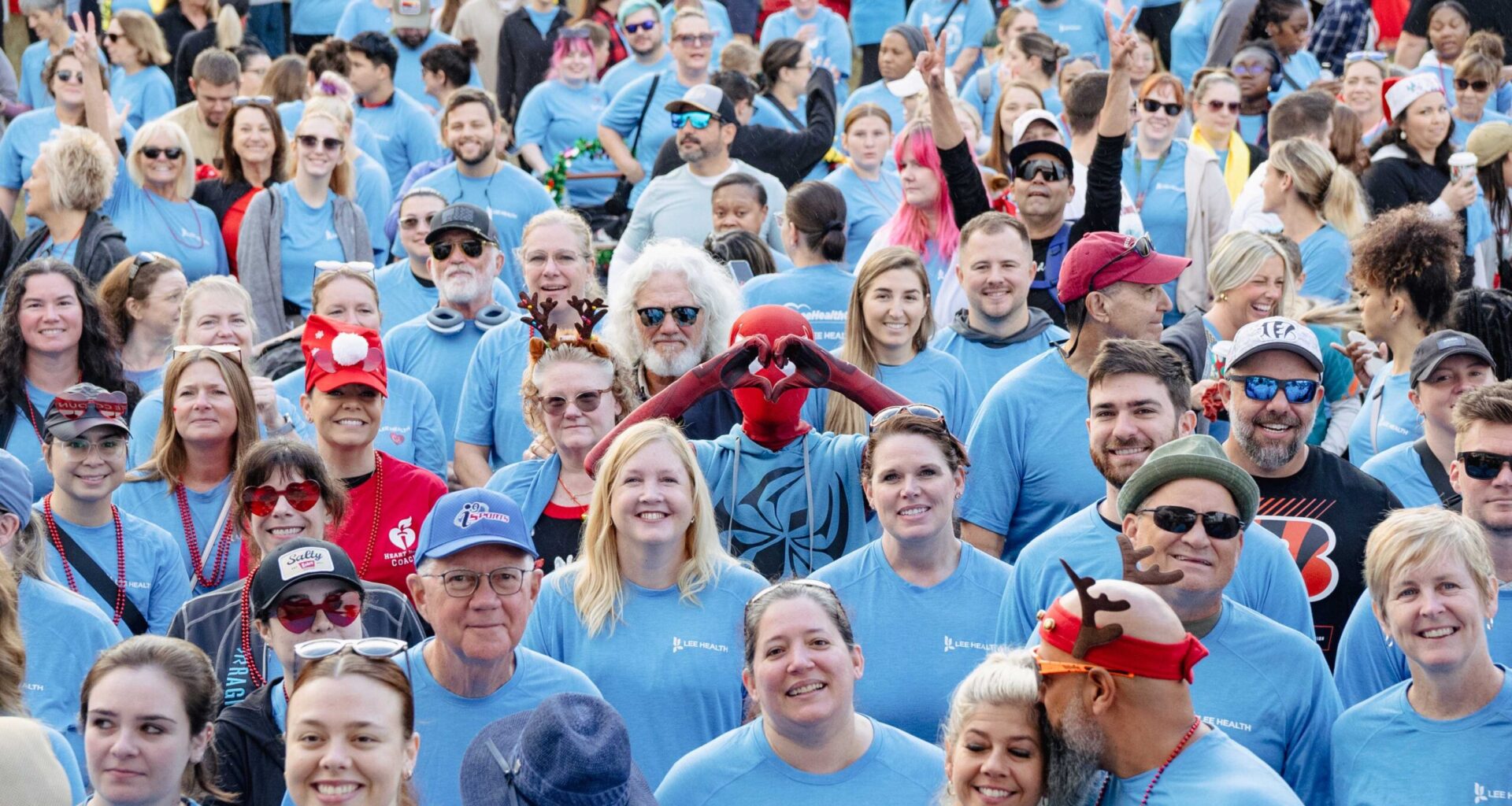
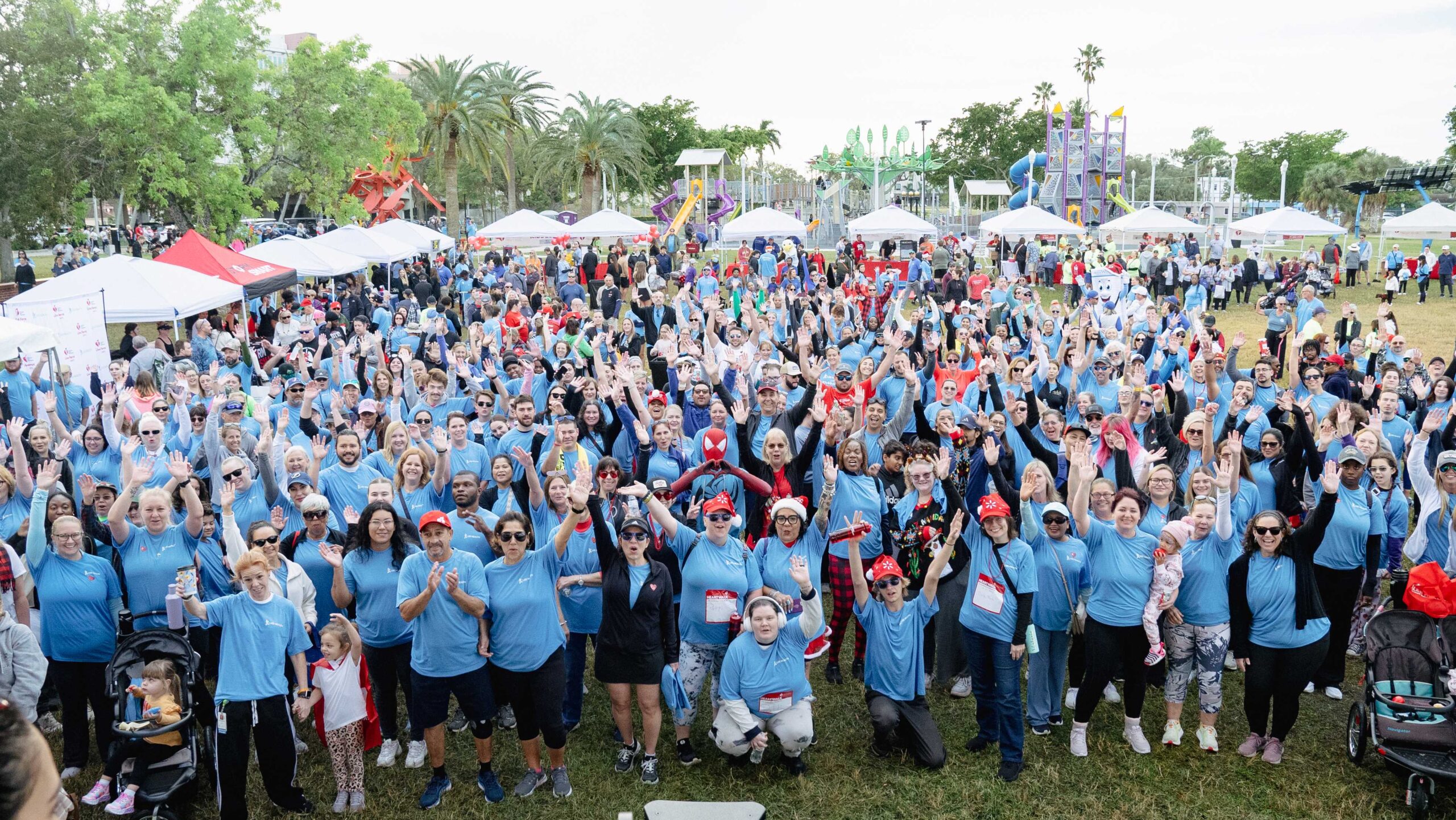
A previous year’s Heart Walk brought in participants from all around Southwest Florida to walk with a purpose. -COURTESY PHOTO
On Nov. 15, the American Heart Association (AHA) hosted its annual Lee County Heart Walk at FGCU’s campus. Over 1,000 walkers were in attendance and raised approximately $223,000 to support the fight against heart disease and stroke.
According to the AHA, nine out of 10 people who suffer cardiac arrest outside the hospital die every year. Most of these victims are unassisted with CPR by bystanders.
“The annual Heart Walk in Lee County is one of the largest fundraisers for the American Heart Association,” said Dr. Shawn Felton, dean of Marieb College of Health & Human Services. “The biggest piece for the walk is to bring awareness to heart disease and stroke. It was just talking with the students, heart disease still remains the number one leading cause of death, still today in the US, (and) stroke is the fifth leading cause of death.”

Dean of Marieb College of Health & Human Services, Dr. Shawn D. Felton. -DAVID WISHTISCHIN / FLORIDA WEEKLY
Felton has held the positions of Co-Acting Dean, Associate Dean, and Department Chair of Health Sciences at Marieb College, and has also taught at the school, including courses on Personal Fitness and Wellness, Exercise Science and Injury Management.
“I think there’s no one in this room that’s not been touched by heart disease, someone, whether it be a family member, a friend, everyone is touched by heart disease,” said Felton. “For a moment, it’s a matter of remembering those who may have lost their lives to heart disease. I think everyone can be a lifesaver by doing hands-only CPR and calling early access to 911, to get advanced providers, you know, to the scene of an emergency.”
CPR is an emergency lifesaving procedure performed when the heart stops beating, with its goal to partially or fully restore blood flow to the body.
“Your chances of survival outside of having a cardiac arrest in the hospital is very slim, (around) 10%,” said Felton. “The importance of early education, often education and CPR that any of us can do, pump fast and hard on the chest for CPR (and) we can’t say that enough. I think too often individuals don’t act because of fear.”
CPR is crucial to extending a victim’s life, and not many people are trained or are immediately ready to act with their training when someone shows signs of cardiac arrest or heart attack.
“They’re afraid to perform, or maybe they’re just in awe (and) not ready to engage,” said Felton. “It might be a family member, a friend, and so getting over that and to ensure that everyone is ready, and at least one person in every household is ready to do CPR is critical, and will hopefully change that 10% survival outside of the hospital to maybe 20 or 30. It’s going to take all of us to be willing to act to increase the survival rates for those with heart disease.”
Marieb College has been involved with the AHA for many years and was very committed to promoting heart health through its athletic training and science programs, so the integration of heart disease preventive education has been natural.
“I had served several years on the executive leadership team, and then last year, after celebrating the 100th anniversary (of the walk), good friend Dr. Larry Antonucci, COO of Lee Health, wanted to pass the torch at Centennial Park last year,” said Felton. “When Larry asked me to chair, I was very humbled. It’s a huge job to fill his role as the Chair for the 100th. I joked (that) ‘I need to go buy some more socks to fill your shoes!’, but we’re doing a great walk here, and we’ve had a great team here at FGCU.”
Many student-athlete teams have registered for the walk, as well as many more administrative departments at FGCU, including HR and Marketing and Communications.
“It’s one of those areas that I didn’t say, hey, one day my life will be complete by chairing the Heart Walk,” said Felton. “But boy, it’s definitely made my life better by being able to be so connected to a great organization.”
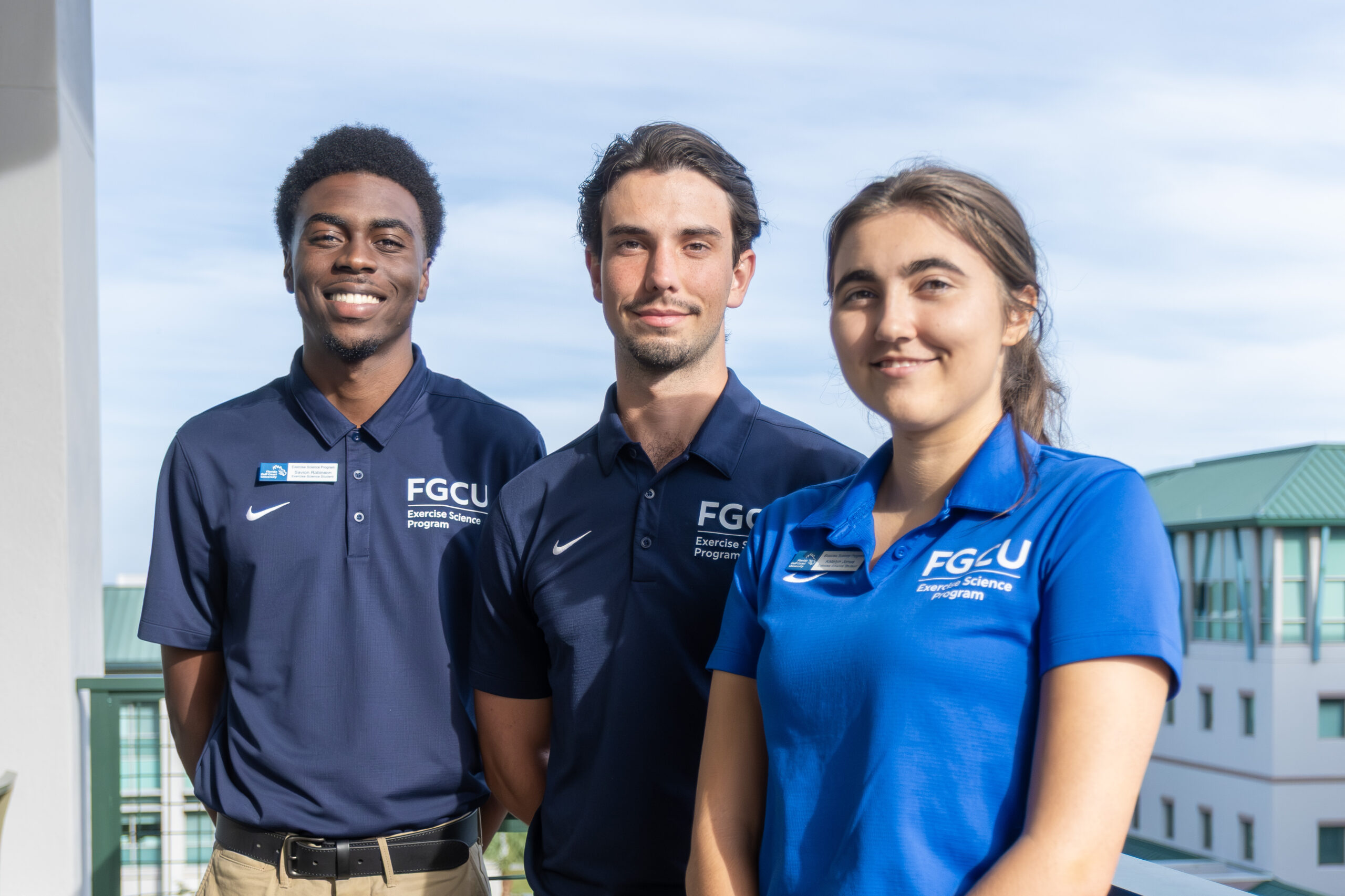
FGCU Exercise Science Students Savion Robinson, Brandon Davis-Perez and Katelyn Jones. -DAVID WISHTISCHIN / FLORIDA WEEKLY
Students from the Exercise Science program, who were some of the many volunteers involved in the event, taught the event’s attendees proper CPR procedures, handed out water to walkers and also participated in the walk with other attendees.
“It’s really been helpful,” said Brandon Davis-Pérez, a junior student in the program and volunteer. “We got involved mostly through our professors. They’re doing a really good job of getting us involved in the community, and they’re always pushing us to get involved and helping our peers out. When I saw that we had this (event) on campus, I thought it was going to be really interesting to see how our faculty is working at the walk and see how the students are there. I thought that through the AHA it would be really special to me, especially. I think we all know somebody who’s been affected by heart disease, and I thought that it would be like a really good opportunity to kind of get the word out, you know, I think it’s just mostly through the connections in our faculty.”
Davis-Pérez is looking to become a physical therapist after graduation, and his goal is to help people create independence in their lives.
“This is my first time doing something like this, you know, on campus with so many people,” said Davis-Pérez. “I think it’s going to be a really good opportunity for me to even make connections with people and see how it affects our community and see how we can get the students more involved in cardiac diseases and things like that.”
Another student in the program, Katelyn Jones, is participating in the walk to raise awareness about cardiovascular health, particularly in relation to her mother’s history with AFib, a common heart disorder that causes irregular heartbeat patterns.
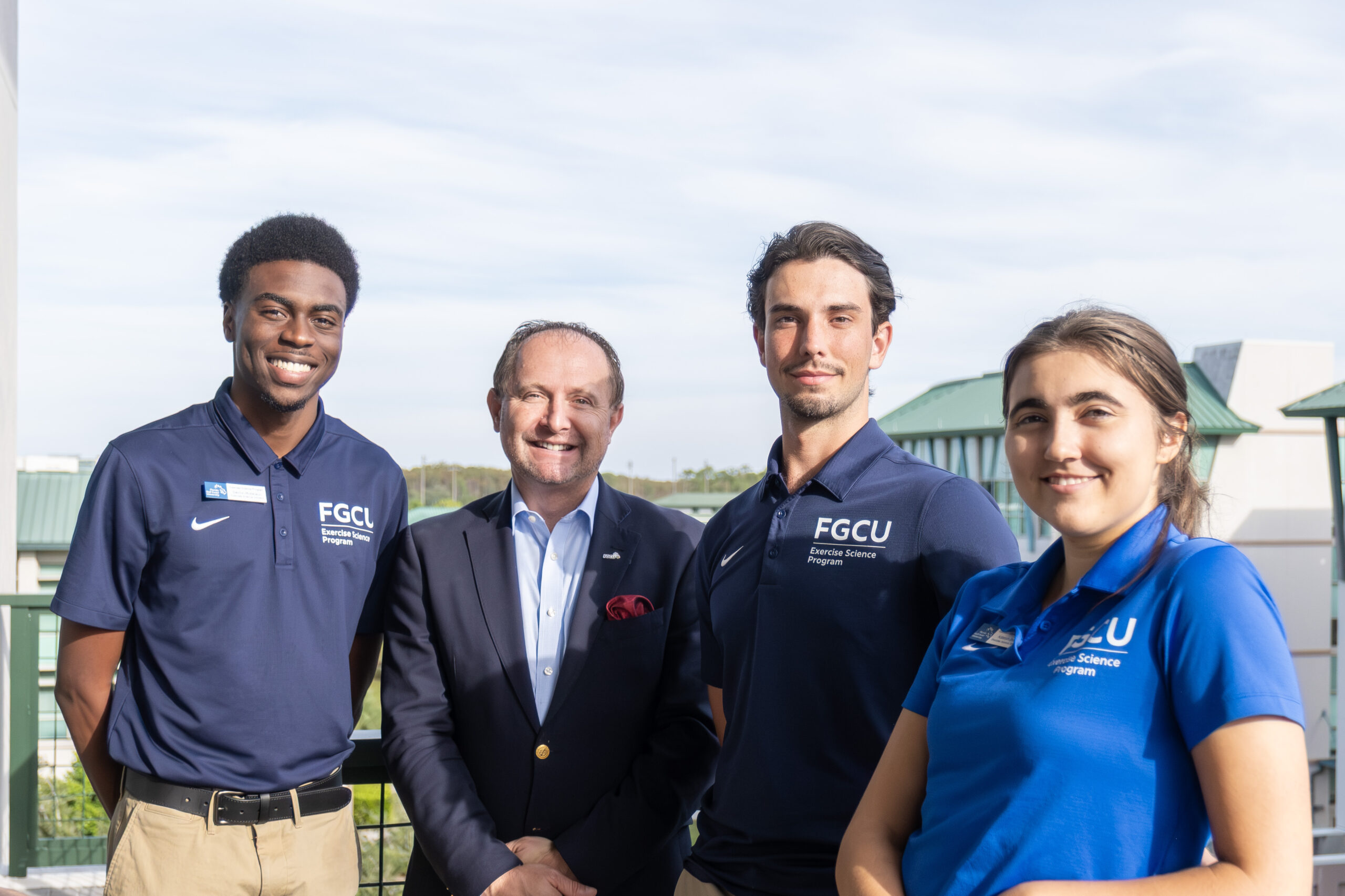
Savion Robinson, Dr. Shawn D. Felton, Brandon Davis-Perez and Katelyn Jones. -DAVID WISHTISCHIN / FLORIDA WEEKLY
“We were presented with a list of options of ways to get involved around the community, and I chose the Heart Walk because it means something to me,” said Jones. “My mother has AFib and has had two attacks, and as long as I’ve known her, as long as I’ve been alive. I just think it’s the signs I never noticed. She waited until I left for school one day to go to the hospital. I was with her that morning while she was presenting signs and symptoms, and I never noticed, so I just feel like there’s so much more we can do to see and prevent the signs and causes.”
One of the ways Jones and other students are getting information out is by making flyers with recommended ways to improve cardiovascular fitness and health, exercises that are available and recommended guidelines.
“I’ve gone to a lot of dementia, Alzheimer’s (events), and I think the difference for me is doing it in college and being around so many of my peers and friends, student athletes, and just being around with that community, and then meeting people who live around here as well. So, I think just building that different community will be what’s most impactful,” said Jones.
To learn more about the Heart Walk you can visit, www2.heart.org/site/TR/HeartWalk/GSA-GreaterSoutheastAffiliate?pg=entry&fr_id=12305.