
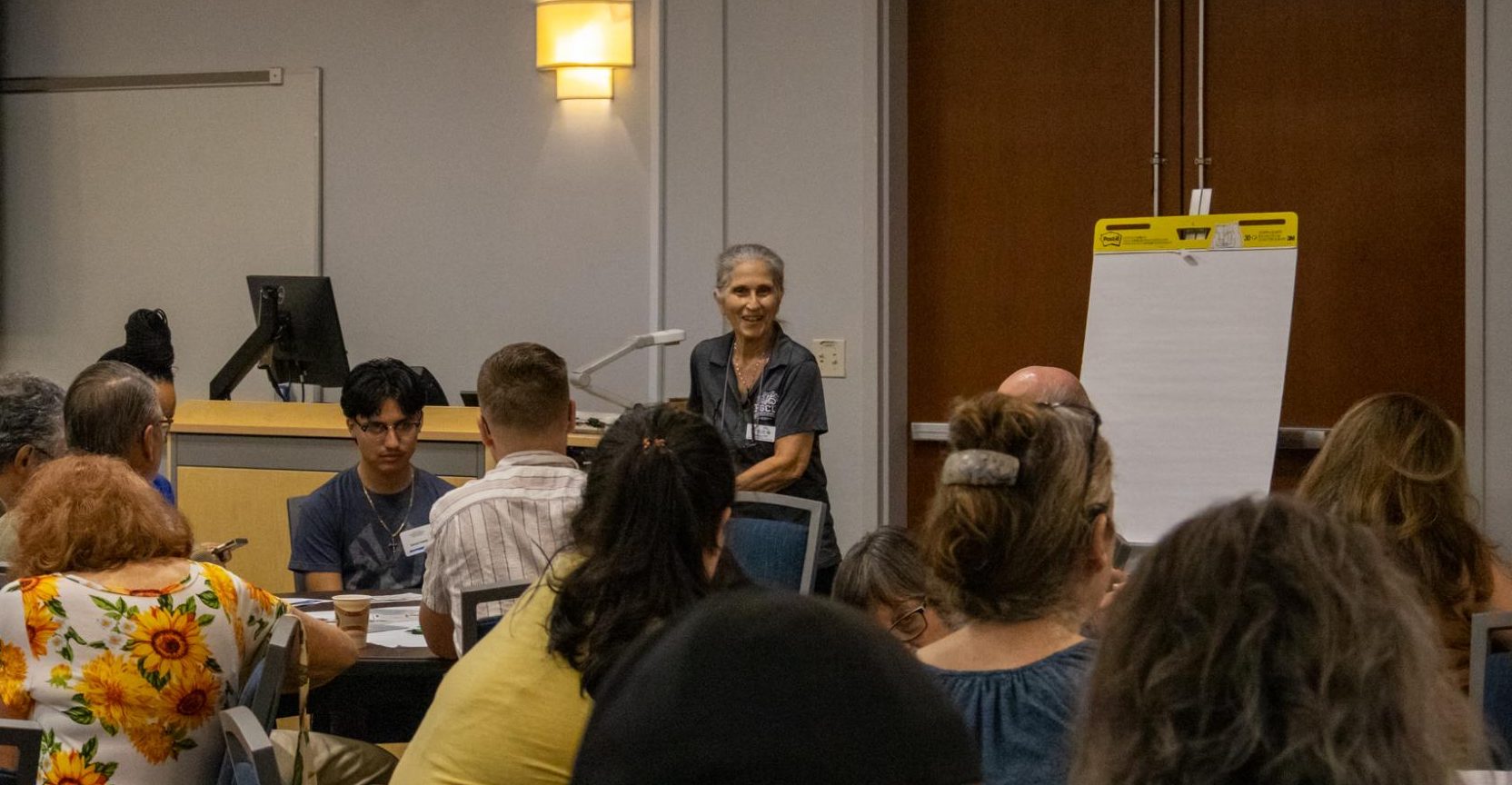
FGCU is a relatively young university, having been open for only 28 years. Its youthfulness presents a unique opportunity for the Southwest Florida institution, as many students have the chance to be taught by founding faculty members.
Dr. Maria Roca is one of the few founding faculty members who have continued teaching at the university, having been with the institution since its inception in 1997. She was hired to create the communications department and program, with assistance from other faculty members, and stayed for many reasons.
“The devotion we have to each other is profound, and we are a community that leaving feels like leaving your family. And I haven’t had any real reason,” Roca said. “It’s been an amazing journey.”
As part of the founding faculty, she has witnessed the growth and expansion firsthand, from a smaller campus to what it is becoming now. She says she is proud to see this growth.
Story continues below advertisement
“To watch something birthed as a little, tiny tomb building, university to what we are now is amazing,” Roca said. “I kind of feel like a parent, you know, like when I came here, we had a baby, my daughter’s 33, she was five when we first moved here. So I see almost a parallel to raising your own kid.”
Roca received her bachelor’s in Interpersonal and Public Communication with a minor in Theater. She then went on to receive her master’s degree in arts management from New York University (NYU) and worked in the performing arts in New York for 10 years. After that, she returned to NYU to complete her doctorate in media ecology, which led her to teach at numerous universities throughout New York.
Roca initially wasn’t looking for a new job when FGCU was opening, but her friend and her husband encouraged her to apply.
“I just went through one of the coldest winters of my life, and somebody’s asking me if I want to come down for an interview to Florida? I was like, ‘Sure I’m interested,’” Roca said. “I didn’t think there was any chance that I would accept the position here but I did take the free trip to Florida and did not expect to fall in love with the people as much as I did.”
Roca teaches many courses within the Department of Integrated Studies, but she says the most important course she teaches is the one she has taught for 15 years, which always fills up: The Contemplative Life.
“It is really focused on helping students develop their own contemplative path and also it says a lot about mental health,” Roca said. “We live in a world where there’s so much anxiety and so much depression and so much stress, we teach strategies in there for how to deal with that.”
Senior Hannah Barrios took Roca’s contemplative life class last fall. She puts the principles Roca teaches into practice daily.
“She’s taught me how to be a more compassionate human,” Barrios said. “I’m like, ‘OK, how would Dr. Roca approach the situation?’ and I approach it how she would: with compassion and kindness and deep listening and finding the goodness in my heart.”

Roca picked Barrios to be one of her six course assistants for the last spring semester. She is still a course assistant for this class and plans to be again next spring.
“If you have a really good relationship with her as a course assistant, she wants to keep you on until you graduate, because she wants to see how far you can go,” said Barrios. “She respects you and she listens, and I have a relationship with her that is built on so much trust and love and respect.”
Barrios has a unique story with Roca, even before she took her class and became her course assistant.
“She taught one of my dad’s best friends,” Barrios said. “He just always talks about how she radiated positivity and kindness and all these types of things. And I was like, I need to actually meet this lady. And so when I had the opportunity to take a class with her last fall, I jumped on it.”
Roca finds that applying what she teaches directly to her students’ lives is the most effective practice, rather than lecturing. She wants to make an impact on their lives.
“I want them to become more reflective. I want them to not be afraid of their own thoughts,” Roca said. “I want them to become comfortable in their own skin. I want them to know how special and amazing and wonderful each one of them is, and that they don’t have to conform to what somebody else says they should be.”
Roca’s hope is reflected through Barrios’ experience.
“Dr. Roca really likes to make sure that the class knows how valuable you are and how you do have a purpose,” Barrios said.
In addition to being a professor, Roca is also the director of the Roots of Compassion and Kindness (ROCK) program and center. This opportunity to create and form the ROCK center was brought to her by a donor.
Roca had an idea that was able to blend an existing FGCU program, Wings of Hope, with a new concept to teach younger students and older generations about compassion, kindness and empathy toward all.
“Compassion goes way beyond just humans, because all of those things are suffering, and compassion is all about alleviating suffering,” Roca said.
Though there are compassion centers in other colleges, the structure of the FGCU ROCK center is unique.
“We are really the only one that is meant to be a local, regional organization,” Roca said. “We’re doing some things with other organizations in other areas, and they’re interested in maybe creating rock centers on their campuses or in their communities and we would be thrilled if other people would do things like this.”
The ROCK center has made an impact throughout FGCU that a registered student organization (RSO) was formed to work hand-in-hand with the center.
During her time at FGCU, Roca has had many valuable experiences and memories. However, the most significant thing for her is that she has found her sense of purpose and wants her students to do the same.
“That notion of a sense of purpose, I think, is something that too many people have lost,” Roca said. “You might be the one person that smiles at a person coming through that day, and your kindness to them may be what keeps them from going down a darker path, you just never know. And we have to all be able to see that in whatever work we do.”