
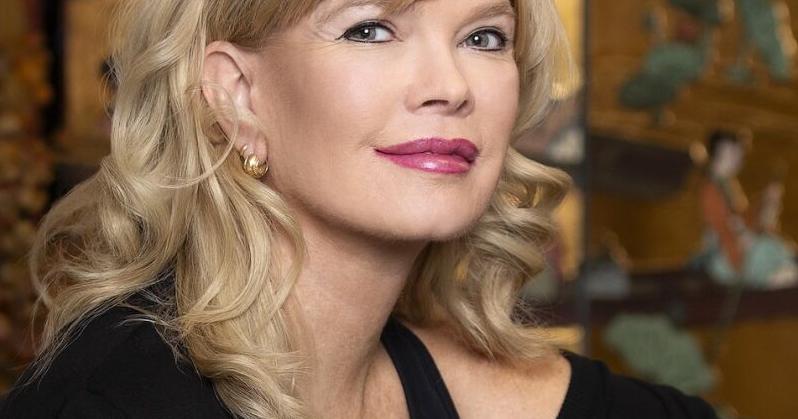
TAMPA — Mary Wendelken will become the first Florida music educator to receive the Royal Conservatory of Music’s Teacher of Distinction for the Southeastern United States award when she’s honored at the University of South Florida in March, acknowledgment of a 30-year journey to bring classical music to New Tampa.
Chosen from a pool of 1,400 nominees across the U.S., the Tampa Palms resident was recognized for her creativity and innovation in shaping future generations of musicians.
“It was an amazing surprise, and it was very humbling,” she said.
Her students have all learned the pillars of her European classical style of teaching — attention to detail, emphasis on technique, expressing the music being played — on the way to their own awards and successful careers.
The Wendelken Music Studio has produced thousands of musicians over the years, including winners with the National and Florida Federation of Music Clubs in both piano and voice as well as gold and silver medalists with the Royal Conservatory and multiple scholarship recipients.
“We uphold the traditional, classical style of training, meaning everything is addressed the same as it would be if you went to a Juilliard or a Royal Conservatory,” Wendelken said. “No shortcuts.”
Wendelken’s school was the first in Florida to work with the Royal Conservatory, and she also helped write the Royal Conservatory exam syllabus.
Her students describe their teacher as someone who takes them deep into the music they are learning to play.
“It’s not just playing the piano and all the technical stuff, but she teaches you the deeper meaning of it,” said Alonzo Tigley, a 17-year-old student who has been with Wendelken for 11 years. “She wants you to learn what the composer is trying to convey. Even though these songs were written hundreds of years ago, she wants you to know why they wrote it the way they did.”
Wendelken uses Beethoven, a notoriously moody composer, as an example. Anyone can play the notes off a sheet of paper, but she wants her students to know the history and digest his story — “his temper, his joy, his struggles” — and convey the emotions that helped create the piece.
Her credentials back up her approach.
An award-winning pianist even before she was a teenager, she earned her Bachelor of Fine Arts in Piano Performance, Magna Cum Laude, from SUNY Purchase in New York, studying under Tung Kwong-Kwong, the last protégé of Artur Schnabel — a direct link to the teaching lineage of Beethoven himself.
She pursued a master’s at the Royal Academy of Music in London, and established music studios in both London and Birmingham before returning to the United States and settling in Tampa Palms in 1996.
She was initially dismayed by the scarcity of music training in the area. It was spread out over Tampa Bay, and the New Tampa Performing Arts Center was still more than 25 years from breaking ground.
“I almost immediately thought, ‘Well, I’m out of here. This isn’t going to work,’” she said.
But within a year, the Wendelken Piano Studio had 100 students and she was teaching at USF.
“I thought, ‘Well, maybe my role here is to be a cultural pioneer,’” she said. “Maybe this is where I’m supposed to be, because what I do isn’t here. So I stayed, and it’s kept me busy for 30 years.”
Over the years, Wendelken has taught students from her home and at Grace Episcopal and St Andrew’s Presbyterian churches in Tampa Palms.
She draws students from South Tampa, Westchase, Carrollwood, Wesley Chapel and beyond, some from more than an hour away.
Wendelken chose not to open a brick-and-mortar studio in some strip mall or business park because she didn’t want to commercialize her teaching, where she would be obligated to take whoever could afford to sign up rather than choosing those that fit her top-tier program.
Instead, all interested students must pass an interview session and audition before being accepted.
She looks to see who has passion for music, whose faces light up talking about it. She seeks out diamonds in the rough. She has turned students away, and told parents to come back in a year or two when their child is more equipped for what Wendelken expects.
Often, they do.
Sometimes, she’ll take on someone on the verge of quitting. As someone who almost quit the piano at age 11 due to frustration, she can relate. Her father found her the finest teacher near their home, and Wendelken played for her the “Minute Waltz” by Chopin, which she had taught herself the previously summer. She was accepted as a student and flourished.
Those lessons she learned at 11 — how to manage time, fight through a difficult piece and battle nerves — all find their way into her teaching today.
“I share my experiences in a comical way and then show them how to use breathing techniques to calm themselves before they play,” she said. “I find ways to make even the most boring things (like music theory or playing scales) entertaining. I like to hear laughter at lessons because I believe we learn best when we’re happy and light-hearted.”
And she takes on all ages. Deborah Plant has been training with Wendelken for 10 years. She is 69. She remembers playing on a plastic Fisher Price toy piano when she was a toddler and had taken a few lessons over the years. But her dream of playing the piano well was never satisfied.
Then she met Wendelken, was inspired enough to buy a piano and has reached her goals.
“She is an excellent teacher,” Plant said. “It’s kind of hard to explain, but she just has this talent to speak to your spirit, and help you express the spirit that you have.”
Plant always had a love for music, the key ingredient in her endeavor.
“If they love music,” Wendelken says, “I can get them there.”
As a fifth-grader in Ohio, Wendelken remembers performing “Poupée valsante” (The Dancing Doll) by Ede Poldini. Afterward, a teacher approached her with tears in her eyes, wanting to share with Wendelken how much the performance had touched her.
“I was astonished that I could make this lady cry with my piece, and I realized that I had touched her heart,” she said.
She shares that story with her students because it captures what any musician should aspire to —make someone feel sad or happy or excited through music.
Plant had a similar experience recently, when a friend stopped by her Lutz home and asked her to play something. Plant, who admits to still having nerves playing for people, performed Nocturne No. 12 in D-flat Major by Dennis Alexander, bringing her friend to tears.
It is a skill that Wendelken is thrilled to have passed on.
“If you feel it in your heart when you’re playing it, your music has no choice but to send that message out to everyone else who hears you,” she said.
For more information on the Wendelken Piano Studio, visit tampapiano.com.