
This year’s Miami Book Fair featured the 2025 ReadCaribbean series, celebrating the region’s literature and culture through a string of author events, panels, and discussions. From renowned authors to emerging voices, the series sought to honor the writers that are remembering, rebuilding, and reimagining the history of a region where the effects of colonialism still echo.
More than 44 million people inhabit over 7,000 Caribbean islands, each with their own historical characters and accounts. The geopolitical force of colonialism continues to have a devastating effect on these islands, whether through economic vulnerabilities, political upheaval, or social inequalities that persist to this day. But despite efforts to encapsulate it in a single narrative, the region resists pigeonholing.
Two panels on Nov. 22 tackled the issues of family and cultural memory in the Caribbean. Marlene Daut, professor of French and African Diaspora Studies at Yale University, is the author of several books about Haitian history and culture. Her most recent publication, The First and Last King of Haiti: The Rise and Fall of Henry Christophe, explores not only the biography of Haiti’s only king but also the complex — and at times, surprising — politics of a 19th-century Caribbean monarchy.


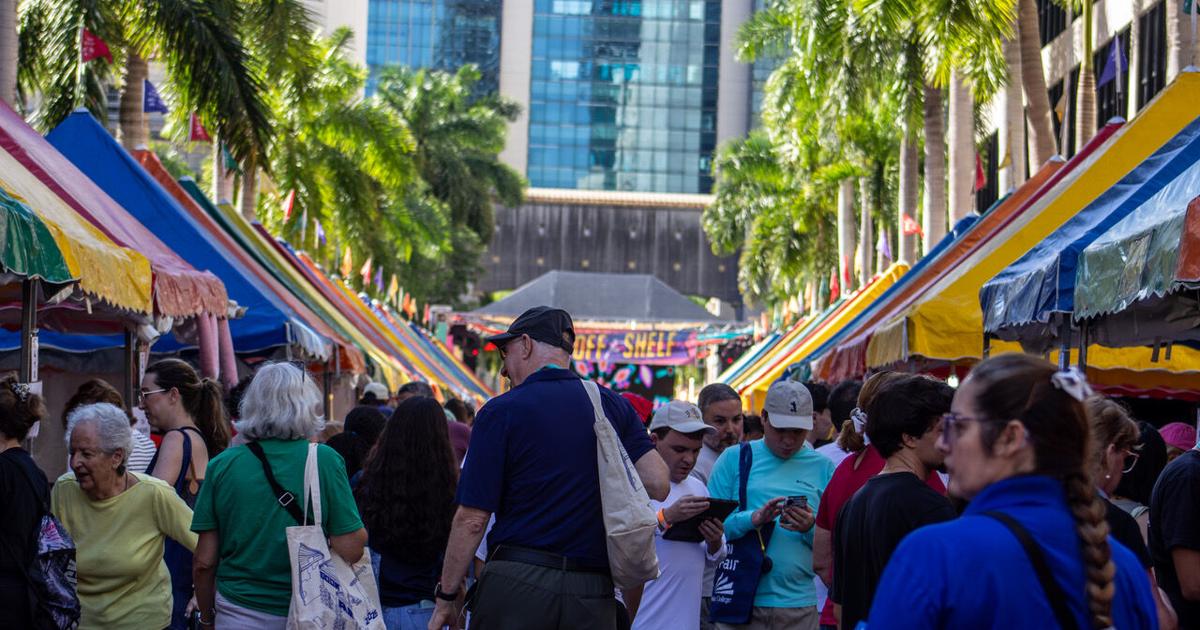
The 2025 Miami Book Fair featured live music during the weekend of the street fair.
(Elisabeth Campbell for The Miami Times)
“People only know one side of Haiti,” said Daut. “They know the Haiti that they’ve read about or seen on the news, and it involves disaster and corruption and violence. Every person has multiple stories. Every country has multiple stories, more than could fit into a single volume. So why is it that Haiti should be trapped into that single narrative and single story?”
Daut emphasizes the humanity of the historical figures she discusses, framing them as “human beings whose decisions are shaped by large geopolitical forces like wars, ecological disasters, or environmental concerns,” in addition to their own personal motivations.

Monique Clesca signs her memoir, “Silence and Resistance: Memoir of a Girlhood in Haiti,” at the Miami Book Fair on Saturday, Nov. 22, 2025.
(Elisabeth Campbell for The Miami Times)
Monique Clesca, author of Silence and Resistance: Memoir of a Girlhood in Haiti, also writes about the rise of political and social violence in her home country of Haiti. Although the narrative primarily takes place in the 20th century, Clesca ties moments from her childhood to predominant issues seen in the Caribbean today.
“The issue of violence against women, next to the state violence I talk about in terms of fascism and totalitarianism, is a huge issue,” said Clesca. “The story is universal… The themes of silence and resistance are universal. Children live with them. Women live with them. Men live with them… [and] I hope others will open their eyes to what is going on.”
Geoffrey Philp prepares to sign a copy of his book, “Unstoppable You: 50 Quotes from Marcus Garvey to Inspire Greatness.”
(Elisabeth Campbell for The Miami Times)
Geoffrey Philp, a Jamaican poet, novelist, and playwright whose work ranges from climate change in the Caribbean to the legacy of Marcus Garvey, the pioneering Black nationalist and founder of the Universal Negro Improvement Association, offers a similar perspective. The effects of colonialism on the African diaspora is evident not only in the Caribbean, Philp says, but in every place affected by the transatlantic slave trade.
“It was the same ship that dropped us off in Trinidad, Jamaica, Haiti, and the Carolinas,” he said.
Camille U. Adams greets an attendee at her panel on Saturday, November 22, 2025.
(Elisabeth Campbell for The Miami Times)
For Philp, the African diaspora should be united, despite the different cultures that arose as a result of varying places of origin, colonizers, and influences from the North American natives who first called this continent home.
But what is unity, and how can we achieve it? Camille U. Adams, an author from Trinidad and Tobago, tackles this difficult topic in conjunction with a discussion of abuse in her memoir, How To Be Unmothered. She wrestles with the issues of generational trauma, beginning during enslavement and persisting to this day. For Adams, there is no excuse for abusing another. She believes in the power of human emotion as a motivator for change.

A panel of authors for the ReadCaribbean series at the Miami Book Fair included Monique Clesca, Geoffrey Philp, and Camille U. Adams, moderated by FIU professor Chantelle F. Verna.
(Elisabeth Campbell for The Miami Times)
“Be angry,” said Adams. “That’s where your power lies. Do you know what ‘angry’ means? Angry means somebody has transgressed against you, that your dignity is being called into question, that you have greater esteem than to let yourself be treated poorly, that you can say, ‘That’s not good enough; you can’t treat me so.’”
Despite all originating from the Caribbean, the four authors have vastly different perspectives on their history and their present. The two panels of the ReadCaribbean series tackled the subjects of power, motivation, and identity in Caribbean culture, and sparked debates about how the African diaspora should view where they come from in order to determine where they are going.

“People only know one side of Haiti … Every country has multiple stories, more than could fit into a single volume. So why is it that Haiti should be trapped into that single narrative and single story?” -Marlene Daut
(ND.edu)
“We have a phrase in Haitian,” said Daut. “‘Tout moun se moun’: Every person is a person… Why is it that the undoubted urgency of the present day should mean that everything else doesn’t matter?”
At this year’s ReadCaribbean, the underlying consensus is that the region still has a long way to go in order to heal from the devastating effects of colonialism. Through the analysis of history, each author hopes to make a better future, whether in the large-scale understanding of fascism or the small-scale inner workings of the family.
Close
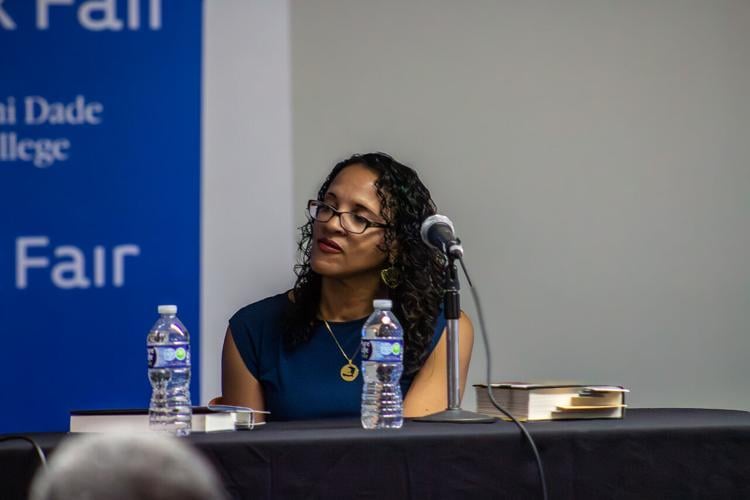

During her panel, Marlene Daut reads three excerpts from her book, “The First and Last King of Haiti: The Rise and Fall of Henry Christophe.”
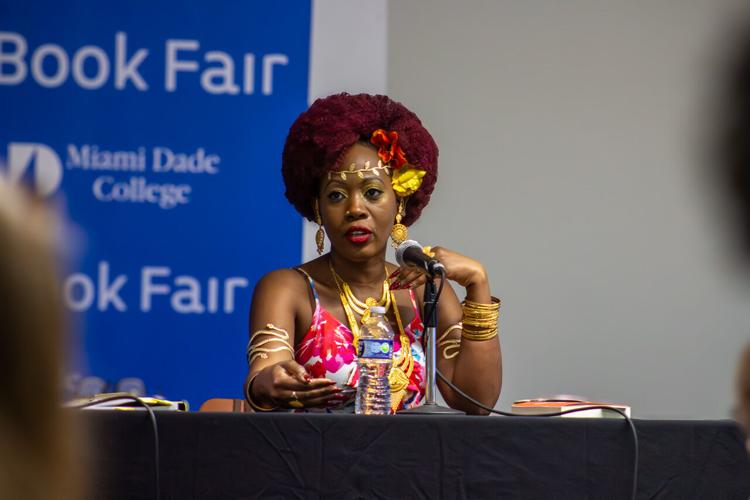
Camille U. Adams explains her book on a panel of authors as part of the ReadCaribbean series at the Miami Book Fair.
During her panel, Marlene Daut reads three excerpts from her book, “The First and Last King of Haiti: The Rise and Fall of Henry Christophe.”
Camille U. Adams explains her book on a panel of authors as part of the ReadCaribbean series at the Miami Book Fair.