
Speaking of Thanksgiving, I’ve always been thankful to live in Florida, where, besides the forests and the beaches, we have truly exceptional people, many just an arm’s length away.
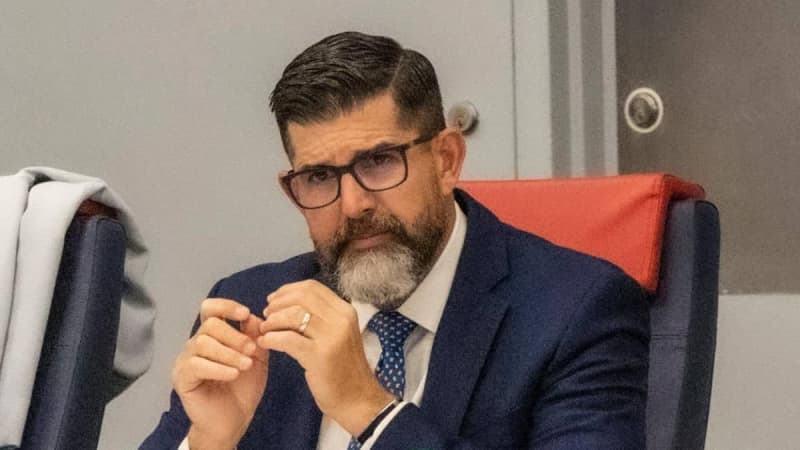
I was reminded of that Monday with the announcement that a search committee had named Manny Diaz Jr. as the sole finalist to become the next president of the University of West Florida. An ally of Gov. Ron DeSantis, Diaz is a former Republican state legislator who served as Florida’s education commissioner before being tapped as UWF’s interim president in July.
The search for a permanent president with a compensation package in the million-dollar range reportedly drew 84 candidates — nobody knows for sure, thanks to Florida’s secrecy laws. But “after reviewing all of the applicants,” Zack Smith, who chaired the university’s search committee, said in a statement, “it became clear” that Diaz’s experience in education and politics “uniquely prepared him to be UWF’s next president.”
Yep, sometimes the answer’s just staring at you in the face.
I wish Diaz the best, for the university’s sake, but really: Why bother appointing a search committee, hiring headhunters, interviewing applicants and going through the farce of conducting meetings and a national search if you’re just going to throw these plum jobs to the inside guy?
It’d be one thing if Diaz’s appointment was a one-off, but the patronage is almost a policy. In 2022, Nebraska Republican Sen. Ben Sasse was named the sole finalist for president at the University of Florida. A couple years later, his would-be successor, Santa Ono, was tapped as the sole finalist for the post, too, before the state’s higher education board nixed Ono over his past support of diversity programs. Earlier this year, Florida International University and Florida A&M University gained new presidents with backgrounds in state politics. And in September, a search committee at the University of South Florida named Moez Limayem, a former dean, as the sole finalist for that school’s presidency.
The phrase “sole finalist” is ridiculous; it’s come to mean a competition that didn’t happen and a decision that university trustees won’t explain. But the political spoils extend well beyond our education system. Of the seven offices elected statewide in Florida, four are held by political appointees. We have an unelected U.S. senator (Ashley Moody), an unelected lieutenant governor (Jay Collins), an unelected attorney general (James Uthmeier) and an unelected chief financial officer (Blaise Ingoglia). They were all put there by DeSantis. For anyone who watches things closely, it shows.
Every governor makes appointments; it’s a privilege of the office. But state government under DeSantis seems more like a fraternity. Moody, for example, worked closely with the governor as Florida’s attorney general. Collins was a key DeSantis proxy in the Florida Senate. Uthmeier served as DeSantis’ chief of staff; another onetime aide, Anastasios Kamoutsas, was recently appointed to succeed Diaz as education commissioner. Ingoglia was a DeSantis loyalist in the Legislature, too. Who needs HR when you can fill these jobs by walking down the hall?
These appointees brought a subordinate relationship to their elevated posts, and an acknowledgement (if not a debt) to the governor for boosting their political careers. They often seem in lockstep in promoting the governor’s agenda, with a style and language whose orthodoxy is narrow for such a large, diverse and growing state. It all reminds me of fourth grade, when getting a part in the Christmas play meant being on the right side of Sister Rosaire. It’s a culture of fealty and exclusion, a recipe for blind spots, and it explains how some of the governor’s biggest problems, like the Hope Florida scandal, got started in the first place.
I’ll be interested to see how long the patronage game holds. With elections to replace the termed-out governor next year, you can expect DeSantis to lose influence, and for the people around him to move on, either to the next job or the new center of power. Voter fatigue with the governor’s controlling behavior over time could also force a reset in how the state bureaucracy manages its relationship with the governor.
Until then, hold those resumes and wait for the call. We’ve got only so many universities to go around.