
The Winter Garden Police chief was at a party on Christmas Eve 1975 when he received a phone call from his friend Tommy Zeigler, the owner of a furniture store on Dillard Street.
“I’ve been shot, please hurry,” Zeigler told the chief as he struggled for breath.
When police arrived at the store, Zeigler, 30, managed to unlock the door and then collapsed “with a gaping bullet hole through his lower abdomen,” court records show.
In the store, detectives found a gruesome, bloody crime scene and several guns. Four other people — Zeigler’s wife, his in-laws and a laborer — lay dead.
Zeigler claimed he was attacked when he entered the store — he, his wife and her parents were to meet there so the older couple could pick out a recliner for Christmas — but authorities soon became convinced Zeigler was the killer. In 1976, he was convicted of the four murders.
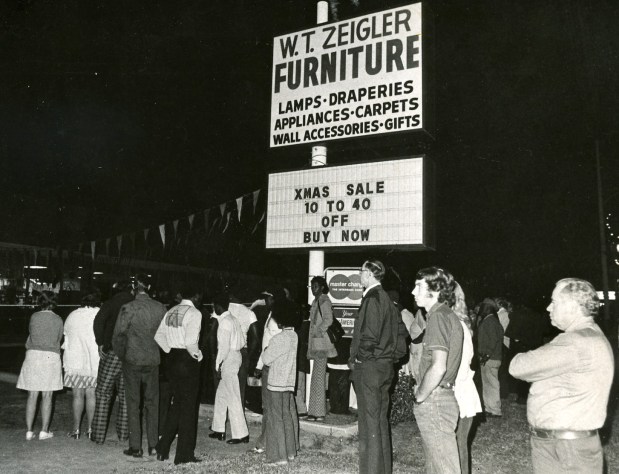 Area residents gather in from the W.T. Zeigler Furniture store in 1975 after four people were found shot to death on Christmas Eve. Owner of the store, W.T. “Tommy” Zeigler, who was shot but survived that night, was convicted of the murders. (Orlando Sentinel file)
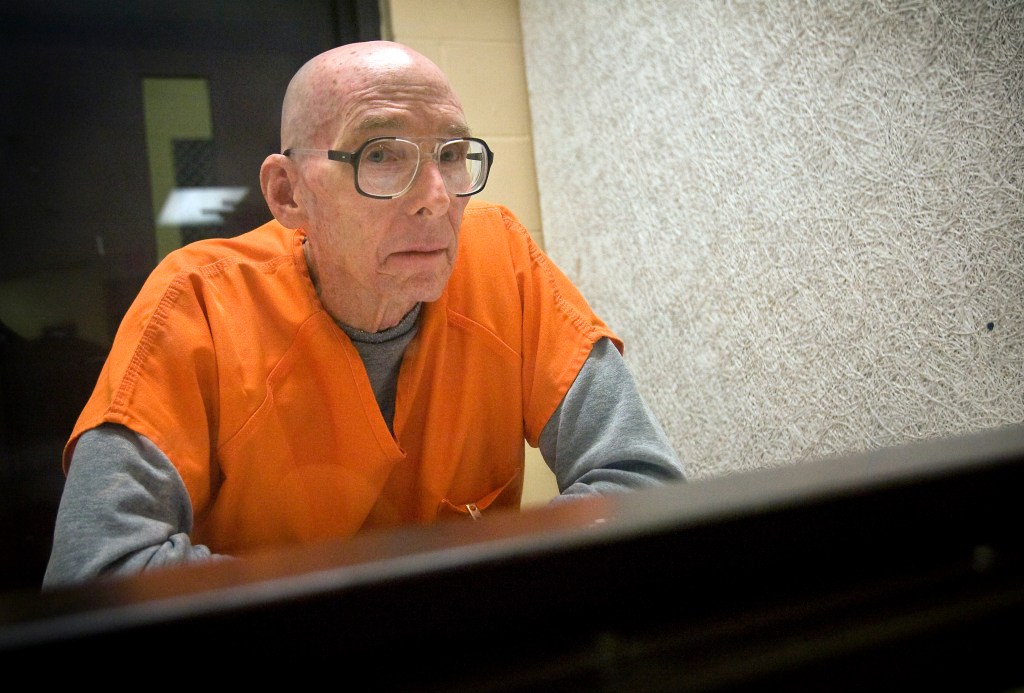
He has since been on Florida’s death row for nearly 50 years, longer than any other inmate, and has always maintained his innocence. Numerous appeals have kept him from execution.
On Monday, Zeigler is scheduled to be in an Orange County courtroom to face what is most likely his best and last chance for freedom. At an evidentiary hearing, Zeigler’s attorneys will argue that new DNA results from that crime scene suggest he wasn’t the murderer. Blood from the victims, for example, was not on his clothes.
“We’ve been trying for years and years,” said Ralph “Terry” Hadley, the Orlando attorney who has represented Zeigler since his 1976 trial. “We are very delighted.”
But while Orange-Osceola State Attorney Monique Worrell agreed to release evidence for new, more modern DNA testing, her office said this summer that the examination of fingerprints and bloody clothing from the 1975 crime scene does not exonerate Zeigler.
“The jury got it right the first time around: Zeigler is guilty beyond a reasonable doubt,” the court filing from Worrell’s office said.
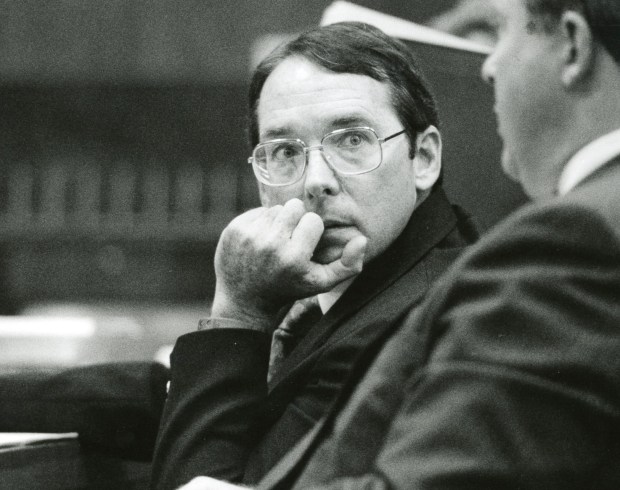 Tommy Zeigler in court in 1989 during a re-sentencing hearing. Zeigler was sentenced to death in the murders of four people in 1975. (Orlando Sentinel file)
The two sides will argue the evidence before a judge in a hearing expected to last a week.
Circuit Court Judge Leticia Marques likely will not make an immediate ruling, but could later decide to uphold Zeigler’s death sentence or overturn his convictions. If the latter happens, Zeigler, now 80, would walk out of the Union Correctional Institution in Raiford a free man.
Over the decades, the Zeigler case has sparked worldwide interest. It was featured in 1997 on the popular television show “Unsolved Mysteries,” for which Zeigler agreed to take a polygraph test that showed he was telling the truth. And Bianca Jagger, a human rights activist and ex-wife of Rolling Stones singer Mick Jagger, has written editorials urging a new trial for Zeigler based on recent DNA evidence.
At this point, Zeigler has outlived many of the key figures in the grisly murders, including then Winter Garden Police Chief Don Ficke and the prosecutor, then Orange-Osceola Attorney Robert Eagan, who died last year.
“No one, I am satisfied, could look objectively at the evidence and conclude that anyone other than Tommy Zeigler committed those murders,” Eagan told an Orlando Sentinel reporter in 1986.
Zeigler and prosecutors have long presented two different versions of what took place just after 7 p.m. on that Christmas Eve.
Zeigler has always maintained that he and Edward Williams, a longtime employee of W.T. Zeigler Furniture, went together to the store on Dillard Street just north of Colonial Drive.
Zeigler told detectives that when he walked inside from the back of the store — which had been closed for the day — the lights would not turn on, and it appeared the power had been shut off.
As he walked through the dark store, he was suddenly hit over the head, causing him to fall and lose his glasses. He heard unfamiliar voices and then gunshots. Though everything was blurry, he got up and fought an attacker, he told detectives. He then fired his gun, which he often kept in a holster by his side. The fight continued and Zeigler reached into a drawer and got another gun, which he also fired, he testified.
In the midst of the struggle, he was shot in the stomach and lost consciousness. When he awoke, the store was dark and quiet. He crawled on the floor and pulled himself over a dead body so he could reach a phone and called his friend, Ficke, for help.
At trial, though, prosecutors presented a witness who said she’d seen Zeigler and his wife driving together in their car that evening on Dillard Street, toward the store. They argued that Zeigler was heavily in debt after taking out loans for a swimming pool and a new Oldsmobile and had recently taken out life insurance policies on his wife.
Money was his motive, they said, adding that he tried to stage the crime scene so that he could frame three Black men for the murders, perhaps thinking that in Winter Garden, a then rural slice of a Southern community that had only recently desegregated its public schools, such a tale would be believed.
But investigators with the Orange County Sheriff’s Office, which took over the case, did not buy his story. They arrested Zeigler five days after the murders while he was still hospitalized for the injury they believed was self-inflicted.
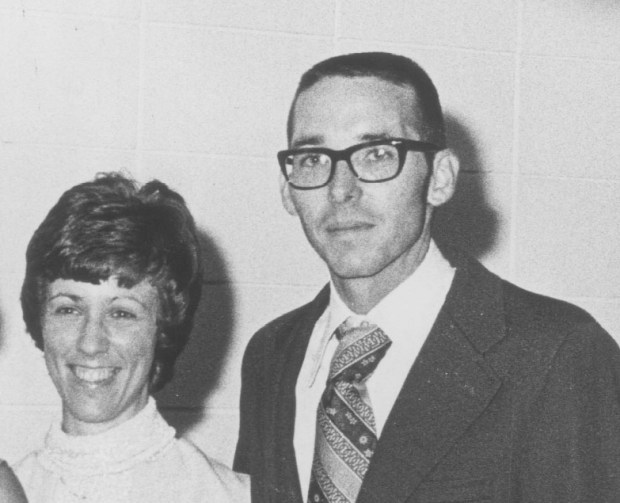 Tommy Zeigler and his wife Eunice. (Orlando Sentinel file)
Eunice Zeigler was the first to die when the Christmas Eve shooting started, officials said, from a bullet fired into the back of her head.
Eunice’s parents, Perry and Virginia Edwards, had driven from their home in Moultrie, Ga. Inside the store, they met their end. Virginia Edwards was shot in the side and then crawled to hide among the furniture at the front of the showroom. The killer found her and finished her off with a shot to the head, officials said.
Perry Edwards was shot in the side and the arm but tried to fight off the gunman, overturning furniture and smearing blood. His killer pursued him while firing the .38-caliber handgun. One bullet hit a clock on the wall, stopping it at 7:24.
Edwards picked up a wooden barstool to try and protect himself. The killer then started trying to hit the 74-year-old man with the gun, bending the trigger guard and marking the stool.
Detectives said that explained why Zeigler had a broken right index finger when he was rushed to the hospital.
The killer finished off the older man by picking up a heavy metal crank and smashing in Edwards’ head.
Police would also find the body of Charlie Mays, a Black laborer and customer of the furniture store. Mays, who was known to gamble, owed Zeigler money. Mays had been shot in the back several times and his head was beaten.
Zeigler told detectives at the hospital that he had shot Mays after Mays shot him. But detectives wondered, who had beaten Mays more than dozen times on the head? And why would a killer — or killers — make sure everyone was dead except Zeigler, the store’s owner?
Tommy and Eunice Zeigler — well-known members of their community — were to attend a holiday party that night hosted by Judge Theodore Van Deventer at his Winter Garden home and planned to pick up their close friends, Ficke and his wife, on their way there. But the Zeiglers never showed up at Ficke’s house.
Puzzled and tired of waiting, the Fickes testified they drove to Zeiglers’ home and the furniture store but couldn’t find them. So they went to the party by themselves.
It was just after 9 p.m., more than 90 minutes after the clock in the store stopped, when the phone rang at Van Deventer’s home. It was Zeigler asking for Ficke who, along with other police officers, would soon find the bloody scene.
Hours later, two Black men — Williams and Felton Thomas — would separately contact police and describe odd encounters with Zeigler earlier that night.
Felton Thomas, who was friends with Mays, said the two men drove to the store just after 7:30 p.m. to meet Zeigler, who was waiting to sell Mays a television set. In the parking lot, Zeigler told Thomas and Mays to get in his car and drove them to an orange grove.
At the grove, Thomas said, Zeigler showed the men a bag of guns he had just purchased and asked Mays to try them out by quickly shooting out the car window. Zeigler and the men then returned to the store, where he said he didn’t have a key to get into the locked building and asked them to break in, according to Thomas’ testimony.
Mays and Thomas refused, so Zeigler drove the men to his house, got a key and returned and unlocked a rear gate and then the store’s back door. He then asked Mays to reload a gun with bullets.
As the men walked into the dark furniture store, Thomas said he felt uneasy and “just had a feeling to leave” and walked away.
He called police after hearing news reports about the killings.
Williams worked for years as a handyman and laborer for Zeigler’s father. He stayed on after the elder Zeigler turned over the store to his son.
That night, Zeigler called Williams and told him to meet him at his house to help move boxes at his store. As he waited in the driveway, Williams saw Zeigler drive up with two Black men in his car. Zeigler told Williams to continue waiting and he would be right back. Zeigler returned by himself around 8 p.m., and the pair drove in Williams’ pickup truck to the furniture store.
The two walked into the dark store with Zeigler leading the way. Williams testified that Zeigler then turned around and pointed a gun wrapped in cloth at him. Though Zeigler pulled the trigger several times, the gun did not go off. Zeigler told Williams he confused him for an intruder and handed him the gun to prove he did not mean to hurt him.
Frightened, Williams ran out, climbed over a fence and called police from a nearby chicken restaurant with the gun still in his pocket.
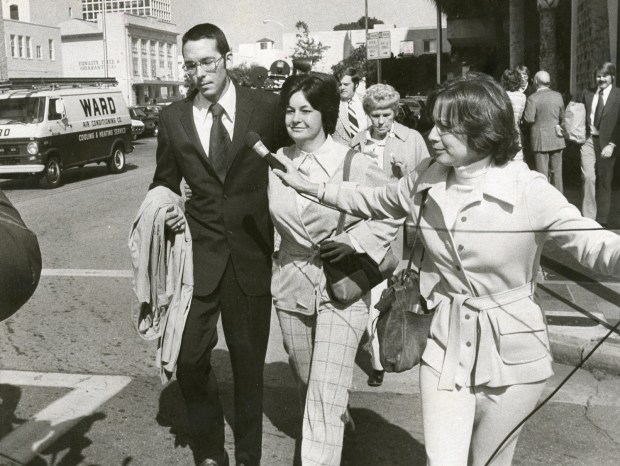 Tommy Zeigler, left, about a month after the murders of his wife, his mother-in-law and his father-in-law. Zeigler was later convicted of killing them and a fourth person on Christmas Eve, 1975. (Orlando Sentinel file)
At his trial — which was moved to Jacksonville because of the intense publicity — Zeigler testified that he was attacked as he walked into the store that night, providing a similar account to what he’d told detectives. But he said he could not recall all the details.
“I just can’t remember anything,” Zeigler said.
Prosecutors presented evidence that Zeigler had purchased two separate life insurance policies totaling $500,000 on his wife just weeks before the killings. His wife had mentioned to friends that the couple were not getting along and she planned to move back to Georgia with her parents.
After three days of deliberations, a jury found Zeigler guilty. The jury recommended life in prison, but Orange County Judge Maurice Paul sentenced Zeigler to death.
In 1981, the Florida Supreme Court affirmed Zeigler’s guilty verdicts. Five years later, Zeigler came within two days of being put to death, but his execution was halted after a last-minute appeal by his attorneys.
Since then, the case has had further appeals and hearings, including an evidentiary hearing in 2004 that presented DNA evidence of blood samples collected at the scene. Defense attorneys said those results showed Mays was the perpetrator, but a judge ruled that DNA test results would not have changed jurors’ minds. He denied Zeigler a new trial.
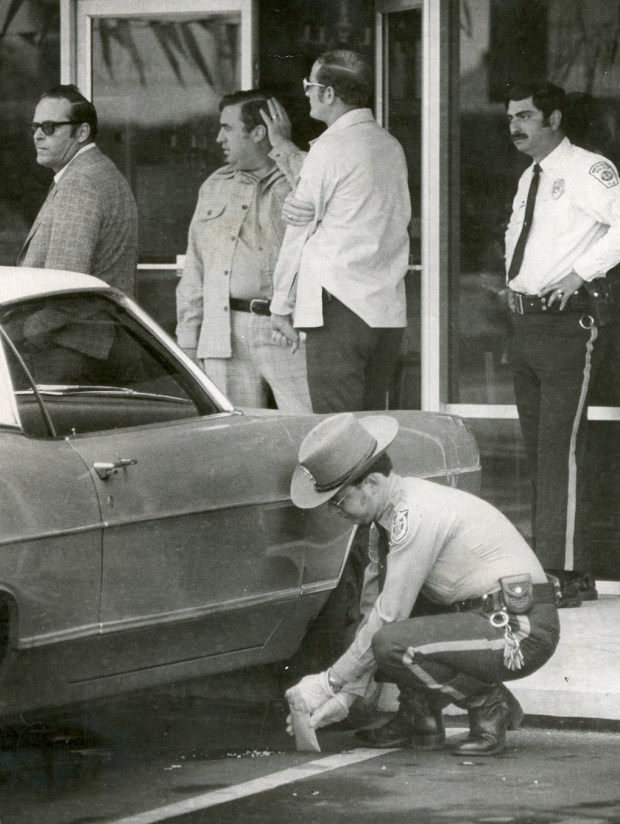 Law enforcement gathers evidence outside of the W.T. Zeigler Furniture Store in Winter Garden following the murders of four people on Christmas Eve, 1975. (Orlando Sentinel file)
This year, Zeigler’s defense attorneys said the batch of more modern DNA testing casts even more doubt on whether Zeigler is guilty of the four murders.
In their motions requesting the hearing, Zeigler’s attorneys pointed to the lack of blood on Zeigler’s clothes. If he shot each of the family members at close range, “he would have been covered” with splattered blood, they wrote.
“Mr. Zeigler’s shirts and pants showed no DNA from the family members,” defense attorney Dennis Tracey said during a court hearing last August.
Blood from Perry Edwards was on Mays’ pants and shoes, they said, and Mays’ DNA was found on Eunice Zeigler’s coat. The blood on Zeigler’s shoes was from when he walked across the bodies to call his friend, the Winter Garden police chief, they argued.
Prosecutors, however, said that Zeigler didn’t have any blood on his clothes because he wore an employee’s raincoat during the murders.
The raincoat was never found.