
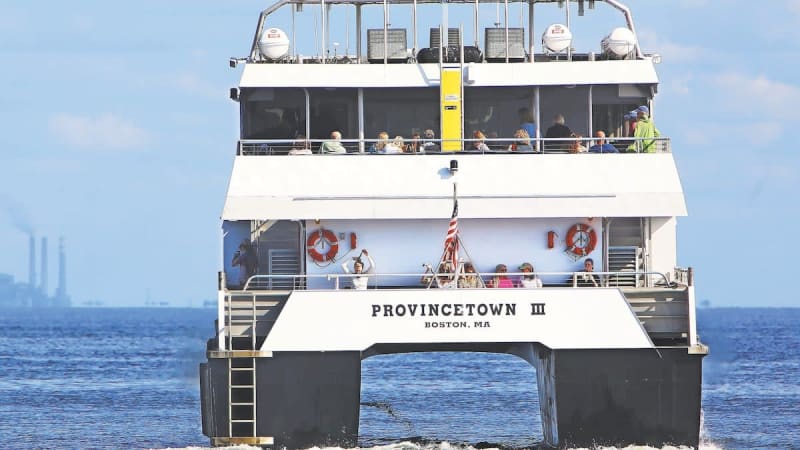
Apassenger ferry will soon return to the waters of Tampa Bay.
On Wednesday, the board of the Pinellas Suncoast Transit Authority voted to approve Hubbard’s Marina, a Madeira Beach business, to operate the revamped ferry service. The board also agreed to purchase at least one new vessel for the service, now called the Tampa Bay Ferry.
The votes mean the revival of a ferry that has carried passengers across the bay since 2016, but shuttered abruptly earlier this year amid regional drama.
Tampa Bay Sea Taxi Inc., operated by Hubbard’s Marina, will run the service under a five-year agreement for up to $16.59 million, with the option to extend the contract an additional five years. The Transit Authority said it could lower adult fares and increase the frequency of trips across the bay.
Board members also agreed to buy a faster and larger ferry, which will seat 250 passengers compared with 149 on theformer Cross Bay Ferry.
The Transit Authority will use a $4.8 million federal grant, transferred from the Hillsborough Transit Authority in June, to buy the used vessel, which currently operates in San Francisco. The authority said it is searching for a second ferry to purchase.
Service is expected to begin mid-2026, with initial departures near the Tampa Convention Center in downtown Tampa and Bayshore Drive in St. Petersburg, according to a presentation from Alvin Burns, procurement director for the Pinellas Transit Authority.
Last month, council members in St. Petersburg also approved more than $336,700 for plans to build a permanent dock on the St. Pete Pier near the St. Petersburg Museum of History and the Dolphin Parking Lot. Brejesh Prayman, the city’s engineering and capital improvements director, said the space would be wide enough to accommodate docking on both sides, including tall ships.
The ferry has long been at the heart of debates around regional transportation in Tampa Bay. Some local leaders say it eases traffic congestion and offers a cheap alternative for daily commuters. Others say it’s wasteful.
“Any alternative transportation options will help create regionalism and connectivity,” Tampa council member Guido Maniscalco said at a meeting in November, when the council voted to commit $350,000 per year for five years toward the ferry. St. Petersburg’s council voted unanimously last month to contribute the same amount of money.
“This is another tool in the toolbox,” Maniscalco said, “to get traffic off the street.”