
December 5, 2025
By Karan Singh
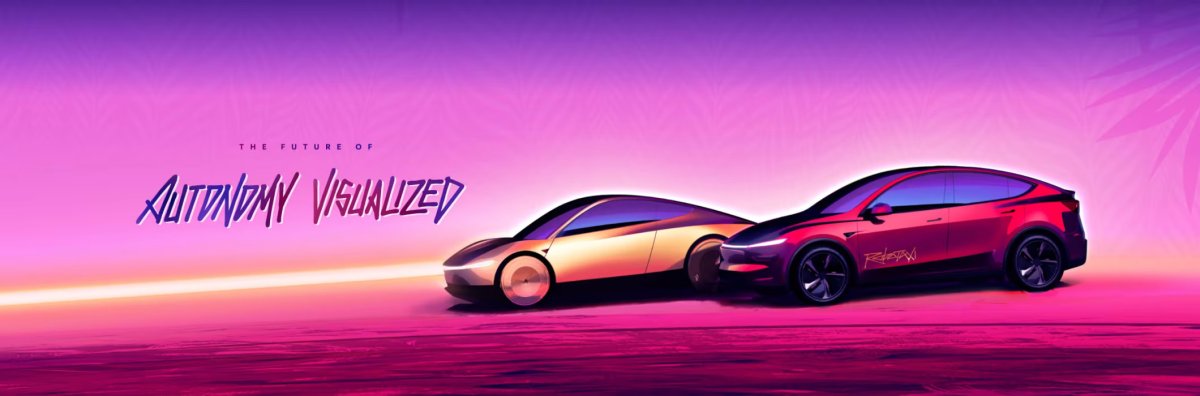
Just days before the main events of Art Basel Miami Beach, Tesla has announced a surprise pop-up exhibition in the heart of the Miami Design District. Titled “The Future of Autonomy Visualized,” the event promises to be more than just a simple car display.
Tesla is billing the event as an immersive journey inside the digital mind that powers FSD, both for Optimus and its vehicles.
For owners and enthusiasts in the Florida area, this is a rare opportunity to see how FSD actually thinks, beyond the polished renderings that appear on the center screen.
Event Details & How to RSVP
The event is open to those who RSVP’d across two days, coinciding with the peak weekend of the Miami Art Week.
Location: Tesla Miami Design District Showroom, at 4039 Northeast 1st Avenue, Miami, FL.
Dates & Times:
Saturday, Dec 6: 11:00 AM – 5:00 PM
Sunday, Dec 7: 11:00 AM – 8:00 PM
Tesla has opened a dedicated RSVP page. However, due to the high traffic expected from Art Basel crowds, admission is not guaranteed, so early arrival is recommended.
You can RSVP at this link on the Tesla Events page.
What to Expect
While the physical Cybercab and Optimus prototypes will likely serve as the centerpieces, the event description suggests a deeper technical focus on the software behind them.
The invite states that the exhibit will show off a simulation of what Tesla vehicles and Optimus see, a digital landscape. As such, we expect visitors will be treated to a behind-the-scenes look at what exactly your vehicle sees and how it works.
That could be a matrix-like view of curbs, pedestrians, and objects, represented not as a smooth video, but a 3D, calculated occupancy network – the same one that we saw recently in a patent. This voxel world that’s generated by the AI model is a mathematical representation of the world around it, far more complex than the vehicle visualizations we see every day.
For those who can attend, we’re sure it will be an exciting event.
Subscribe to our newsletter to stay up to date on the latest Tesla news, upcoming features and software updates.
December 4, 2025
By Karan Singh
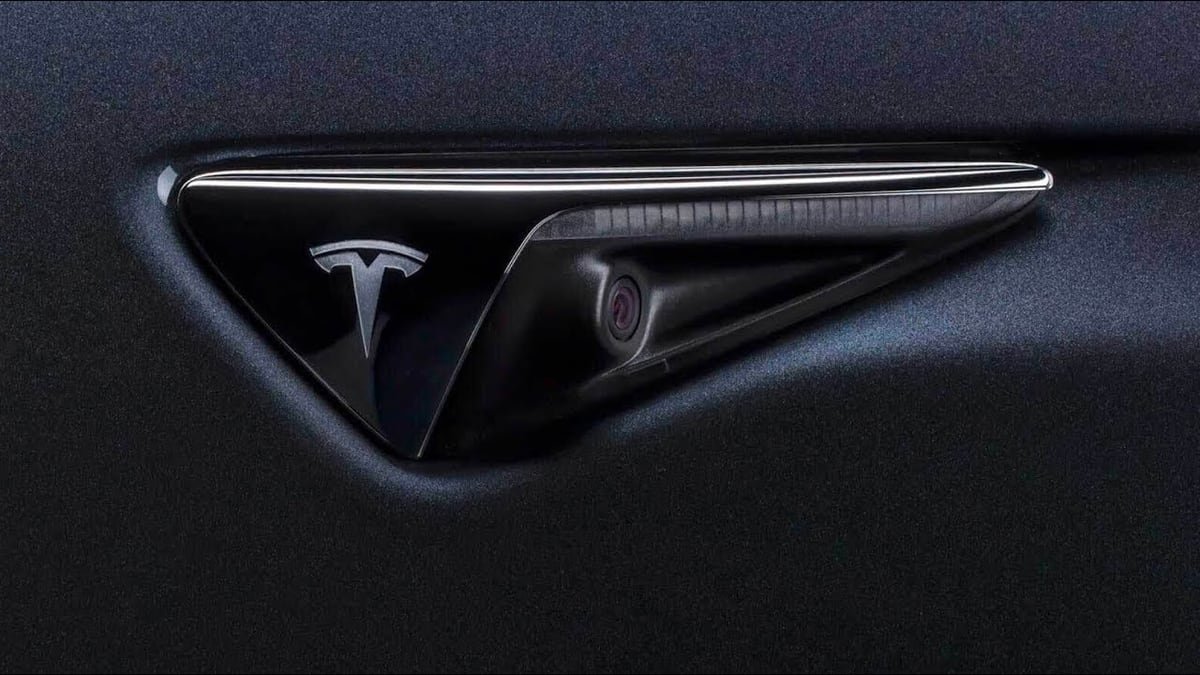
Tesla doesn’t do model years, and it rarely announces hardware changes that happen under the hood. Instead, they sometimes slip significant upgrades into the production line silently, leaving it to the community to find them. The latest discovery comes from noted Tesla hacker Green, who has identified a new camera sensor model, IMX00N, buried in the latest firmware.
This mysterious sensor is a successor or alternative to the current IMX963 used in AI4 vehicles, suggesting that Tesla may be preparing to roll out an AI4.5 camera suite that is more custom, more capable, and potentially game-changing in the future for FSD.
The Current IMX963 Camera Sensor
To understand the upgrade, we need to take a look at what we have on today’s Teslas. The current AI4 cameras use the Sony IMX963, believed to be a custom iteration of the automotive-grade Sony IMX490.
By industry standards, this sensor is already a beast. It features a resolution of approximately 5.4 megapixels (2896 x 1876) and a massive 3.0μm pixel for low-light sensitivity. With 120dB of High Dynamic Range (HDR) and flicker mitigation, the spec sheet is impressive. All that lets your car read lane lines while simultaneously peering into the dark far ahead, with oncoming lights obscuring your human vision.
However, there is one particular weakness. It uses a rolling shutter, which means that the sensor scans the image line by line. At highway speeds, this can introduce motion artifacts or speed distortion that Tesla has to spend processing power to correct for.
The Upgrade: IMX00N
The designation IMX00N does not exist in any public Sony catalog. The 00 naming convention suggests that this is a bespoke, ground-up sensor designed by Sony specifically to Tesla’s architectural requirements, rather than an off-the-shelf part adapted for Tesla.
While the specs are unconfirmed, there are a few major things that Tesla could be looking to upgrade in its move to a new sensor. The first is a leap to a global shutter, using Sony’s new Pregius line of sensors. Unlike a rolling shutter, a global shutter exposes all pixels simultaneously. This eliminates motion distortion entirely. For an AI trying to calculate the trajectory of a cross-traffic vehicle at high speeds, a global shutter provides a mathematically perfect freeze-frame, reducing latency and processing load.
Second is resolution and range, which is one of the most unclear aspects. Moving the sensor resolution up closer to 8 Megapixels (4K image resolution) would bring a lot more camera data, which could be especially useful given the expected improvements of AI5 in the future.
The last and final item is color accuracy. Because this is likely a custom build, Tesla may strip out some of the features that make the sensors suitable for human eyes. Standard cameras use a Bayer filter (RGGB) to make colors look natural to us. A custom sensor could use something like RCCC (red-clear-clear-clear) or a similar array to achieve improved light sensitivity and edge detection while sacrificing color accuracy – a big improvement for night vision.
However, with features like Dashcam, Sentry Mode, Blindspot Cameras and more all being human-facing, Tesla may need to either have a software solution to color back to something human-readable, or use these sensors solely for forward-facing autonomy.
What About Retrofits
The inevitable question that comes whenever Tesla is considering an FSD-related hardware improvement is always retrofits. So, could you expect a retrofit? For HW3 owners, any retrofit is still up in the air. We don’t know when Tesla will ever make a retrofit, or if these new cameras would even be part of it – but FSD V14-lite is a promised upgrade for later in 2026.
For AI4 owners, a retrofit is also not likely, at least not right away. Even if the connectors and bandwidth requirements are identical, Tesla’s neural networks are calibrated to the specific optical characteristics of the existing sensors. That means a full-on retrofit would have to be completed of all cameras across your vehicle, alongside upgrades to FSD that actually take advantage of the new capabilities.
So, if you’re hankering for new eyes on your Tesla, you might just need to continue waiting. This part could already be in production, or it could just be destined for a new HW4 revision or even set for the Cybercab or the launch of AI5 in 2027.
December 4, 2025
By Karan Singh
For a company that builds arguably the most advanced batteries on wheels and the infrastructure to charge them with, Tesla seems surprisingly bad at charging the tiny battery you carry in your pocket daily.
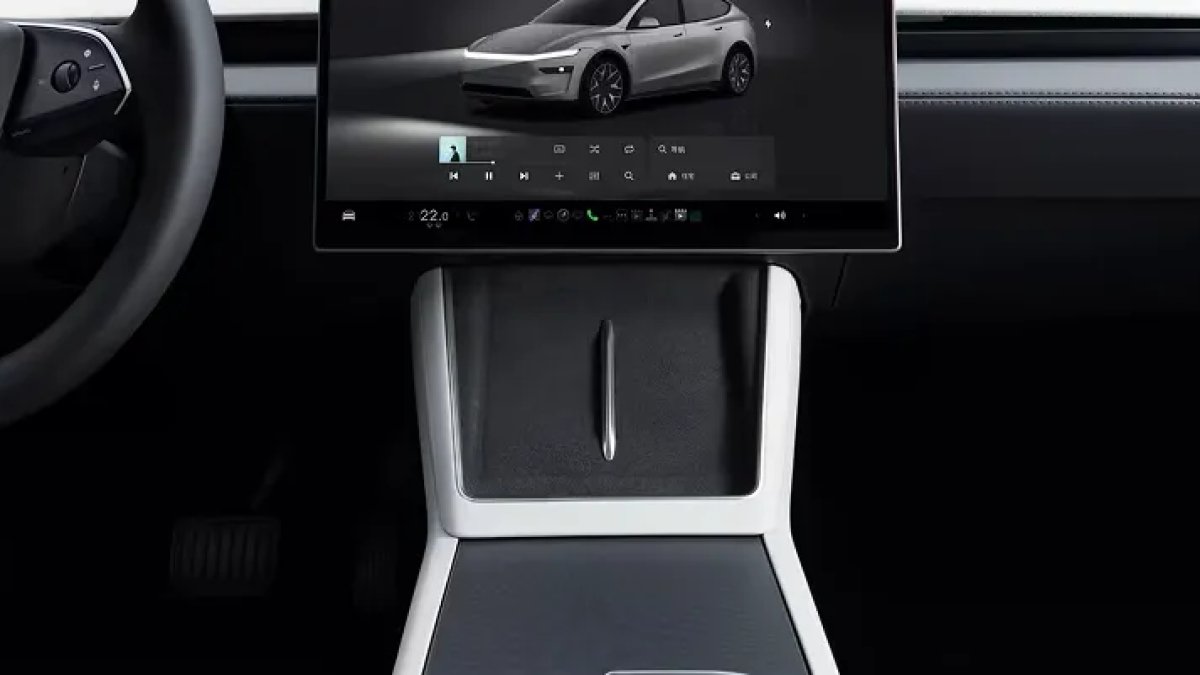
If you own a modern Tesla, you know the drill: you get in, you place your phone on the felted Alcantara pad, and drive. Thirty minutes later, you pick up a device that is molten hot, has stopped charging due to a “Temperature Warning”, and has gained maybe 4% additional battery life.
For years, the wireless phone charging pad has felt like less of a charger and more of a phone warmer. It’s inefficient, slow, and potentially damaging to your phone’s long-term battery health, which is why charging gets slowed or stops entirely. But the frustrating part isn’t just that it’s bad – it’s that Tesla already has the tech to fix it, but they just haven’t given it to us yet.
The Hot Potato
The issue stems from the older Qi standard Tesla uses. Without magnets (like Apple’s MagSafe or the open Qi2 standard), to perfectly align the phone’s copper coil with the car’s charging coil, energy transfer is inefficient. However, it doesn’t just disappear; it turns into waste heat.
Combine that misalignment with a lack of airflow and the sun beating down on your phone through the glass roof, and you have a recipe for thermal throttling. The charger continues to pump 5-15 watts of energy into a device that can’t accept it, effectively turning into a space heater rather than a charger.
The Solution Exists (In China)
We know Tesla is capable of solving this problem, and not just because the whole world knows how — they do too. In the recently launched Model Y L, exclusive to the Chinese market for now, Tesla implemented a completely redesigned charging module.
This new unit features active fan cooling with dedicated vents that blast air against the back and sides of the phone. The result? Your device stays cool enough to sustain charging speeds of up to 50W — ten times the effective speed of current charging pads. If Tesla can engineer this for the Model Y L in Shanghai, there is no excuse for the rest of the lineup to still be lacking the feature.
Software Wishlist
Until the hardware catches up, Tesla needs to give us some better software controls to manage the heat, as the issue will continue to plague older vehicles. Here are some features we’re wishing would arrive in the Holiday Update:
An Off switch. No, really – it sounds simple, and almost dumb, but you cannot turn off your phone toaster if you put your phone on the super conveniently-placed charging pad. A simple toggle in the UI would go a long way to prevent playing hot potato with your phone on the way out. This way, you could at least have a nice place to set your phone down without overheating it. Musk said this was coming back in 2022, so Tesla is either still planning to release it, or it fell off their roadmap.
Thermal Throttling. Your car knows the cabin temperature. If the cabin is 80°F, it shouldn’t be running the charging pad at full tilt; it should slow down and reduce the wattage or disable the pad automatically if it reaches unsafe temperatures.
State-of-Charge limits. Just like we limit our cars to 80% charge for battery health, let us do the same for our phones. Some phones allow this through the OS, which helps preserve the battery. However, Tesla also has access to the phone’s battery state of charge when connected via Bluetooth. They can allow users to select a maximum charging limit for their phone, just like they do for their vehicles.
We’d love for Tesla to display your phone’s battery level on the vehicle’s display. Since Tesla knows your phone’s battery level, it should display it or even alert you with a notification when your phone reaches a low state of charge.
Hardware Wishlist
Looking forward, just bringing the active cooling and 50W pads from China isn’t enough. As phone batteries get ever denser and faster charging, Tesla needs to keep up. That means adopting Qi2 (the open version of MagSafe that works with all devices) and ultra-fast wireless charging.
Magnetic alignment solves the root cause of the heat by ensuring perfect coil placement every time. It also holds your phone in place, whether you’re on the road, on the track, or off-roading. Third-party companies offer Qi2 pads that work in all of these conditions, and just need a simple USB cable – all while charging far faster than the existing pads.
Adding magnets will not only charge your phone faster, reduce heat, and prevent your phone from wobbling, it’ll also better support charging smaller devices such as AirPods.
Tesla has some absolutely world-class engineering – and they’re even working on wirelessly charging vehicles too – so why can’t we get functional phone charging?