

The cemetery is believed to have veteran graves from the destroyed Moffett Cemetery that existed under land now covered by I-175 in St. Pete near Tropicana Field.
ST. PETERSBURG, Fla. — The City of St. Petersburg’s Housing and Land Use Committee on Thursday voted unanimously to advance conversations around re-annexing the historically Black Lincoln Cemetery in Gulfport, after dumping it decades ago.
“We have to stop pussyfooting around and do the right thing,” Councilmember Corey Givens said.
Givens, who has relatives buried in the cemetery, said annexation would be appropriate because the city de-annexed the cemetery without much reason, he said. The city kept the white cemetery directly across the road, while Lincoln began to struggle with upkeep.

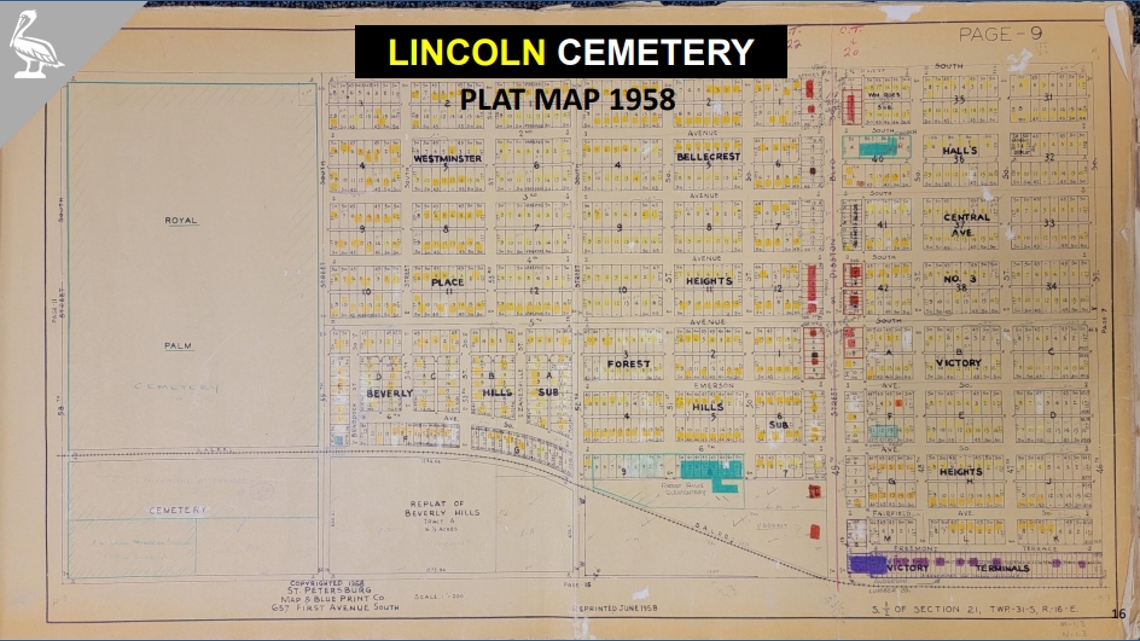
Over the last decade, Pastor Clarence Williams has worked to maintain the cemetery, but funding remains a challenge. He said on Thursday he would like to see more done to protect the site. Givens said he’s working hard to make that happen.
“Being an elected official now, I certainly want to use my powers to make sure that we bring some justice, not just to the folks who are buried out here at Lincoln but also to the folks who were buried at the Tropicana Field cemeteries,” said Givens.
This includes the erased Moffett and Evergreen cemeteries that once existed, where part of I-175 is today near Tropicana Field. Historical records show graves from these cemeteries were supposed to be moved to Lincoln before construction of the interstate, but it’s unclear if that ever fully happened.
RELATED: Florida House minority leader calls on FDOT to search for erased Black graves under I-175
Newspaper archives show crews found bones when building I-175, but construction continued anyway. The Florida Department of Transportation has repeatedly told 10 Investigates it has no plans to search for remaining graves, but a lawmaker leading the legislative fight to save these historic locations says the agency should reconsider.
“It just seems to me that when it’s public land, when it’s land that’s owned by the state or even the federal government, that should be a much easier process,” said Florida House Minority Leader Fentrice Driskell. “Once we know that there’s a strong likelihood that there are graves buried there, I feel like there is a responsibility of the state to investigate and to give peace to the descendant community.”
Driskell says she plans to introduce new cemetery legislation during the 2026 session.
Emerald Morrow is an investigative reporter with 10 Tampa Bay News. Like her on Facebook and follow her on Twitter. You can also email her at emorrow@10TampaBay.com. To read more about the search for lost African American cemeteries in the Tampa Bay area, head to 10tampabay.com/erased.