
Ask almost any politician in Seminole County about the voter-imposed rule that protects open lands from intensive development, and they’ll tell you: Messing with the rural boundary is tantamount to licking the third rail of the New York City subway.
You just don’t go there, unless you want a rude shock.
The boundary is so popular that 82% of Seminole voters said an enthusiastic “yes” in 2024 to making its protections stronger. In that same election, 73% of Orange County voters imposed similar restrictions on sprawl.
But apparently the state Attorney General’s Office didn’t see a need to consult with Seminole or Orange leaders before erroneously declaring both counties’ rural-boundary ordinances to be a violation of state law, and likely the state and U.S. Constitutions to boot. Even worse, the letter carrying that absurd claim failed to mention that Seminole County’s boundaries — first enacted in 1991 by the County Commission, and approved by voters in 2002 — have been challenged by multiple lawsuits over the decades, and held firm.
Putting brakes on sprawl
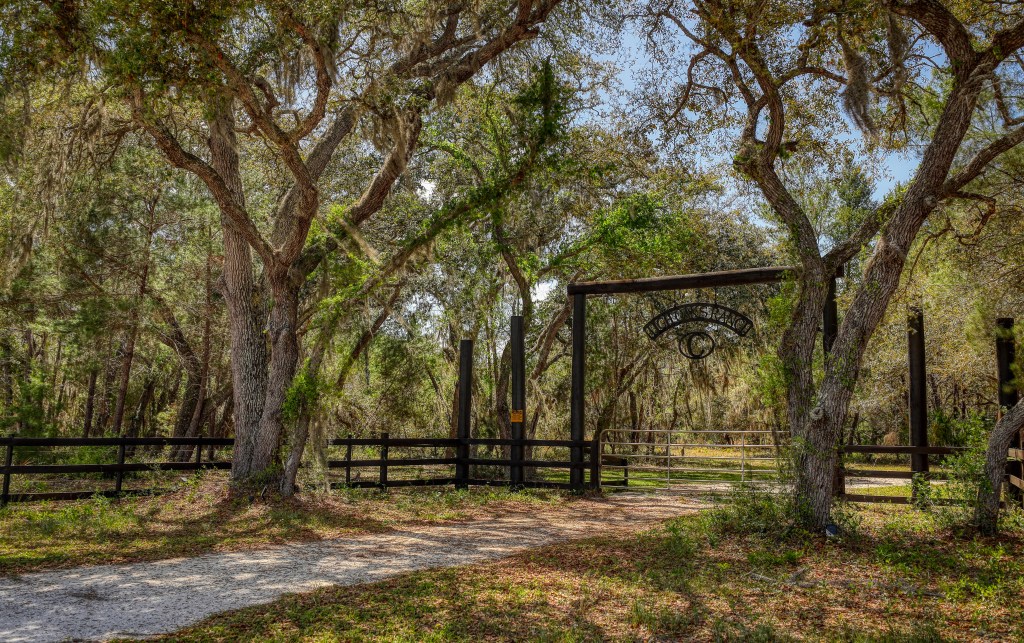
Seminole’s rural boundary protects the eastern third of the county through a few simple safeguards. Unlike the tight-packed development clustered around Longwood, Maitland, Altamonte Springs and other cities, the rural area is mostly given over to agriculture and single-family homes on large lots. Unfortunately, this is exactly the kind of territory developers love to exploit, clearing acres of trees and throwing up new subdivisions before moving on, sticking local taxpayers with most of the cost of the roads, schools, police and fire protection and other amenities the new residents will expect.
The protections of the rural boundary don’t diminish the rights of any property owner. But they do require extra steps (and now, the approval of four of the five county commissioners) before allowing any development more intensive than the current rules allow. The urban boundary rule also prevents developers from evading regulation by having their property annexed into a city.
Notably, however, the boundary doesn’t shut the door on development altogether. Over the years, the commission has approved several projects in the rural area. But it’s also fended off lawsuits that raised every single argument in the Nov. 25 letter — and each time, the county has prevailed.
The AG’s letter, signed by Greg Slemp, a high-ranking lawyer in the attorney general’s office, ignores most of those points. Instead, it pretends that developers have a guaranteed right to extract maximum profit from land, regardless of the public impact — including an easy path to rezoning their land whenever and however they choose.
A partisan fumble
This wouldn’t be the first time we’ve seen James Uthmeier, currently acting as attorney general, sacrifice facts for political gain. Uthmeier, who engineered many of Gov. Ron DeSantis’ most egregious stunts as his chief aide, was elevated to the role of acting attorney general when Ashley Moody was appointed to Marco Rubio’s Senate seat. As AG, he’s used his office to attack civil rights and undermine local control.
But this letter is still puzzling — not just because it’s so egregiously wrong, but because it takes aim at officials Uthmeier would normally consider allies. Seminole County is solidly Republican. That includes every single county commissioner and countywide constitutional officer, and most city leaders. And it was the County Commission that decided to put the issue of rural boundaries on the ballot again in 2024, asking voters to make them stronger by requiring a supermajority vote of the County Commission to approve development in the rural area.
They understood their assignment. “Every community deserves to have the ability to establish growth and development plans consistent with the values of their own citizens,” Sen. Jason Brodeur, R-Sanford, says on his campaign website. “Communities know how to approach their development.” He was among those who lobbied Gov. Ron DeSantis in 2020 to veto legislation that would have crippled local growth management, which he described as “a direct attack on the will of the voters.”
Threats on the horizon
Seminole County voters should remind Brodeur of that promise, because there are actual threats to the county’s ability to say no to sprawl.
https://www.orlandosentinel.com/2025/08/24/editorial-a-deceptive-bill-could-strip-floridians-of-a-sustainable-future/
One of them has already hit Orange County, whose voter-approved boundaries might be obliterated by a 2025 law sold as a hurricane-recovery act. That law (SB 180) is being used, illogically, to challenge Orange County’s new rural boundaries, a battle currently playing out in court. The 2025 law included a provision that made it retroactive, allowing lawmakers to reach back in time to attack the November 2024 vote in Orange County.
It’s not hard to imagine the Legislature crafting a law that simply wipes out any voter-approved growth controls, no matter how reasonable or popular they are. Voters will need Brodeur and all their local leaders to support local control, sensible growth controls and environmental protections.
They also need an attorney general who understands and respects the law. And Uthmeier — who is expected to run for the AG’s office next year — may have just dropped a bomb on his chances of winning support in dark-red Seminole County. There are already better candidates in the race on both sides of the partisan aisle. Throwing support to them would be a fitting response to his egregious, error-ridden attack on local control, and an acknowledgement to local Republican officials who have done a good and faithful job of serving their voters’ priorities.
The Orlando Sentinel Editorial Board consists of Opinion Editor Krys Fluker, Executive Editor Roger Simmons and Viewpoints Editor Jay Reddick. Use insight@orlandosentinel.com to contact us.