
For commercial crabber Robbie Dillon, workdays are spent on the water. “This is the first string that we’re going to,” he explained while leaving the dock for Pine Island Sound. “We like to see 6, 7 crabs to a pot.” Between his time in Maryland and in Florida, he’s learned a thing or two about crabbing. He’s been at it since he was a kid. For as much as he enjoys being out on the water, make no mistake – it’s gritty work. Challenges come with the job. “The crabs are… they’re very scarce,” Dillon said. “We work our butts off moving pots every day.” “There’s always something,” Carrie Grainger explained. “We’re having a bad season, we’ve got bad water, it’s not good weather, the winds blowing the wrong way, it’s the price is down, the price is up.” Grainger runs the Barnhill Seafood Market in Matlacha, which sells the local seafood they catch. While so many factors are out of the crabbers’ control, there’s one problem – a growing one – that is preventable. “As this area gets more inundated with people, people come here to go out on a boat. They don’t have boating experience,” Grainger said. “They don’t understand.” And that’s led to more crab traps being damaged – even ruined – by boaters. Grainger said they lost 60-70 of them this year. Each costs $50-60. That means thousands of dollars lost. “99 percent of the guys out there, it’s just one man feeding his family,” Grainger said. “We set on the edges of the channel,” Dillon explained. “If you get somebody that’s not familiar with the red and the green and which side to go on, they’ll go right down your string of traps and destroy every one of them.” Within the past year, Dillon lost 50 crab traps in Estero Bay alone. As he explained, they have buoys to mark the location of each trap. But with the line, the wind, and the tide, the trap is not always right below the buoy. So, boaters should steer well clear when they see them. “Give us guys 20 feet, you know. Stay 20 feet away from our buoys. It’ll save us a lot of money,” Dillon said. Whether the problem is caused by people who own their own boats, people renting them from local companies, or both, Dillon is pleading for everyone to educate themselves on the rules of the water. For the crabbers, their very livelihood depends on it. “If we can’t sustain a rig. And we can’t afford to buy new gear. It would potentially put some of us crabbers out of business that have been doing it their whole lives,” Dillon said.DOWNLOAD the free Gulf Coast News app for your latest news and alerts on breaking news, weather, sports, entertainment, and more on your phone or tablet. And check out the Very Local Gulf Coast app to stream news, entertainment and original programming on your TV.
SAINT JAMES CITY, Fla. —
For commercial crabber Robbie Dillon, workdays are spent on the water.
“This is the first string that we’re going to,” he explained while leaving the dock for Pine Island Sound. “We like to see 6, 7 crabs to a pot.”
Between his time in Maryland and in Florida, he’s learned a thing or two about crabbing. He’s been at it since he was a kid.
For as much as he enjoys being out on the water, make no mistake – it’s gritty work. Challenges come with the job.
“The crabs are… they’re very scarce,” Dillon said. “We work our butts off moving pots every day.”
“There’s always something,” Carrie Grainger explained. “We’re having a bad season, we’ve got bad water, it’s not good weather, the winds blowing the wrong way, it’s the price is down, the price is up.”
Grainger runs the Barnhill Seafood Market in Matlacha, which sells the local seafood they catch.
While so many factors are out of the crabbers’ control, there’s one problem – a growing one – that is preventable.
“As this area gets more inundated with people, people come here to go out on a boat. They don’t have boating experience,” Grainger said. “They don’t understand.”
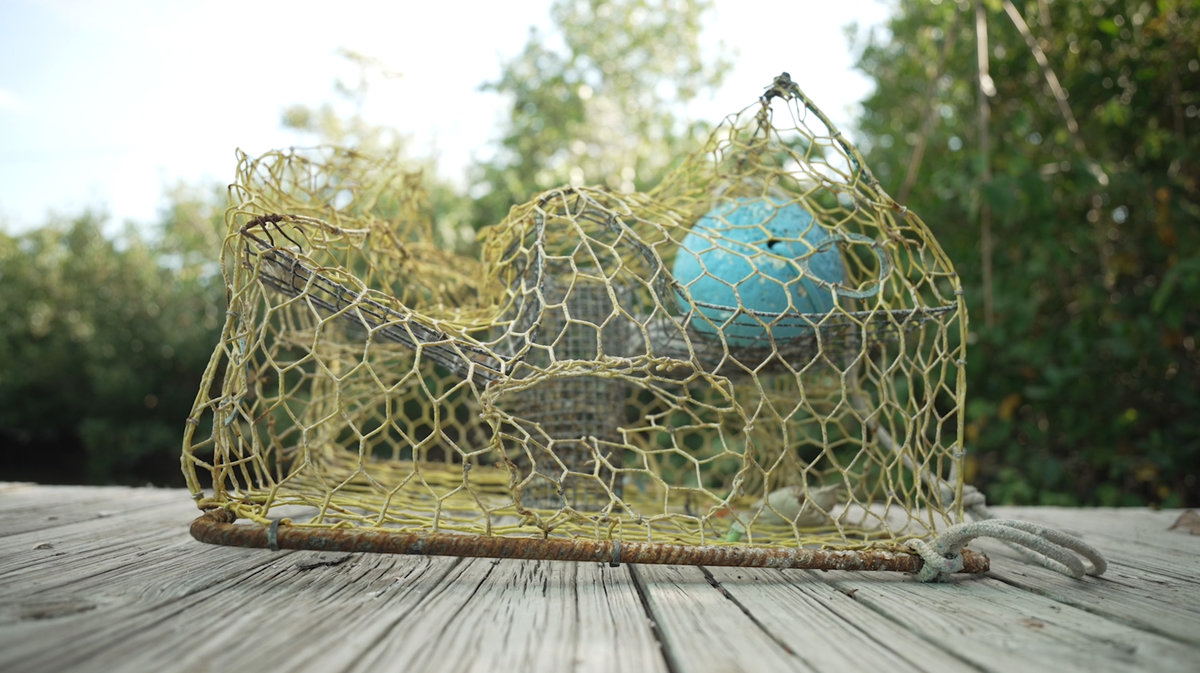
And that’s led to more crab traps being damaged – even ruined – by boaters.
Grainger said they lost 60-70 of them this year. Each costs $50-60.
That means thousands of dollars lost.
“99 percent of the guys out there, it’s just one man feeding his family,” Grainger said.
“We set on the edges of the channel,” Dillon explained. “If you get somebody that’s not familiar with the red and the green and which side to go on, they’ll go right down your string of traps and destroy every one of them.”
Within the past year, Dillon lost 50 crab traps in Estero Bay alone.
As he explained, they have buoys to mark the location of each trap. But with the line, the wind, and the tide, the trap is not always right below the buoy.
So, boaters should steer well clear when they see them.
“Give us guys 20 feet, you know. Stay 20 feet away from our buoys. It’ll save us a lot of money,” Dillon said.
Whether the problem is caused by people who own their own boats, people renting them from local companies, or both, Dillon is pleading for everyone to educate themselves on the rules of the water.
For the crabbers, their very livelihood depends on it.
“If we can’t sustain a rig. And we can’t afford to buy new gear. It would potentially put some of us crabbers out of business that have been doing it their whole lives,” Dillon said.
DOWNLOAD the free Gulf Coast News app for your latest news and alerts on breaking news, weather, sports, entertainment, and more on your phone or tablet. And check out the Very Local Gulf Coast app to stream news, entertainment and original programming on your TV.