
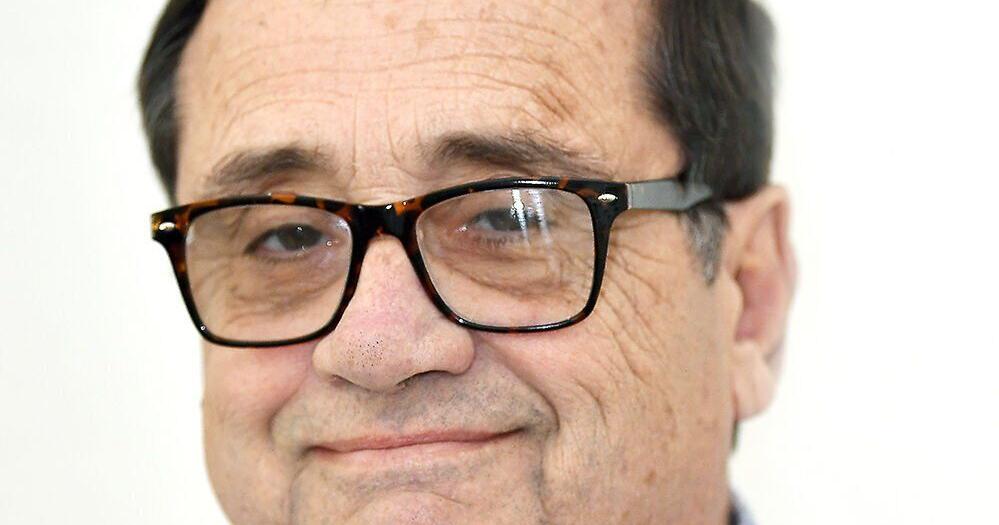
Florida Chief Financial Officer Blaise Ingoglia likes to cast himself as the taxpayer’s watchdog — a crusader against waste, fraud and abuse. He’s spent a lot of his time in his new job touring the state under the banner of Gov. Ron DeSantis’ DOGE initiative. The pitch is simple: local governments can’t be trusted to spend your money wisely, and the state, under DOGE and the governor, is here to hold them accountable.
But when the governor cracked his whip a couple of weeks ago at a Cabinet meeting, Blaise the fiscal lion tamer himself turned tame.
Ingoglia raised an objection to one of the most eyebrow-raising land deals in recent memory: an $83.3 million purchase of a four-acre waterfront parcel in Destin. He didn’t explain why during the meeting. He didn’t ask for discussion. He didn’t challenge the governor’s insistence that the vote had to be all or nothing — approve the entire bundle of land deals or none at all.
Only later did his office issue a statement saying he objected to the “purchase price,” calling it excessive and inconsistent with fiscal restraint. That’s an understatement. The property — bought less than a decade ago for under $8 million by Louisiana businessman and political donor Robert Guidry — was acquired at a per-acre cost of more than $20 million. Conservation experts called it “a sham.”
Twelve former state environmental regulators and land-acquisition veterans interviewed by the Tampa Bay Times agreed the land has little conservation value. It’s four acres of vulnerable coastline — a patch of sand propped up by expensive coastal engineering and prone to flooding. It’s not even on the state’s priority list for the Florida Wildlife Corridor, the very program the money was supposed to fund.
Former DEP Secretary Colleen Castille put it bluntly: “There’s a lot of environmentally sensitive lands on the state’s list that could’ve used this money.”
So how did this sliver of waterfront leapfrog more deserving projects? Through a last-minute addition to the state budget, pushed by a Panhandle senator whose district includes Destin. The $83 million price tag wasn’t publicly disclosed until just days before the Cabinet vote.
“This was not transparent,” said Deborah Burr, who led the state’s Office of Environmental Services until last year.
And yet — in an era when DOGE is supposedly shining light into dark corners of government — the CFO barely flicked on a flashlight.
That’s the irony of Ingoglia’s crusade. His DOGE roadshow has been heavy on theater and light on substance. He travels from town to town, wagging a finger at local governments — many of them in Democrat-led counties — accusing them of wasting taxpayer money on “frivolous” projects. He even blasted Seminole County for spending unwisely, though his office never actually conducted an audit there.
It’s all part of a narrative — one that happens to dovetail neatly with DeSantis’ campaign to eliminate property taxes altogether. The underlying message is that your local officials — the ones you elect — can’t be trusted with your money. Better to let Tallahassee take the wheel.
That’s a hard pill to swallow in a state that’s long valued home rule and local accountability. But Ingoglia’s DOGE mission helps make the case for consolidating power at the state level, just as DeSantis gears up to put the property-tax repeal on the 2026 ballot.
Ingoglia built his brand years ago with “Government Gone Wild,” a viral social media series railing against bloated local budgets. He’s reprising the act now, playing the part of the fiscal lion tamer — cracking his whip, roaring about waste, and warning that only the state can protect you from reckless spending.
But last week’s Cabinet meeting flipped the script. When the governor presented a deal that even veteran conservationists called “the most expensive per-acre purchase in state history,” the lion tamer became Ingoglia the house cat.
He earns a bit of credit for at least acknowledging concern — something his Cabinet colleagues didn’t bother to do. But concern without courage doesn’t mean much. If he truly believed this deal violated fiscal prudence, he could have demanded transparency before the vote. He could have asked why the land skipped the review process. He could have requested an independent audit of the appraisal that magically ballooned Guidry’s property tenfold.
He didn’t.
Instead, he issued a polite objection, then went back to his DOGE tour, where he warns local governments about wasting taxpayers’ money.
If DOGE were truly about defending efficiency and accountability, it would start with the state’s own spending — especially when millions of taxpayer dollars go to politically connected donors for questionable land deals. But that would mean holding the governor’s office to the same standard Ingoglia demands of city councils and county commissions.
But in this Cabinet, that kind of independence appears to be off-limits.
Jim Gouvellis is the executive editor of the Citrus County Chronicle. He thinks even watchdogs need watching, especially when Tallahassee Goes Wild.