
The Great American Smokeout (GASO) returned on November 20th, a day dedicated to promoting education, treatment, and resources that help Veterans take charge of their health by reducing or quitting tobacco use.
For Air Force Veteran John Schultz, that same message hit home earlier this year when a conversation with his doctor changed the course of his life. During what began as a routine cardiology visit, Schultz’s physician explained that smoking was putting dangerous strain on his heart. The words were direct and undeniable.
 “She told me flat out that my smoking was one of the biggest factors affecting my heart,” Schultz said. “She set me up with the VA’s quit-smoking program and introduced me to Dr. Wolf and the pharmacist. I didn’t really have a choice, and I’m glad I didn’t.”
Schultz, who served 20 years in the Air Force from 1975 to 1995, had smoked for more than five decades. He had tried to quit twice before, only to relapse. This time, he was determined to make it permanent. With the help of Dr. Laurie Wolf, the Orlando VA’s Tobacco Use Treatment Lead Clinician, and the support of his family, Schultz chose May 4, 2025, as his quit date.
“I used to roll my own cigarettes and kept the last few in a Tupperware container,” he said. “Now, I look at them every day and think, you’re not going to touch those again. I also watched my oxygen levels go from the low 80s into the 90s. That was proof my body was healing.”
The changes were immediate and meaningful. Schultz noticed he could breathe easier, walk farther, and spend time with loved ones without having to step away for a smoke.
“It’s one hundred percent positive,” he said. “I don’t have my wife or daughter telling me I smell like smoke. I don’t have to leave the table when everyone else is enjoying themselves. It feels good.”
For Dr. Wolf, Schultz’s story represents more than a clinical success; it echoes a deeply personal loss that continues to shape her mission. Earlier this year, her brother, who had smoked since high school, passed away suddenly from a heart attack at just 51 years old. He had been working to make healthier changes but had not yet been ready to quit smoking.
“He’d told me once that he knew smoking would catch up with him someday,” Dr. Wolf said. “We all thought that day would be far away and would come with treatment options. Losing him has taken the meaning of this work to a new level. When I see a Veteran make changes to tobacco use, I feel hope that they have the chance at life my brother didn’t have and that another family will be spared the pain of such a loss.”
Dr. Wolf sees in Schultz the chance to take control before it was too late. “Quitting tobacco is one of the most beneficial things people can do to improve their health,” she said. “Health benefits begin within days, and the improvements keep building over time. It’s never too late to quit.”
The Orlando VA’s approach focuses on accessibility and partnership. Veterans can attend Tobacco Use Treatment 101, a one-time education class held twice monthly over video. The program reviews medication options such as nicotine replacement and prescription therapies, along with behavioral coaching to help Veterans build motivation and change habits to take charge of tobacco. Veterans can enroll without a provider’s order by contacting any Orlando VA scheduler or care team member.
For Schultz, that partnership made all the difference. “The VA support was incredible,” he said. “I didn’t want to disappoint my wife, my daughters, or my care team. I’m proud of where I am now.”
Dr. Wolf hopes more Veterans will take the same step that Schultz did to protect their hearts and their futures. “Find your why,” she said. “There’s no perfect timeline or method, just a commitment to yourself and your health. We’re here to help.”
Schultz agrees. “Listen to your doctor,” he said. “They know what’s best for you. I wish I had done this 20 years ago.”
Veterans interested in quitting tobacco can ask any Orlando VA team member about Tobacco Use Treatment 101, or visit https://www.mentalhealth.va.gov/quit-tobacco/gaso/index.asp or smokefree.gov/veterans for more resources.
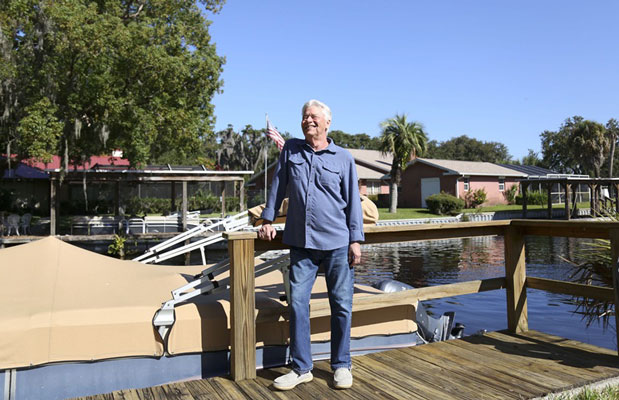
PHOTO: Air Force Veteran John Schultz smiles as he reflects on how far he has come since quitting smoking and taking back control of his health.
Hansraj Raghunandan is the Public Affairs Specialist for Orlando VA Healthcare System