
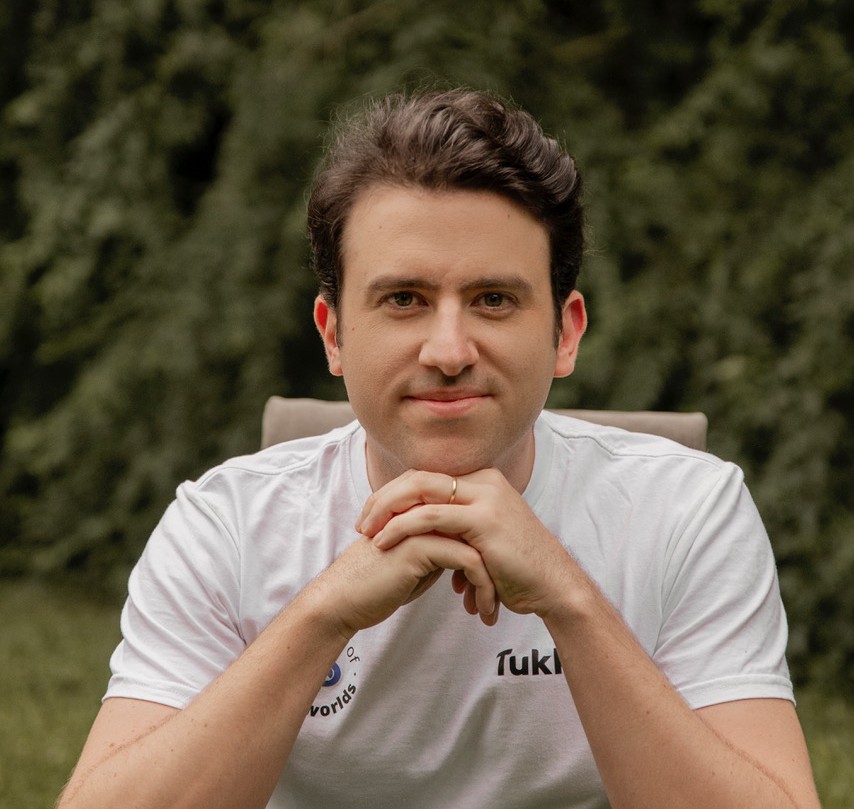
At his core, Ramiro Roballos is a realist. For that reason, he didn’t really expect Tukki to make it past the first round of the 43North shark tank-style pitch competition in New York. A thousand startups applied. Five were chosen. Tukki – the immigration platform he co-founded with CTO Saveliy Vasilev – ended up as one of them.
That moment marked the end of a two-year push to build an immigration service that actually works for the people who need it most.
“This year is going to end up a bit more than 3x versus last year,” Roballos, Tukki’s CEO, [pictured above] told Refresh Miami. The team grew to about 30 people and revenue climbed fast enough to push the company into a new phase.
The path here started with a simple decision. Before scaling, make the product solid.
Tukki focused on direct-to-consumer cases first: entrepreneurs, tech execs, scientists, artists, anyone trying to secure a visa or green card without losing their mind in the process.
“We wanted to build the product and improve that and make sure we had a good experience,” he said.
As the product expanded, so did the user base. What began with founders and tech workers widened to include senior hires at major tech firms, corporate employees seeking H-1Bs, and people moving through complex green card pathways. “The more visas you add, the more segments you add,” Roballos said.
And all of this happened in a climate where immigration rules shift with little warning. He described weekends spent fielding calls from anxious clients after sudden policy changes. One update dropped on a Friday left a client unsure if she should go ahead with her wedding because she didn’t know if she’d be let back into the U.S. “She was telling me, what do I do? Do I cancel my marriage? Do I go back?” he said. The answer didn’t become clear until the next day.
Even routine consulate visits feel different now. “You see people way more worried,” he said. Interviews that once lasted minutes can stretch far longer. Tukki responds by treating precision as the baseline. Anything less isn’t an option.
AI has become a major part of Tukki’s stack, though Roballos approaches it with realism.
“It’s much better than most normal people think and way worse than the tech CEOs sell,” he said. Tukki uses AI to reduce repetitive work and catch errors, but attorneys and paralegals stay closely involved. “I don’t need it to be a hundred percent,” he said. For Tukki, the edge comes from combining smart tools with experienced people – not replacing one with the other.
That approach helped Tukki stand out in the 43North process. Roballos was struck by how personal the experience felt. “Colleen [Heidinger], who is the president of the organization, took a flight from Buffalo to Miami just to have coffee with me for two hours,” he said. That level of effort and engagement showed him the program meant business.
The $1 million investment brings Tukki’s total raise to just under $2 million, with the company staying lean by design, in Roballos’s view.
“When you have a lot of money, there’s a big temptation of wasting that money,” he said. But now that the product is proven, the timing for fresh capital makes sense. Tukki plans to scale both its consumer and company-facing offerings, and, for the first time, put real muscle behind growth. Until four months ago, Roballos was the entire growth team. (That era is now over.)
Next year, Tukki expects to be far more visible, with more events, more outreach, and a much broader footprint. But the goal hasn’t changed: build the best immigration service in the U.S., one case at a time.
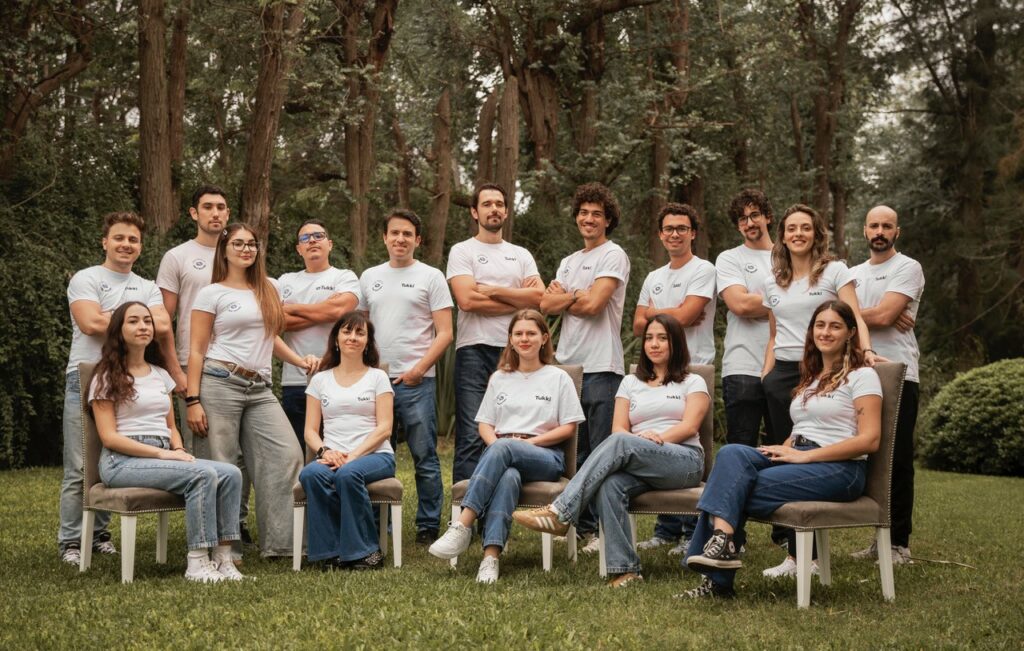 Some of Tukki’s team.
READ MORE IN REFRESH MIAMI:

I am a Miami-based technology researcher and writer with a passion for sharing stories about the South Florida tech ecosystem. I particularly enjoy learning about GovTech startups, cutting-edge applications of artificial intelligence, and innovators that leverage technology to transform society for the better. Always open for pitches via Twitter @rileywk or www.RileyKaminer.com.
Latest posts by Riley Kaminer (see all)