
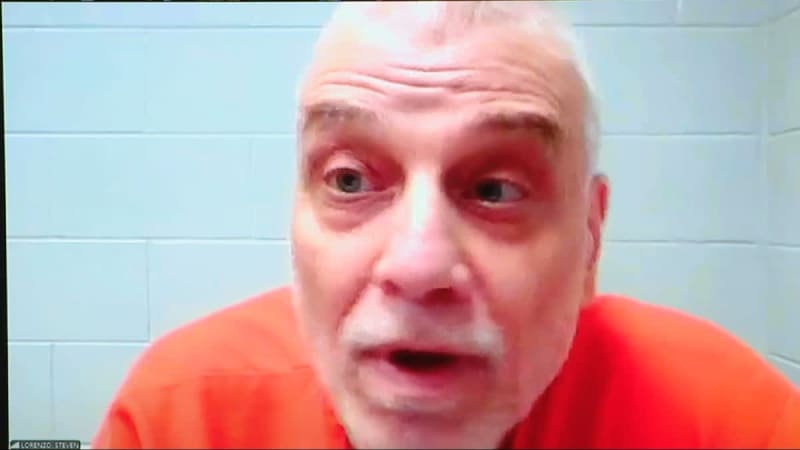
A judge granted Steven Lorenzo’s request to end all appeals of his death sentences Thursday, putting him closer to being executed for one of Tampa Bay’s most notorious murder cases.
Hillsborough Circuit Judge Michelle Sisco’s ruling came at the end of a two-hour court hearing that examined whether Lorenzo is mentally competent to get rid of the court-appointed lawyers who have represented him.
Lorenzo remained adamant that he wants to be executed.
“I have the right to decide my own fate,” Lorenzo said. “The prolonging this is not right.”
Amid a lengthy series of questions designed to ensure he understood what he was doing, the judge told Lorenzo she hoped he would let the appeals process play out.
“I don’t think it’s a good idea,” Sisco said. “I wish you would not do this.”
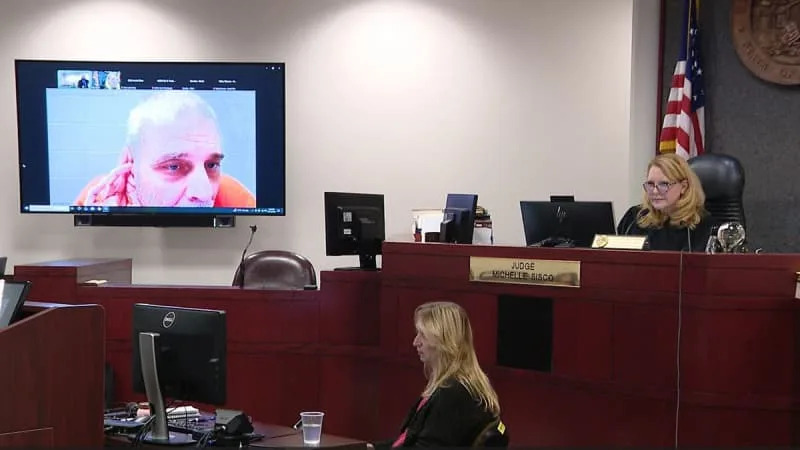
Lorenzo, 66, appeared by videoconference from Union Correctional Institution, northeast of Gainesville, where he is incarcerated on Florida’s death row. Wearing red and seated before a cinderblock wall, he nodded, chuckled and leaned in with a finger bending his ear at times as he listened closely to the proceedings.
Joshua Chakin, an attorney for a state agency that represents death row prisoners, had argued that Lorenzo might not be mentally competent to make such a decision. Among the factors he highlighted were reports that Lorenzo may have suffered a brain injury after a fall from a ladder more than 30 years ago.
But the court on Thursday heard from two mental health experts whose examinations in recent weeks found no concerns about his cognitive well-being. The judge likewise found Lorenzo to be mentally competent.
Harry Krop, a Gainesville neuropsychologist, reviewed voluminous case records and met in person with Lorenzo. He said he diagnosed Lorenzo with narcissistic personality disorder with antisocial traits, but found no evidence that Lorenzo is insane.
Krop said Lorenzo was cooperative with his evaluation. He found him intelligent and said he showed a good sense of humor.
Jennifer Rohrer, a Jacksonville forensic psychologist, said she had discussed the death penalty at length with Lorenzo. She found him very knowledgeable of the process. She said he spoke of a belief in the concept of “an eye for an eye.”
“He believed he should be punished for his choices he has made,” Rohrer said.
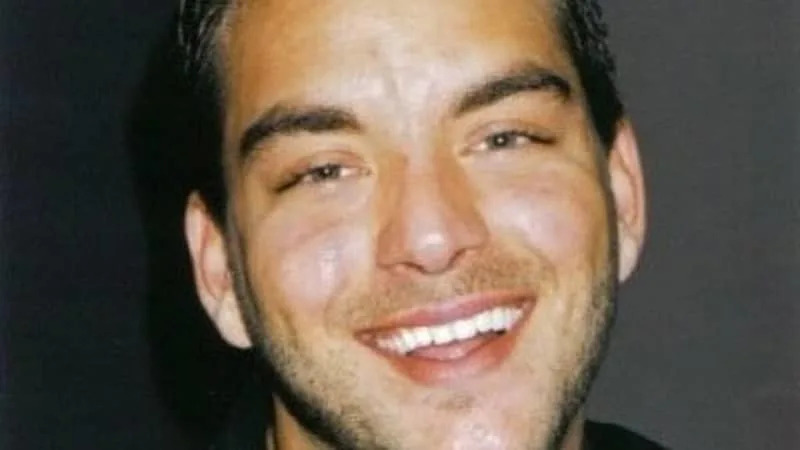
He received two death sentences in 2023 for the murders of Jason Galehouse and Michael Wachholtz. The men disappeared on back-to-back nights in 2003 after visiting the same Tampa nightclub.
Scott Schweickert, who was sentenced to life in prison for his role in the crimes, admitted in court that he and Lorenzo hatched a scheme to kidnap, enslave and sexually torture unwitting gay men. He described in detail how Galehouse and Wachholtz were lured to Lorenzo’s Seminole Heights home, where they were assaulted and killed.
The pair used an electric saw to dismember Galehouse’s body in Lorenzo’s garage, then disposed of it in trash bins throughout Tampa. His remains were never found. They abandoned Wachholtz’s body in a West Hillsborough apartment complex.
The killings and disappearances of other men in Tampa Bay stoked fears of a serial killer preying on the LGBTQ+ community.
Lorenzo, who was charged with the murders of Galehouse and Wachholtz in 2016, represented himself in court for several years, eventually pleading guilty and saying he wanted the death penalty.
He allowed public defense lawyers to represent him in a routine appeal. But after the Florida Supreme Court upheld the his convictions and death sentences, he asked to discontinue his post-conviction representation.
In court Thursday, the mental health experts discussed Lorenzo’s spirituality. He has expressed a belief in reincarnation, saying his spirit will live on after he dies.
Rohrer said Lorenzo had commented that once his post-conviction proceedings stop, he would possibly not be executed for as long as 10 years.
But Judge Sisco warned Lorenzo that if he abandoned his post-conviction legal claims, his convictions and sentences would become final. That, she said, meant the governor could sign a death warrant for him at any time.
Sisco, who handles all post-conviction matters in Hillsborough County, noted that this year alone, she has seen two death warrants — for Glen Rogers and Samuel Smithers. Both were executed.
“Just anecdotally, it appears to me that the governor’s office may be speeding up the signing of these death warrants,“ the judge said. ”And you need to be aware of that.”
“Yes,” Lorenzo said. “I am aware of that.”