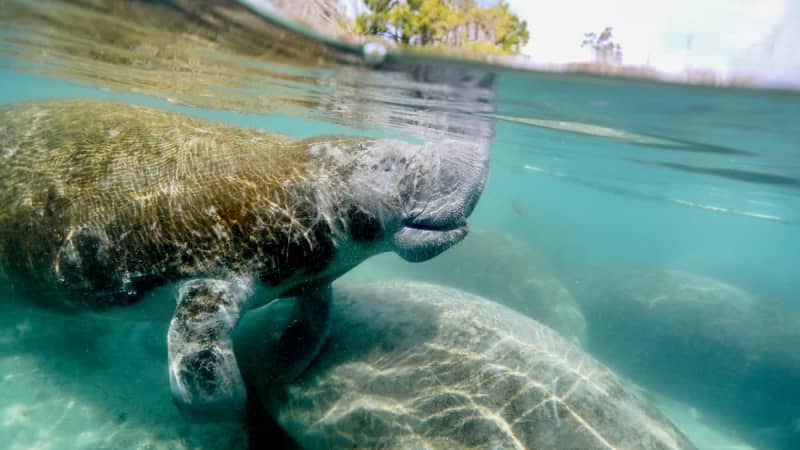
After starving manatees washed up dead in the Indian River Lagoon, the Tampa Bay Times wanted to understand what the crisis signaled about Florida’s waters.
Reporters uncovered a grim picture: Hundreds of waterways are dangerously polluted and many were getting worse or no better over roughly two decades. Millions of pounds of pollution from development and agriculture — two of the state’s dominant industries — overloads waterways from Tallahassee to Miami. Dirty water fuels algae blooms that destroy seagrass and leaves residents and tourists at risk of severe health problems.
Environmental protections aren’t working, undercut by policies that favor big business over nature. Florida leaders have repeatedly declined to implement rules that would help the environment, wasting critical time as waterways suffer.
Here are six steps that experts and environmentalists say state leaders could take to better protect nature and people’s health.
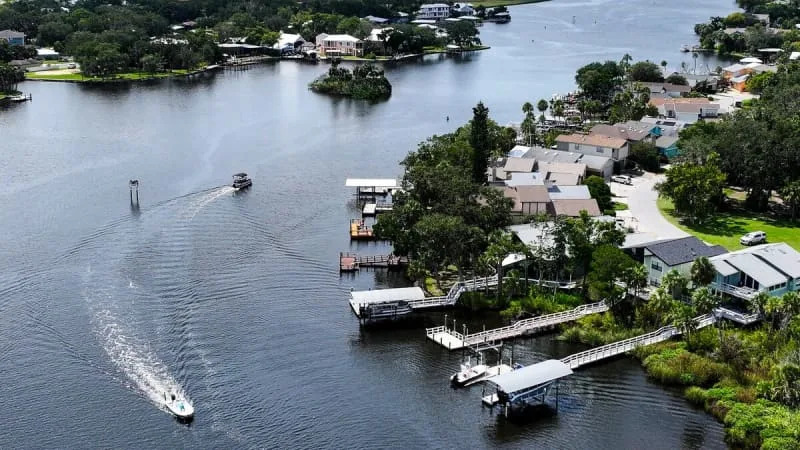
Scientists and regulators have repeatedly recommended that lawmakers mandate routine inspections of septic systems, which are a source of millions of pounds of pollution around Florida springs.
Such a requirement would help spotlight broken systems and prevent some nitrogen and phosphorus pollution, experts say.
In 2008, a Florida Department of Health report declaredthat a mandatory inspection program“would result in greater environmental and public health protection.”
Lawmakers passed a bill in 2010 to require regular inspections, but they rolled back the measure — with the support of homebuilding and real estate lobbyists — before it took effect.
Nearly a decade later, a panel of scientists convened by Gov. Ron DeSantis recommended an inspection program. But a signature environmental bill passed by the Legislature in 2020 again failed to include a requirement.
Elizabeth Southerland, a retired U.S. Environmental Protection Agency official who worked on water quality standards, called the lack of inspections “unbelievable” in a state like Florida, where sandy soils let pollution pass into aquifers that feed rivers and springs.
“If you’ve got a failing septic tank, that groundwater is easily going to get contaminated,” she said.
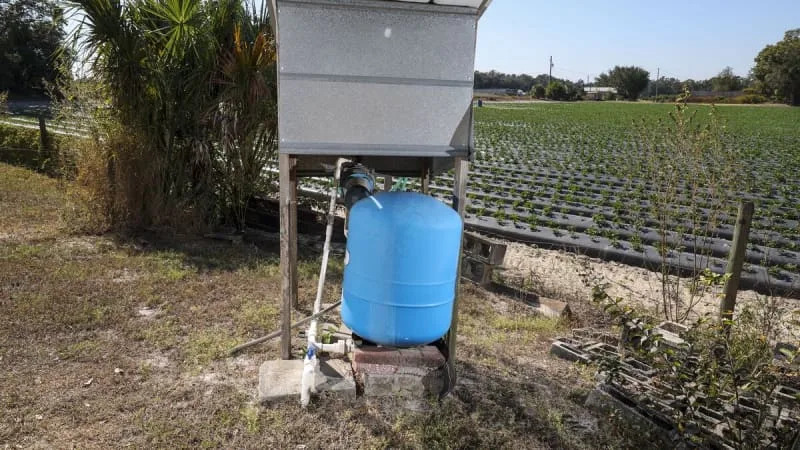
Florida leaders are supposed to verify that the state’s recommended methods for controlling pollution on farms are effective. The techniques are called best management practices.
While environmental officials have signed off on many of these practicesbased partiallyon reviews of past research, they haven’t tested to prove that all the methods work across Florida, the Times found.
“Back when we were writing the law, everyone agreed we needed to do this,” said Eric Livingston, who formerly served as the chief of watershed management for Florida’s environmental agency. “It’s in the law. It’s supposed to happen. It hasn’t.”
State leaders should set a deadline to force regulators to act, he said.
“They’ve had 20 years,” Livingston said. “We think some things might work. But nobody’s proved it yet.”
State officials spend millions of dollars each year helping growers implement best practices.
“You have to monitor and verify in order to know if it’s successful,” said former Department of Environmental Protection Secretary Mimi Drew. “If it isn’t working, it’s a waste of money.”
Florida leaders have updated rules in recent years for how builders and landowners must reduce runoff pollution in urban areas.
But those measures do little to address the hundreds of thousands of acres of development constructed under old policies that didn’t eliminate enough nitrogen and phosphorus runoff, experts say.
“One of our biggest qualms with the new rule is that it wouldn’t have any retroactivity whatsoever,” said Jen Lomberk, who leads the conservation group Waterkeepers Florida. “Those systems are still going to continue to pollute waterways across the state.”
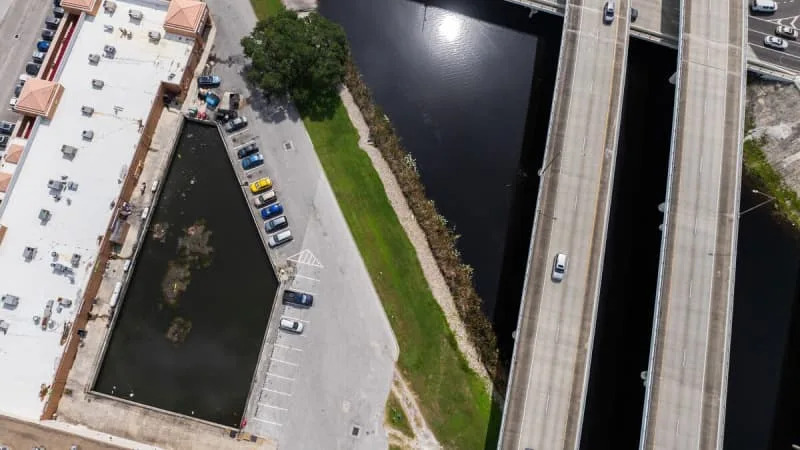
Experts say retrofitting old subdivisions and shopping plazas is difficult and costly. But state leaders must demand — and invest in — improvements wherever possible.
In some areas, providing better treatment may mean setting aside land for holding stormwater, rather than adding more houses and office buildings.
Ed Sherwood, executive director of the Tampa Bay Estuary Program, a government conservation organization, said treatment systems break down over time without maintenance. More testing near old stormwater ponds could reveal “eye-opening” results aboutthe failure to eliminate enough contamination, he said.
An estimated 12% of Floridians use wells that aren’t subject to the same oversight as major public drinking water systems.
Health officials have a limited Well Surveillance Program but don’t test all private wells in the state, leaving homeowners to monitor pollution on their own.
Experts say leaders can do more to make residents aware of the importance of sampling — and of the state’s assistance program.
The Times found at least 3,000 private wells since the 1980s have had water with nitrates above the level the federal government considers safe in public drinking water. Nitrates can cause a lethal illness in infants called “blue baby syndrome,” and newer research has suggested links to other medical issues, including cancer and certain birth defects.
Florida provides financial help for property owners after officials identify pollution, including paying for filters, bottled water or connections to public drinking systems. The state lists its wells program online and recommends homeowners test their water at least once a year.
With so many residents reliant on private wells, it’s essential for Florida leaders to do all they can to increase testing rates, said Gabriel Lade, an applied economics professor at Ohio State University. Across the country, many well owners don’t test their water.
Lade said he’s found public investment makes a difference. A study he worked on in Iowa found that directly sending test strips, information about pollution risks and contact information for a free state sampling program helped boost testing.
The state’s online health guidance doesn’t describe all of the most severe dangersfrom contaminated well water and pollution-fueled algae blooms.
A state fact sheet on nitrates focuses on the risk of “blue baby syndrome” and says: “No proof of a link to cancer from nitrates in drinking water exists.”
That advice is out-of-date and insufficient, experts said. A growing body of science has tied nitrates to risks for adults, not just infants, including potential connections to colorectal cancer and thyroid disease. Such research has prompted Minnesota and Wisconsin to warn residents of the possible threat.
“We understand that this issue is important for many of our communities, and the emerging health effects associated with nitrate in drinking water should be acknowledged,” Christopher Schaupp, an environmental toxicologist at the Minnesota Department of Health, said in a statement to the Times.
Florida’s guidance on toxic red tide and blue-green algae, meanwhile, emphasizes short-term effects such as coughs and nausea.
Earlier this year, the Florida Department of Health told the Times: “Long-term health impacts of toxin exposure need further research.” The state is funding some of that work.
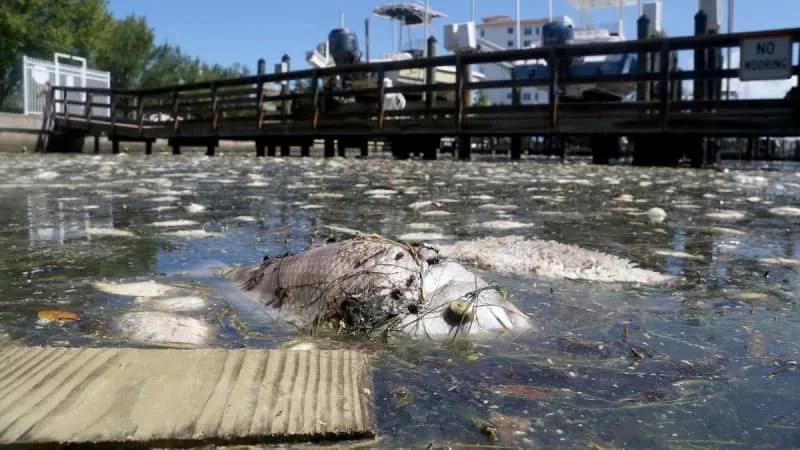
Times reporters spoke to people who suspected toxic algae made them suffer symptoms, including breathing trouble and hearing loss, for weeks or months. They said they hadn’t understood the extent of their risks.
A local attorney, Jeffrey Hensley, said he lost hearing in one of his ears after going out on his boat during red tide.
“The awareness isn’t there,” Hensley said. “It wasn’t there for me, and I consider myself an educated individual.”
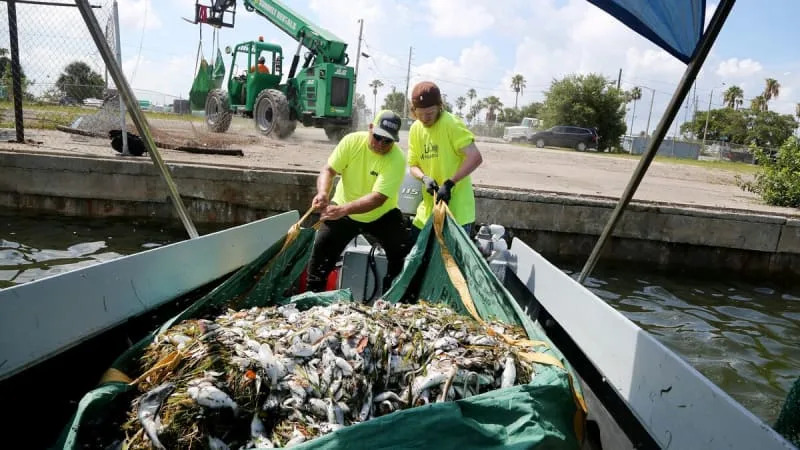
Florida was once full of wetlands to absorb rain that today flows off concrete into streams and bays. Development has rapidly replaced untamed land. Runoff spreads pollution from fertilizer, human and animal waste.
Scientists and engineers say natural land acts like a sponge and serves as a tool in the fight against contamination. Lawmakers can help by aggressively funding efforts to preserve more acreage — especially in places connected to vital waterways.
“If we figure out a way to live with water,” said Maya Burke, assistant director of the Tampa Bay Estuary Program, “that is going to have benefits for wildlife, for water quality and for all of the things that make Florida a beautiful place to live.”