
Cooley Law School holds winter commencement for Tampa campus
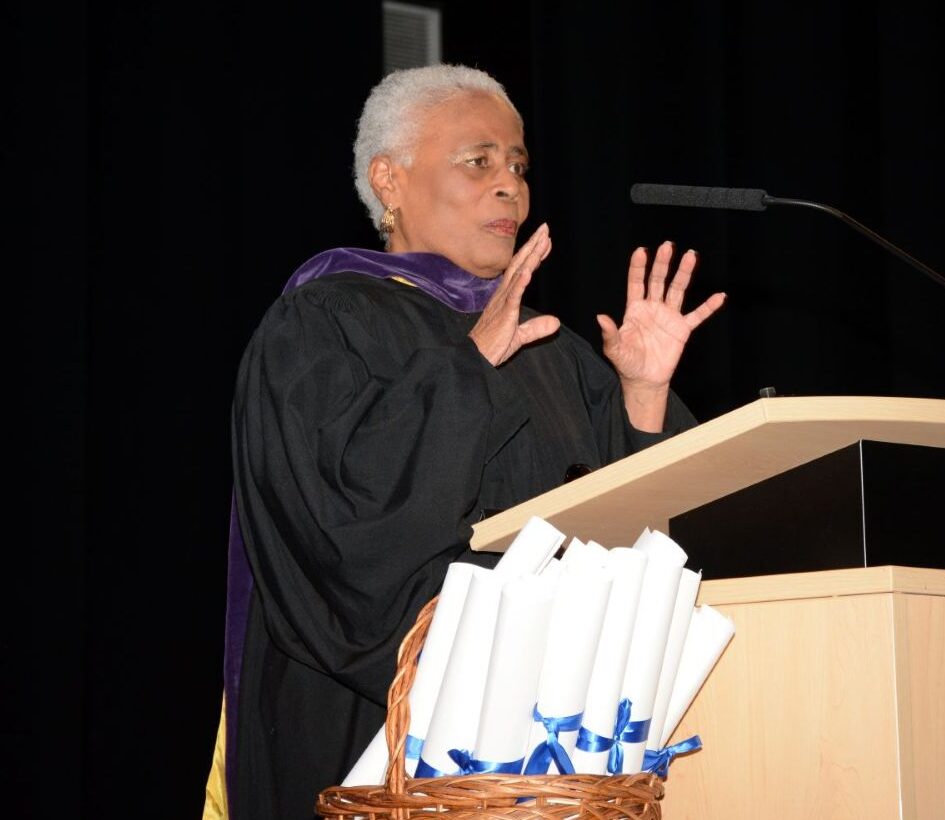
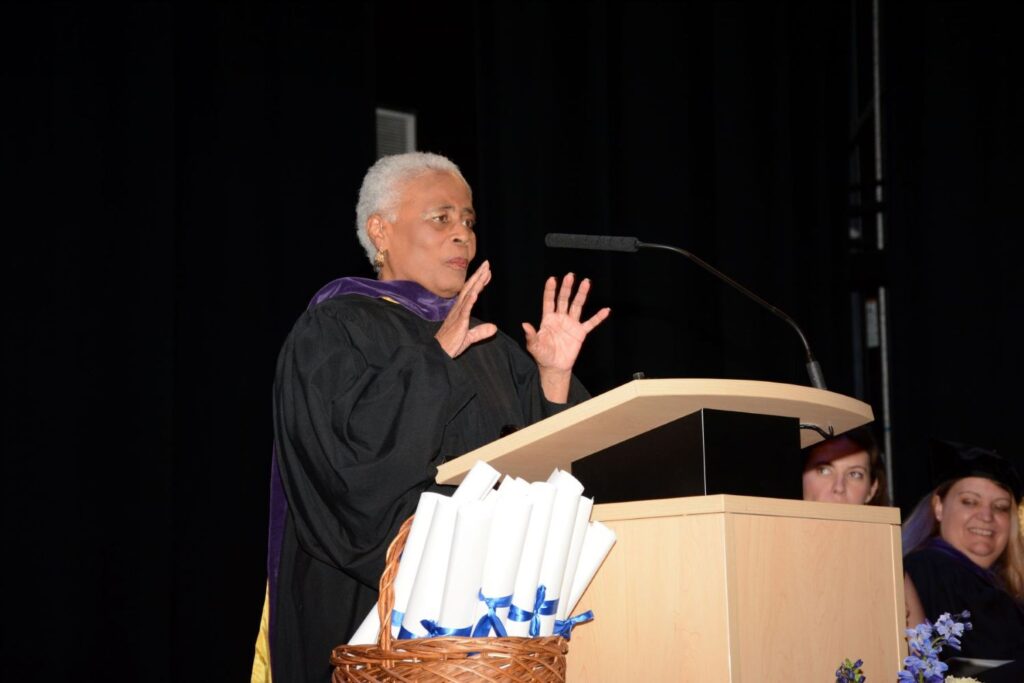
Retired Florida Supreme Court Justice Peggy Quince delivered the keynote speech during Cooley Law School’s commencement ceremony for its Tampa campus at the New Tampa Performing Arts Center on December 16.
Cooley Law School’s Tampa campus recently held its winter commencement ceremony, presenting 31 juris doctor degrees to the graduates of its William Henry Moody Class and Mahlon Pitney Class.
Retired Florida Supreme Court Justice Peggy Quince delivered the keynote speech and graduate Tory Sanders, Jr., was chosen by his peers to give the class’s farewell remarks.
“[W]e enter a world where we are the guardians of the rule of law and where we will often be the voice of reason in the room,” Sanders said. “In the years ahead, people will come to us in their most vulnerable moments, trusting us with their freedom, their families, their futures. They will ask us to stand up for them when they cannot stand alone… Not only are we professionals, we are servants.”
In her keynote address, Judge Quince spoke about how the graduates can help “continue to make law a great profession.”

The classes graduating were named in honor of two 19th century U.S. Supreme Court justices, Mahlon R. Pitney and William H. Moody.
“I am asking you graduates that when you get ready to take the oath of admission, don’t look at it as just something you have to do in order to become a lawyer,” said Judge Quince. “Look at it as the promises you are making to your communities, to yourselves, to your families – the promises you are making to be good and true citizens, to honor the Constitution, to honor the rule of law, and to make sure that there is, in fact, equal justice for all in this country… [M]ake it a reality in your communities, in this state, and across this nation.”
Each Cooley Law School class is named for a distinguished member of the legal profession. The graduating classes honored U.S. Supreme Court Justice Mahlon R. Pitney and Justice William H. Moody.
Justice Moody graduated from Harvard University with honors in 1876. His formal legal education consisted of only one term of lectures at Harvard Law School. After passing the bar exam, he opened his own law office in Haverhill, Massachusetts. In 1890, Moody was elected as district attorney for the eastern district of Massachusetts. Five years later, he was elected to the U.S. House of Representatives and served four terms. During this period, Moody met and befriended future president Theodore Roosevelt. Shortly after Roosevelt was inaugurated in 1901, he appointed Moody as secretary of the Navy. Roosevelt appointed Moody Attorney General in 1904, and in June 1906, Roosevelt nominated Moody to the U.S. Supreme Court. During his four years on the bench, Justice Moody wrote 67 opinions, including five dissents.
Following Justice Pitney’s graduation from the College of New Jersey (now named Princeton) in 1879, he studied law with his father, a well-known attorney and judge. In 1882, he passed the New Jersey bar and practiced law for 12 years. In 1894, he was elected to the U.S. House of Representatives. After two terms, Pitney returned to New Jersey and was elected as a state senator and quickly became the New Jersey Senate president. Pitney served as a justice of the New Jersey Supreme Court for seven years, serving as chancellor, then the highest position in New Jersey’s court system until 1912 when President William Taft nominated Pitney for the U.S. Supreme Court. During his 10 years on the Supreme Court, Pitney consistently supported worker rights, such as workers’ compensation and minimum wage laws.