
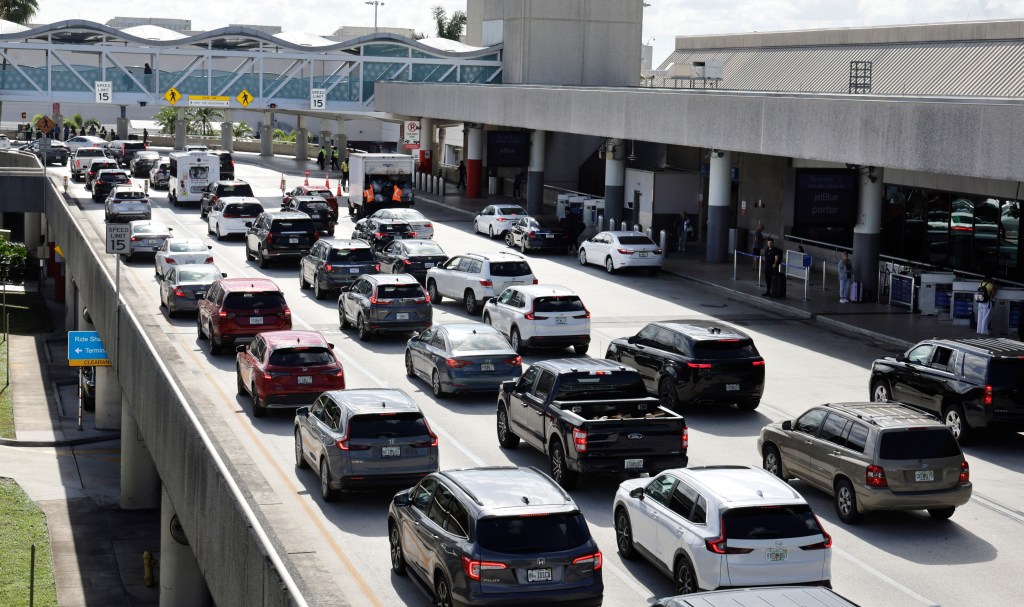
For more than 40 years, South Florida was our home. We raised our children there, welcomed grandchildren there, and built a lifetime of memories in a region that is as vibrant as it is challenging. Three years ago, we moved to North Carolina for semi-retirement, but our ties to Miami-Dade and Broward counties remain strong. So this Thanksgiving, we returned for a family visit — only to be reminded, within hours, of the very frustrations that drove us away.
Anyone who has navigated South Florida travel during the holidays knows to expect a certain level of chaos. Our delayed rental car pickup — despite being Hertz #1 Gold members — was annoying, but forgivable. Even the aggressive highway driving, complete with horn blasts and a middle-finger welcome, felt like the familiar, hectic rhythm of a place we once knew intimately.
 David M. Klein resides in Weaverville, N.C., and lived in South Florida for more than 40 years. (courtesy, David M. Klein)
But what happened next illustrates a deeper problem, one that goes beyond holiday stress or crowded roads. It speaks to a culture of predatory business practices that too often preys on residents and visitors alike.
After parking in a public lot near our hotel, we followed instructions precisely: entered our payment information, name, address, and the rental car’s license plate number, and paid for two hours. When we returned — with half an hour still remaining — our car had vanished.
A call to the number posted on the lot yielded an astonishing explanation: We had mistyped a single character on the rental car’s plate, and for that, our car had been towed. Not because we hadn’t paid. Not because our time had expired. But because of a clerical error in a system that offers no grace, no warning and no human oversight — unless you count the man allegedly watching the lot from a nearby car, ready to pounce on the smallest mistake.
To retrieve our vehicle, we had to take an Uber to a tow yard owned, as it turns out, by the same individual who owns the parking lot. The police told us our only recourse would be small-claims court, which we fully intend to pursue.
The price tag for our first two hours in South Florida: $232 — $30 for parking, $22 for the Uber, and $180 in towing fees.
The price tag for the experience: a stark reminder of how certain corners of South Florida have become inhospitable not just to tourists, but to former residents who once called it home.
This is not merely an inconvenience; it is part of a broader pattern. The hotel staff informed us that this happens regularly. These kinds of predatory towing tactics are not unique to one parking lot or one owner — they are symptoms of a regulatory environment that has allowed such practices to thrive.
South Florida is a place of extraordinary beauty, diversity and energy. It deserves better than to be defined by the worst of its bureaucracy, its driving habits or its opportunistic business schemes. But reputations don’t form in a vacuum. They are shaped by thousands of small interactions — like ours — that leave people feeling exploited rather than welcomed.
We arrived hoping for a warm homecoming. Instead, we were greeted with a reminder of why we left.
David M. Klein resides in Weaverville, N.C., and lived in South Florida for more than 40 years.