
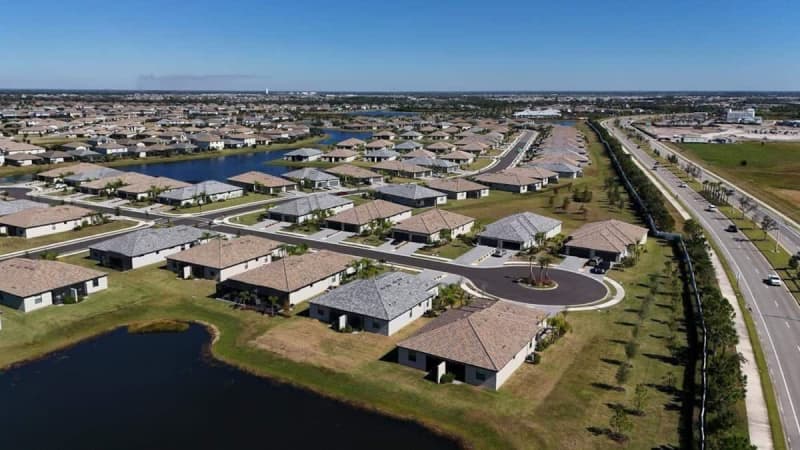
In 2026, Florida lawmakers may revise a controversial law that significantly undermined local control over development and growth.
Legislators said they designed Senate Bill 180 as a hurricane recovery helper, meant to make building back easier for residents after 2024’s devastating hurricane season. The bill did this by banning cities and counties from making new zoning decisions that could be considered “more restrictive or burdensome.”
But that vague wording has allowed developers to challenge virtually any local rule change that seeks to stop, slow down or even put guardrails on growth.
Now, the Florida senator who sponsored SB 180 is proposing fixes to some of the bill’s most controversial aspects in the upcoming 2026 legislative session.
State Sen. Nick DiCeglie, R-St. Petersburg, recently filed SB 840, a bill that aims to clarify and narrow the scope of SB 180 while striking parts of the law entirely.
The new bill would shorten a ban on local governments creating more restrictive development rules, and, for future storms, would prohibit cities and counties only from imposing tougher codes on storm-damaged properties.
Local officials who have faced major roadblocks from SB 180 are praising DiCeglie’s new bill. Home rule advocates are optimistic but question whether the bill goes far enough to restore local control. Development industry representatives declined to comment on the bill but said their industry has been an unfair target of local regulations.
Cities and counties across Florida have felt the effects of SB 180 since Gov. Ron DeSantis signed it into law in June.
As a result, local governments have had to drop or pause a wide variety of “smart growth” policies meant to ensure development happens responsibly, from environmental and flood protections to short- and long-term planning of where building is allowed.
SB 180 also retroactively nullified some local development rules already on the books. And it renews home rule restrictions for one year whenever a new hurricane hits — perpetually tying local officials’ hands and paving the way for more intense and unchecked development across the state.
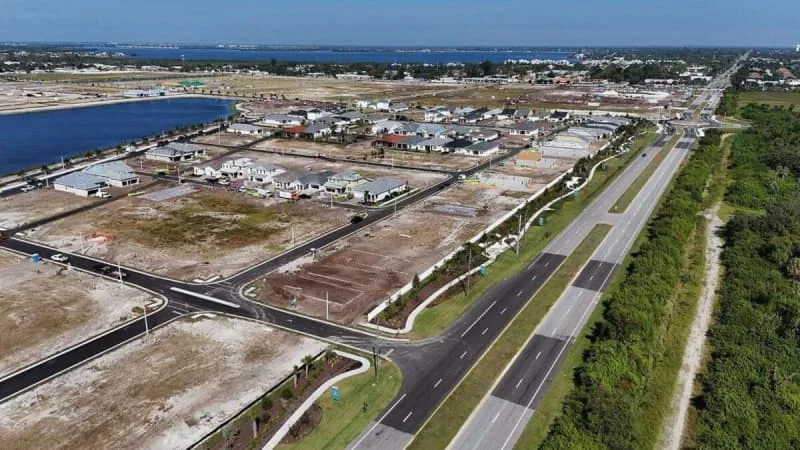
The DeSantis administration further reinforced a pro-development interpretation of the law this year, siding with homebuilders over cities and counties in several clashes over SB 180. Some local officials even expressed fear that DeSantis would remove them from office if they were found to violate the law — or the wishes of developers.
The law’s far-reaching impacts have prompted an outcry from Florida residents, local officials and home rule advocates, who argue that locals should have the right to plan the future of their cities and counties. Their concerns include balancing development with conservation, storm resiliency, safety and other quality-of-life issues.
DiCeglie’s new bill, SB 840, proposes the following changes to SB 180:
•Keeps in place a temporary ban on “more restrictive and burdensome” planning and land use changes for local governments impacted by hurricanes Debby, Helene and Milton, until June 2026.
•For future hurricanes, updates SB 180’s one-year block on new building codes so that it would only apply to properties being rebuilt after hurricane damage — leaving local governments free to pass tougher rules for new development.
•Strikes several mentions of “restrictive and burdensome,” the phrase that gave developers and state agencies wide latitude to challenge local authority over planning and building. The phrase remains in one section of the bill, but with more caveats.
•Eliminates some of the provisions that allow developers to automatically challenge and sue local governments over regulations they don’t like.
•Narrows the geographical impacts of SB 180. Restrictions would be triggered for cities and counties within 50 miles of future hurricane disasters rather than 100 miles.
•Provides exceptions for local government policies that address stormwater, flooding, drinking water and sewer systems.
SB 840’s passage is far from guaranteed. Many bills do not gain enough support to survive the legislative session. Those that do often are drastically amended before a final adoption vote, and they face a potential veto by the governor.
The governor’s office did not respond to a request for comment about the proposed legislation.
Local government officials and home rule advocates are optimistic about the new bill.
“True to his word, Florida Senator Nick DiCeglie just filed a meaningful fix to the issues local governments have with last year’s SB 180,” Manatee County Commissioner George Kruse said in a social media post. “This new SB 840 is a great amendment to last session’s problematic bill.”
“Now let’s get a House companion bill and get this across the finish line so we can all start refocusing on smart, sustainable growth management,” added Kruse, a vocal critic of SB 180’s restrictions on local government officials.
In Miami-Dade County, officials were forced to halt implementation of a new rule designed to help with flooding and runoff of polluted water into ailing Biscayne Bay, known as the impervious surface ordinance, due to SB 180 concerns.
However, the county said it is hopeful that the new legislation will help address the problem.
“The current draft of SB 840 addresses many of the County’s concerns related to SB 180. The County will continue to monitor the legislation during the legislative session and is optimistic that the final bill will resolve the issues raised by the County and other municipalities,” wrote Lourdes Gomez, head of the Miami-Dade’s Department of Regulatory and Economic Resources, in a statement.
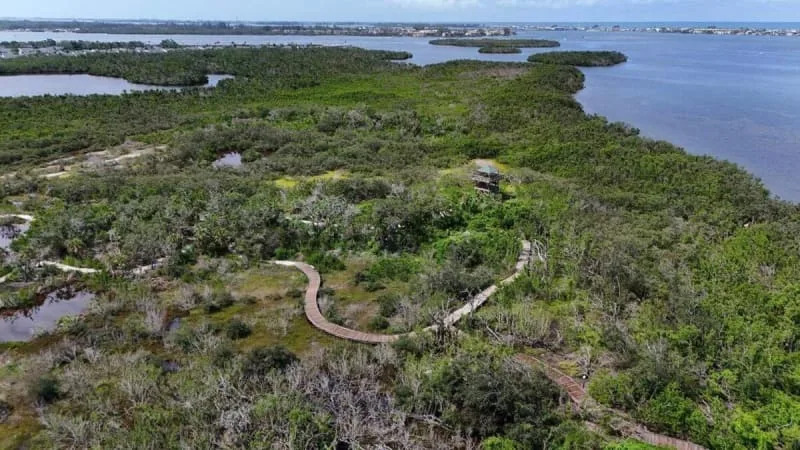
However, some say it doesn’t go far enough to undo the damage caused by SB 180.
“This bill is an encouraging first step, and we appreciate Senator DiCeglie for bringing it forward in good faith. But there is still more work to do to fully restore local planning authority and protect Florida’s communities from the sweeping effects of SB 180,” leaders of smart growth advocacy group 1000 Friends of Florida said in a recent newsletter.
“(The new bill) leaves intact the retroactive provisions of SB 180, which remain a major concern for communities still navigating those impacts,” the organization said.
Kim Dinkins, director of policy and planning for 1000 Friends, said she hopes to see lawmakers fine-tune the bill during session and remove some of the home rule restrictions for communities hit by last year’s storms.
“There are a lot of communities that are stuck not being able to implement these policies that they’ve been working on for years,” Dinkins said. “It’s really harming the ability of local governments to do the work that they’re authorized to do.”
Reporters reached out to several Florida homebuilders who have sued local officials over alleged SB 180 violations. Specifically, a lawsuit filed in Manatee County by the Freedom Housing Alliance protests a recent hike in impact fees — fees paid by developers to support infrastructure needs caused by growth.
Jon Mast, CEO of the Suncoast Builders Association, declined to comment on the specifics of the new bill or the lawsuit. But, he said, developers should not be punished for poor local government planning.
“What I can state unequivocally is that infrastructure capacity is the result of long-term public planning and investment, and the building and development community should not be held financially or legally responsible — or singled out to bear the consequences — for shortcomings that stem from decisions made years, and often decades, before many projects were proposed or approved,” Mast said in an email.
Developer Pat Neal, who is also a plaintiff in the lawsuit, and Carlos Beruff, whose company is a plaintiff, did not respond for requests to comment.
Two high-profile lawsuits have been filed over the impacts of SB 180 — one from more than a dozen local governments, and another from several residents represented by 1000 Friends of Florida.
Recently, both cases were consolidated. A circuit judge in Leon County this month declined to freeze SB 180 but allowed a lawsuit against it to proceed.
In response to the lawsuits, the state of Florida has argued that no one has proven any immediate harm from the law, and that any harm the governments or residents have suggested comes from the homebuilders suing them, not the state for enforcing the law.
The state is asking the judge to block the injunction request and dismiss the case.
Fixing SB 180 isn’t the only concern for home rule advocates. They say other new bills filed for next year’s legislative session could take more planning power away from locals and hand it over to Tallahassee and developers.
Of particular concern is HB 299, known as the “Blue Ribbon Projects” bill.
The bill would allow massive developments of 10,000 acres or more to bypass local development rules and public hearings. If a development project met certain standards set by the state, local officials would be required to approve it.
Those standards include at least 20% affordable housing units and at least 60% of a project’s land set aside as “reserve area” for conservation purposes.
“Blue Ribbon Projects are intended to balance environmental stewardship with the need for development to provide for future growth,” the bills’ sponsors say.
But smart growth advocates say the bill gives developers “extraordinary authority” to shape the future of Florida’s remaining natural areas.
“They’re saying, ‘Bring us a plan and we will let you develop this anywhere.’ It is an ultimate sprawl bill,” Dinkins said.
The bill passed its first Florida House committee stop this month.