
Home » Airline News In America » San Francisco Joins Orlando, Chicago, Phoenix, Kahului, New York in a Coast-to-Coast Sky-High Scramble as Airlines Battle for Supremacy over the Nation’s Busiest Runways, Flight Statistics Reveal the Changing Rhythms, From Quiet Inter-Island Hops of Maui to the Frenetic Financial Shuttles of the Midwest
Published on
December 24, 2025

The American sky is currently a high-stakes battlefield where airlines fight for every inch of airspace. New flight statistics reveal a fascinating shift in how we travel across the country. From the bustling financial hubs of New York and Chicago to the sun-drenched terminals of Phoenix, the competition is heating up. Major carriers are now pouring resources into high-traffic corridors to meet surging demand. Travelers are flocking to the tech-driven streets of San Francisco and the family-friendly gates of Orlando. Meanwhile, the essential inter-island routes in Kahului continue to serve as a vital lifeline for the Pacific. These shifting rhythms show a nation on the move like never before. Airlines are adjusting their fleets and schedules to stay ahead of the curve. Consequently, this coast-to-coast scramble is redefining the modern travel experience. Every takeoff tells a story of economic recovery, changing lifestyles and a relentless pursuit of the horizon.
The Transcontinental Crown: New York to Los Angeles
At the very top of the mountain sits the legendary route between New York JFK and Los Angeles. In 2025, this 2,475-mile stretch has claimed the title of the busiest domestic route in the nation. With a staggering 3.4 million scheduled seats, this corridor has seen a 9% capacity growth compared to 2024. It is the definitive “Executive Express,” serving as the primary link between the world’s financial capital and the global entertainment hub.
Airlines like American, Delta and JetBlue are engaged in a relentless struggle here. They are not just selling tickets; they are selling luxury. Because this route is so vital, carriers are deploying their most advanced aircraft and premium “lie-flat” cabins. Even though total capacity remains about 20% lower than the pre-pandemic peaks of 2019, the demand for high-end travel keeps this runway humming with activity.
The Financial Bridge: Chicago Meets the Big Apple
While JFK handles the glitz, New York LaGuardia (LGA) handles the grit of the business world. The route connecting LGA to Chicago O’Hare (ORD) has secured the number two spot for 2025. This “Financial Bridge” moves 3.3 million passengers, marking a 7% increase over the previous year.
Chicago serves as a massive mid-continental pivot point. For consultants, traders and corporate giants, this flight is a daily reality. The recent $8 billion renovation of LGA has transformed it from a cramped relic into a gleaming modern gateway. This infrastructure boost has made the high-frequency shuttle to Chicago more efficient than ever, proving that even in a world of digital meetings, the face-to-face handshake still drives millions of air miles.
The Golden State Corridor: San Francisco and Los Angeles
In the West, the battle for California is fiercer than ever. San Francisco is a key player in this drama. The route between Los Angeles and San Francisco ranks third in the nation with 3.3 million seats. For decades, this has been the “California Shuttle,” a short hop that connects the venture capital of Silicon Valley with the creative engines of Hollywood.
However, the numbers tell a story of a slow recovery. While capacity grew 5% this year, it is still 29% below 2019 levels. This gap suggests that while the tech-driven economy of San Francisco remains powerful, the travel habits of its workforce have fundamentally changed. Yet, despite the rise of remote work, the demand for travel into SFO remains a cornerstone of the American aviation industry.
The Magic Kingdom Connection: Atlanta and Orlando
Moving to the Southeast, the flight paths take on a different tone. The route from Atlanta to Orlando is the fourth busiest in the country, but it is one of the few to see a decline. Capacity on this leisure-heavy route dropped by about 7% this year.
Orlando remains the undisputed capital of family tourism. Every day, thousands of families funnel through Atlanta—the world’s busiest airport—to reach the theme parks of Central Florida. The drop in capacity doesn’t mean Orlando is losing its charm; rather, it suggests a market correction. After a massive post-pandemic surge in “revenge travel,” airlines are now fine-tuning their schedules to match a more sustainable level of demand for the Florida sun.
The Desert Boom: Denver and Phoenix
One of the most surprising success stories in the 2025 data is the rise of the Mountain-to-Desert corridor. The route between Denver and Phoenix has become a powerhouse. While many routes are still struggling to reach their 2019 numbers, this corridor is flying 23% above pre-pandemic levels.
Phoenix is no longer just a retirement destination; it is a booming tech and semiconductor hub. When you combine that with Denver’s status as the largest airport by land area in North America, you get a recipe for explosive growth. This 3.1-million-seat route reflects a massive demographic shift. People are moving to the “Sun Belt” and the airlines are following the moving vans with an unprecedented number of flights into Phoenix.
The Inter-Island Lifeline: Honolulu and Kahului
In the middle of the Pacific, aviation takes on a different form. The hop between Honolulu and Kahului on the island of Maui is a vital lifeline. It is the seventh busiest route in the U.S. for 2025, with 3.0 million seats.
For the residents of Hawaii, the flight to Kahului is essentially a city bus in the sky. It moves doctors, students and groceries between the islands. However, this route saw a 10% reduction in capacity this year. Part of this decline is a lingering effect of the tragic wildfires in Maui, which shifted the travel patterns of tourists. Despite this, the connection to Kahului remains one of the most frequent and essential flight paths in the world.
The Vegas Factor: Entertainment on the Wing
Las Vegas remains a primary destination for two of the top ten routes. The short flight from Los Angeles to Las Vegas and the trek from Denver to the “Silver State” both command millions of seats.
The route into Las Vegas is unique because it is one of the few where airfares have actually decreased. Fierce competition among low-cost carriers has pushed prices down, making a weekend trip from Chicago or New York to the desert more accessible. The “Vegas Factor” proves that Americans still prioritize play and airlines are more than willing to provide the lift to get them to the slot machines.
The Power of the Hubs: Why Certain Cities Dominate
The dominance of New York, Chicago and San Francisco is not accidental. These cities serve as the “hubs” of our national life. A hub airport like Chicago O’Hare or Atlanta Hartsfield-Jackson acts like a giant heart, pumping passengers to smaller cities and international destinations.
When an airline battles for supremacy in New York, they are fighting for the most profitable passengers in the world. When they increase capacity in Orlando, they are betting on the resilience of the American family’s vacation budget. This coast-to-coast scramble is a game of high-level mathematics, where billions of dollars depend on predicting where people want to be.
Changing Rhythms: Resilience and Evolution
The 2025 flight statistics reveal a nation in transition. We see a “New Normal” where business travel in Chicago and San Francisco is more focused and premium. We see a “Growth Surge” in the Southwest, with Phoenix leading the charge. And we see “Leisure Stability” in places like Orlando and Kahului.
Airlines are no longer just trying to return to 2019; they are building for 2030. They are dealing with aircraft shortages, rising fuel costs and a more demanding traveler. The fact that the JFK to LAX route can grow by 9% in a single year shows that the appetite for travel is not just back—it is evolving.
Conclusion: The Sky is the Limit
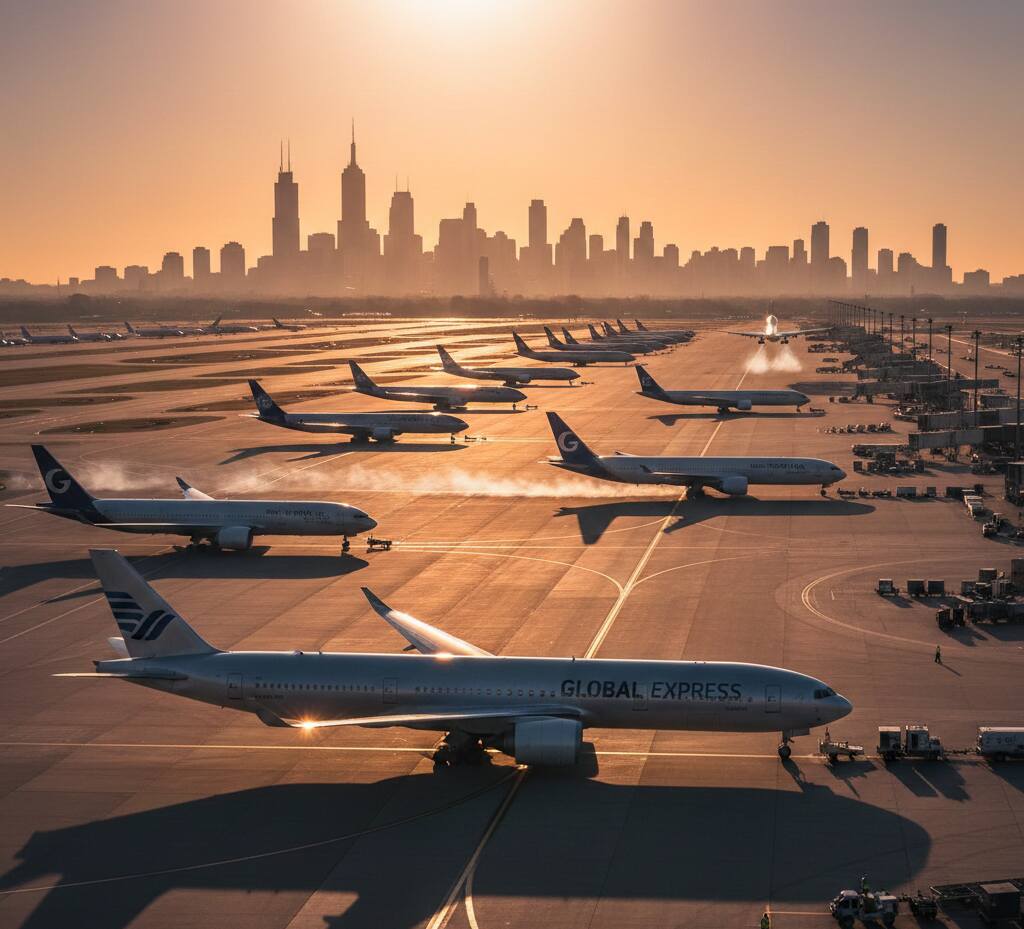
As we look at the busy runways of New York, the bustling terminals of Chicago and the scenic approaches into Kahului, it is clear that the American spirit of movement is stronger than ever. Whether it is a high-stakes meeting in San Francisco, a spring break in Orlando, or a tech conference in Phoenix, the airlines are working overtime to keep the nation connected.
This data provides a fascinating window into our collective behavior. It shows where we work, where we play and how we choose to spend our most valuable resource: time. The coast-to-coast scramble will continue and the battle for supremacy over the nation’s busiest runways is far from over.
According to the comprehensive research and data provided by OAG, these rankings represent the definitive pulse of the aviation industry in 2025. By analyzing millions of scheduled seats, OAG continues to be the primary source for understanding how the world moves through the clouds.
