
The descent into Dominica brings aircraft low over the Atlantic before a short turn inland, with rainforest-covered mountains rising close to the runway. There is little flat land at the coast, and the transition from air to ground is quick and direct.
That trip is now easier to schedule.
American Airlines has launched twice-daily nonstop flights between Miami and Dominica, expanding air service to the island during the peak winter travel season. The additional flights began December 18, doubling daily nonstop capacity from South Florida and strengthening Dominica’s presence in the North American market at a time of high holiday and winter demand.
The increase represents one of the most substantial recent changes to Dominica’s U.S. airlift. and comes after United just ramped up its own flights to the island.
More Capacity, Better Timing
Miami has long been the primary gateway for U.S. travelers to Dominica, but limited frequencies have often constrained planning, particularly during the winter months. With two daily nonstop flights now in operation, travelers have more departure options and improved same-day connections from cities across the United States.
For Dominica, the additional service supports winter occupancy and helps stabilize demand during the island’s busiest season. The move reflects sustained interest in Dominica among travelers seeking active, experience-driven trips rather than traditional resort-based vacations, one of the buzziest trends in travel right now.
What Travelers Come For
Much of Dominica is defined by its interior. Morne Trois Pitons National Park, a UNESCO World Heritage Site, covers a large portion of the island and includes rainforest trails, volcanic features, waterfalls, and river valleys. Visitors hike sections of the Waitukubuli National Trail, visit Trafalgar Falls, and spend time at hot springs located throughout the interior.
Along the coast, Dominica is known for snorkeling and diving, with volcanic reefs, steep underwater drop-offs, and areas of geothermal activity such as Champagne Reef. Offshore waters support a resident population of sperm whales, making whale-watching trips available year-round.
The island tends to attract travelers who plan their itineraries around outdoor activity and exploration rather than beach-centered resort stays.
Where to Stay
Dominica’s accommodations remain relatively low-density, shaped by terrain and by a tourism strategy that emphasizes smaller-scale development.
In Roseau, Fort Young Hotel & Dive Resort sits directly on the waterfront near the center of the capital. The historic property has evolved into a full-service resort, with ocean-facing rooms, a waterfront pool, and on-site amenities that make it a practical base for exploring the city and joining diving and whale-watching excursions.
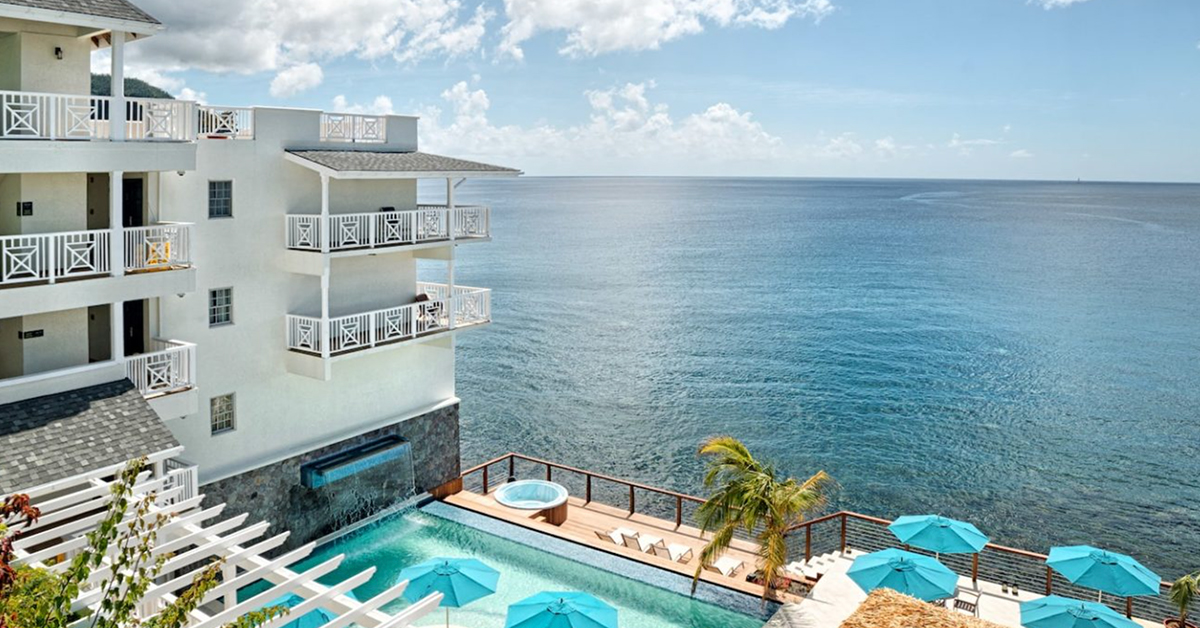
On the island’s west coast, Secret Bay offers a more private setting. Its freestanding villas are positioned along the hillside above the water and include open-air living spaces and private plunge pools. The resort focuses on privacy and personal service rather than a centralized resort layout.
Eating and Daily Rhythm
Food in Dominica reflects what is grown and caught locally. Fresh fish, root vegetables, herbs, and tropical fruit appear regularly on menus, from small roadside spots to hotel kitchens. In Roseau, casual restaurants and rum shops serve Creole staples such as callaloo soup and saltfish with provisions.
Evenings are generally low-key, with social life centered on small bars, local restaurants, and informal gatherings rather than structured nightlife.
Looking Ahead
The launch of twice-daily nonstop service from Miami gives Dominica greater flexibility at the exact moment when demand is strongest. The additional capacity supports holiday and winter travel while improving reliability for repeat visitors.
For Dominica, the expanded service strengthens access without altering the way the island is experienced. For travelers, it removes one of the remaining barriers to visiting one of the Caribbean’s most outdoor-focused destinations—without changing what draws people there in the first place.