
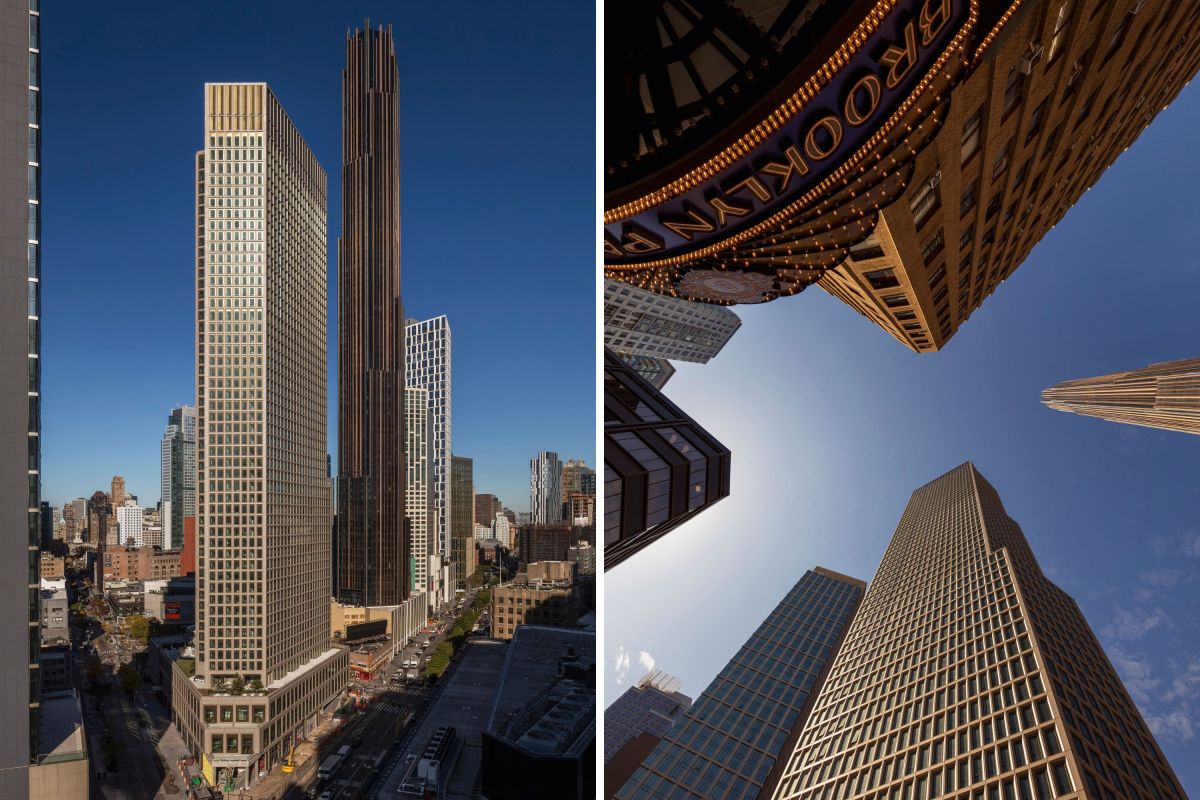
A striking new addition has joined Brooklyn’s skyline, towering over the crossroads where Fulton Street and Flatbush Avenue meet.
Completed late last year, The Brook is a 600‑foot, 52‑story skyscraper set in downtown Brooklyn’s Albee Square—an area increasingly defined by rapid development and bold architectural statements. With its sharp, tapered profile, the building draws comparisons to Manhattan’s iconic Flatiron Building, which is around 307-foot-tall. But, according to the design team, the resemblance is purely the result of the site itself.
“The Flatiron Building itself was not the inspiration—the inspiration was the flatiron-shaped site,” architect Carlos Cardoso, a partner at Beyer Blinder Belle Architects & Planners (BBB), told Newsweek. “The Brook is contextual to its site and to the crossroads of Fulton Street and Flatbush Avenue. That’s what led to its shape—it was site- and location-driven.”
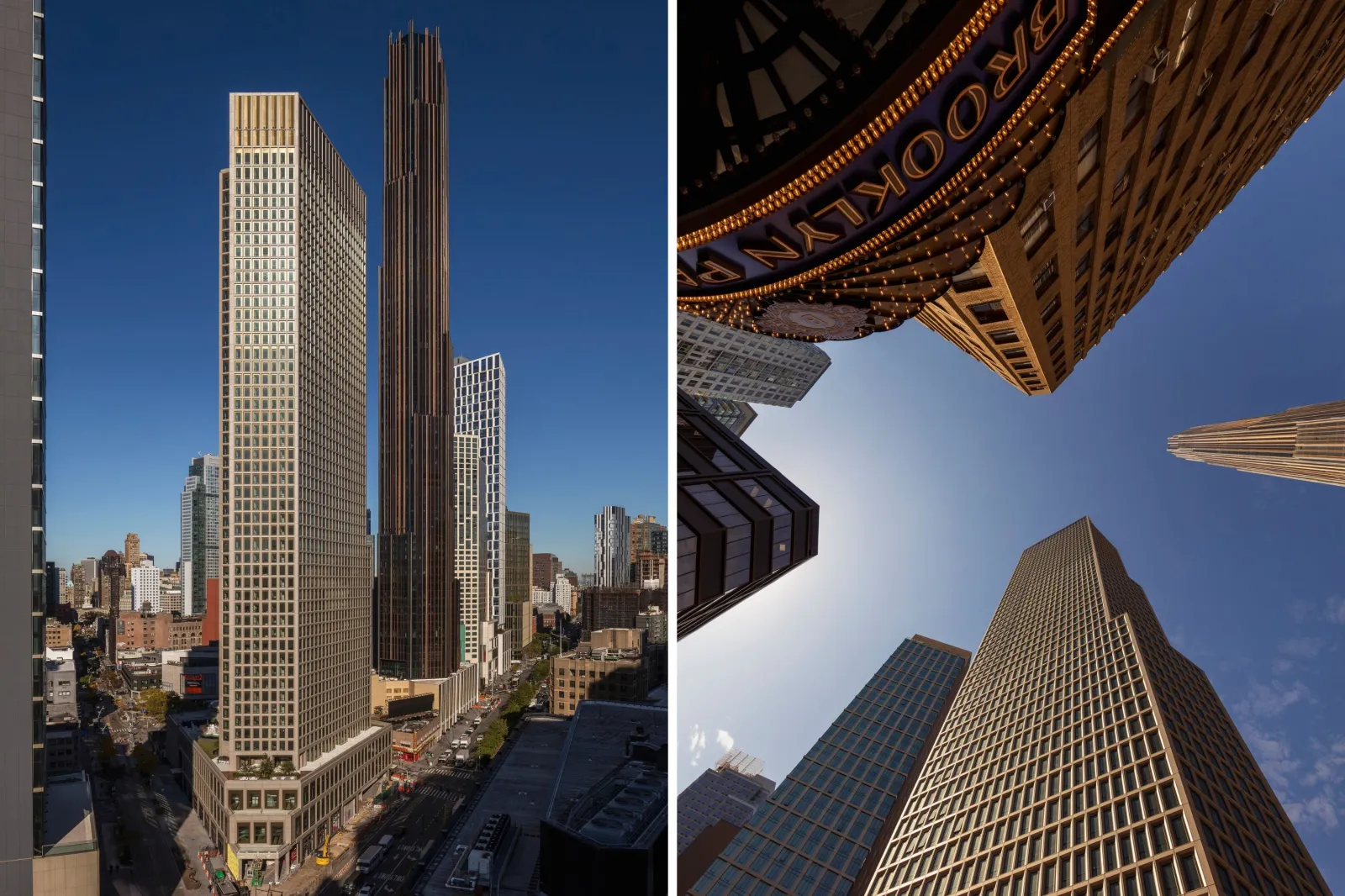
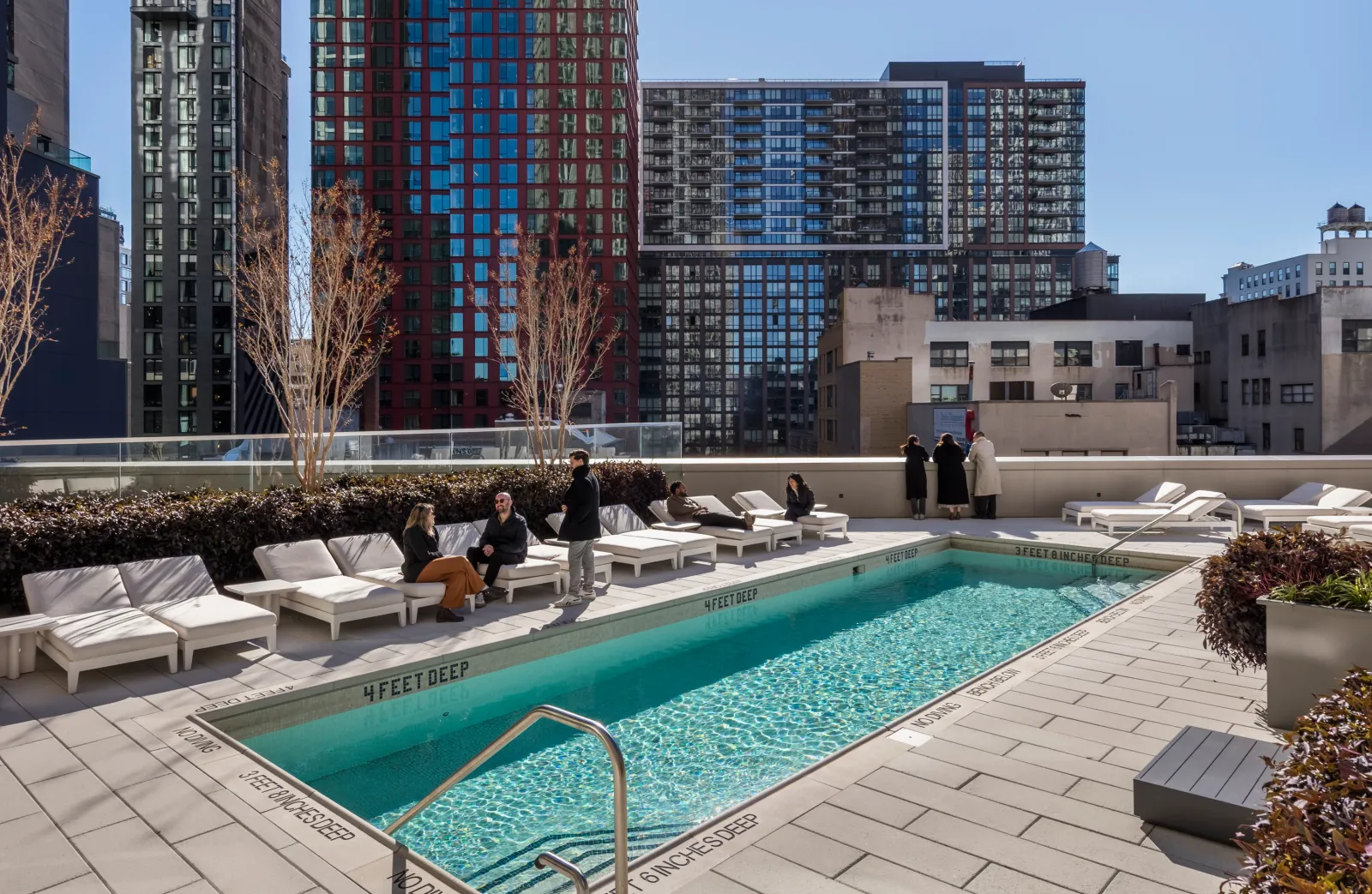
Standing around twice the height of its Manhattan counterpart, The Brook includes 591 apartments, with 30 percent—178 units—reserved for affordable housing. Beyond its residential offering, the project includes 41,000 square feet of retail and 30,000 square feet of resident amenities. Those range from a library and fitness studios to lounges, landscaped terraces, an outdoor pool, and even a basketball court.
The building’s distinctive form is only part of its visual presence. BBB says the tower was crafted to “accentuate the unique geometry of its position at the intersection of Fulton Street and Flatbush Avenue, while balancing the structure’s massive size in a conversation with the neighborhood.” The studio leaned into materials and detailing that tie the tower to its surroundings.
“The contemporary curtain wall facade takes design cues from historic Brooklyn architecture to distinguish itself from the many glazed high-rises that have recently been built downtown,” the firm adds. “Punched window openings set within 8-inch-deep frames evoke the construction of traditional residential buildings and impart a sense of solidity and depth, while aluminum-composite metal panels in warm, organic shades of champagne and bronze evoke the masonry color palette of nearby historic neighborhoods.”
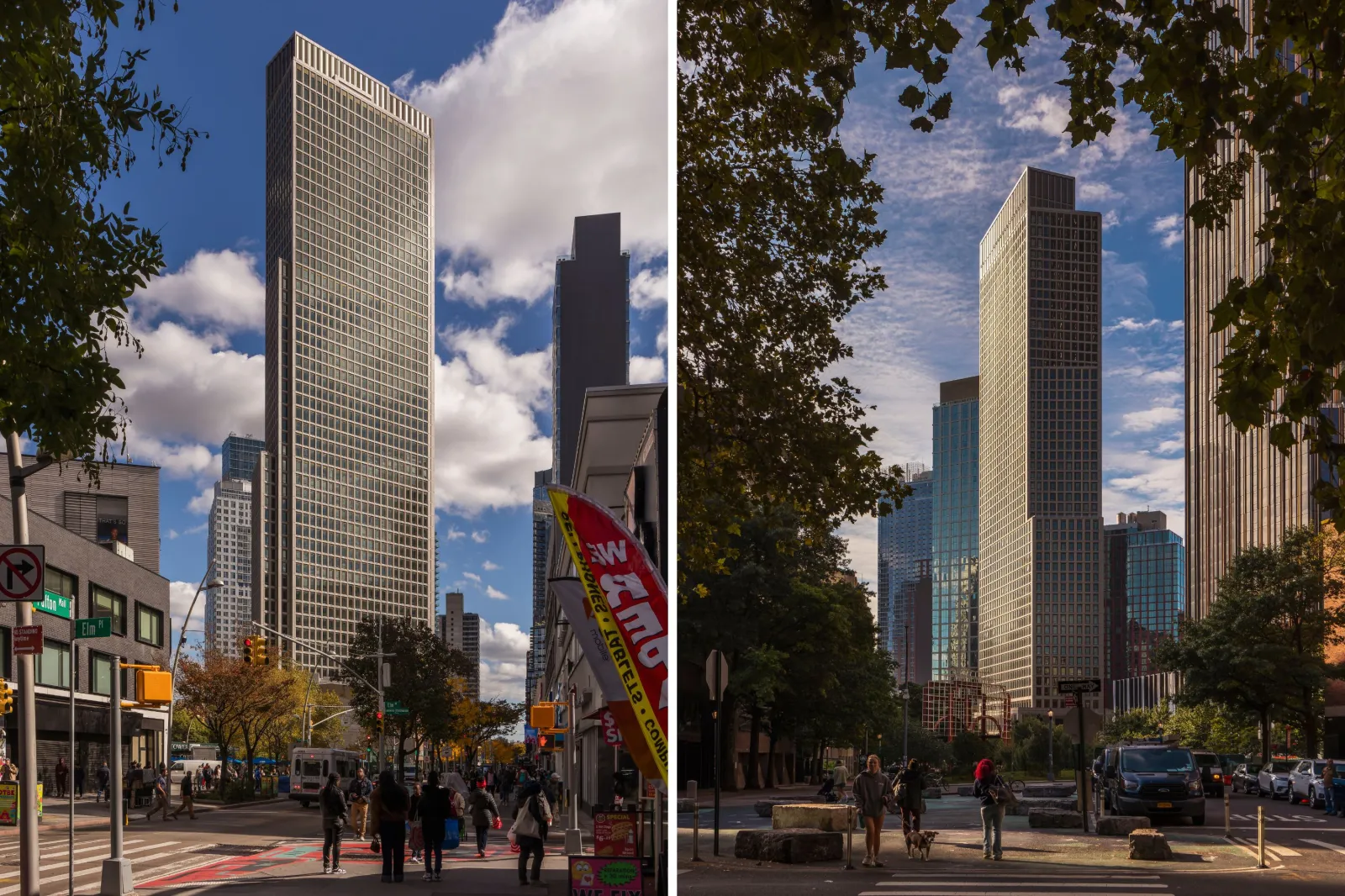
Cardoso noted that the facade evolves throughout the day in ways many passersby might miss. “People don’t always realize how the facade changes throughout the day,” he told Newsweek.
He said this is due to “a subtle manipulation in three tiers, from lower, to middle, to top—the elements between the windows are narrower at the bottom of the building and wider at the top, which changes the tonality of the building and creates almost a dance as the sunlight moves across and as you walk around it. The further away you are, the more it’s visible—from five blocks away on Flatbush you might not notice it, but from a distance, it’s a really interesting component of the skyline.”
Inside, the building shifts tone entirely, with calmer, softer spaces designed to counterbalance the busy streets just outside the doors. According to the design firm, “while the exterior of the Brook supports a bustling, active streetscape, the interiors are designed to help residents decompress from the moment they enter the building.” From a residential-scaled entry on Fulton Street, a narrowing passageway opens into a double-height oval atrium illuminated by soft lighting and accented by biophilic wall installations.
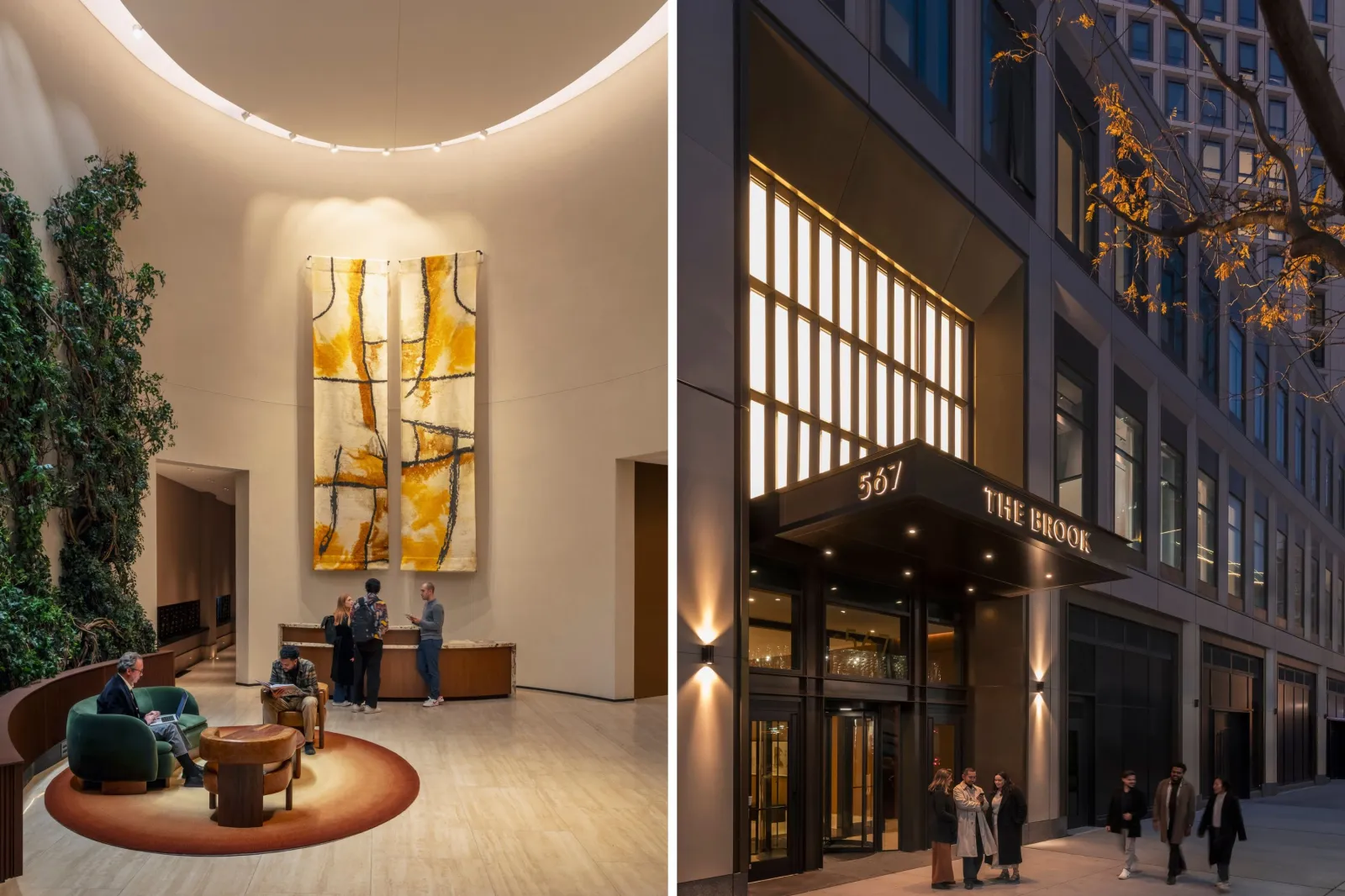
Cardoso said the concept of “the crossroads” carries through the interior as well. “An interesting element of the interior is how we played out the theme of the crossroads,” he added. “When you enter the building, you come to this double-height, open atrium space, which is a crossroads leading you to different areas—the entrances, the mailroom, the elevator lobby. Even the center of the amenities floor has that feeling, as different amenity spaces pinwheel off it. Our collaborators at Bonetti/Kozerski did an amazing job with the interior design.”
For developer Witkoff, The Brook represents more than a single architectural achievement—it marks a milestone for Brooklyn’s trajectory. “The Brook’s innovative design, conceptualized by Beyer Binder Belle, is emblematic of the expansive evolution of the downtown Brooklyn area,” Hiro Sato, senior vice president of development at Witkoff, told Newsweek. “There is no shortage of inspiration here, and with our central location at the crossroads of Fulton, Flatbush, and DeKalb, The Brook has quickly become a striking symbol of the borough’s evolving skyline and its growing reputation for high-end urban living.”
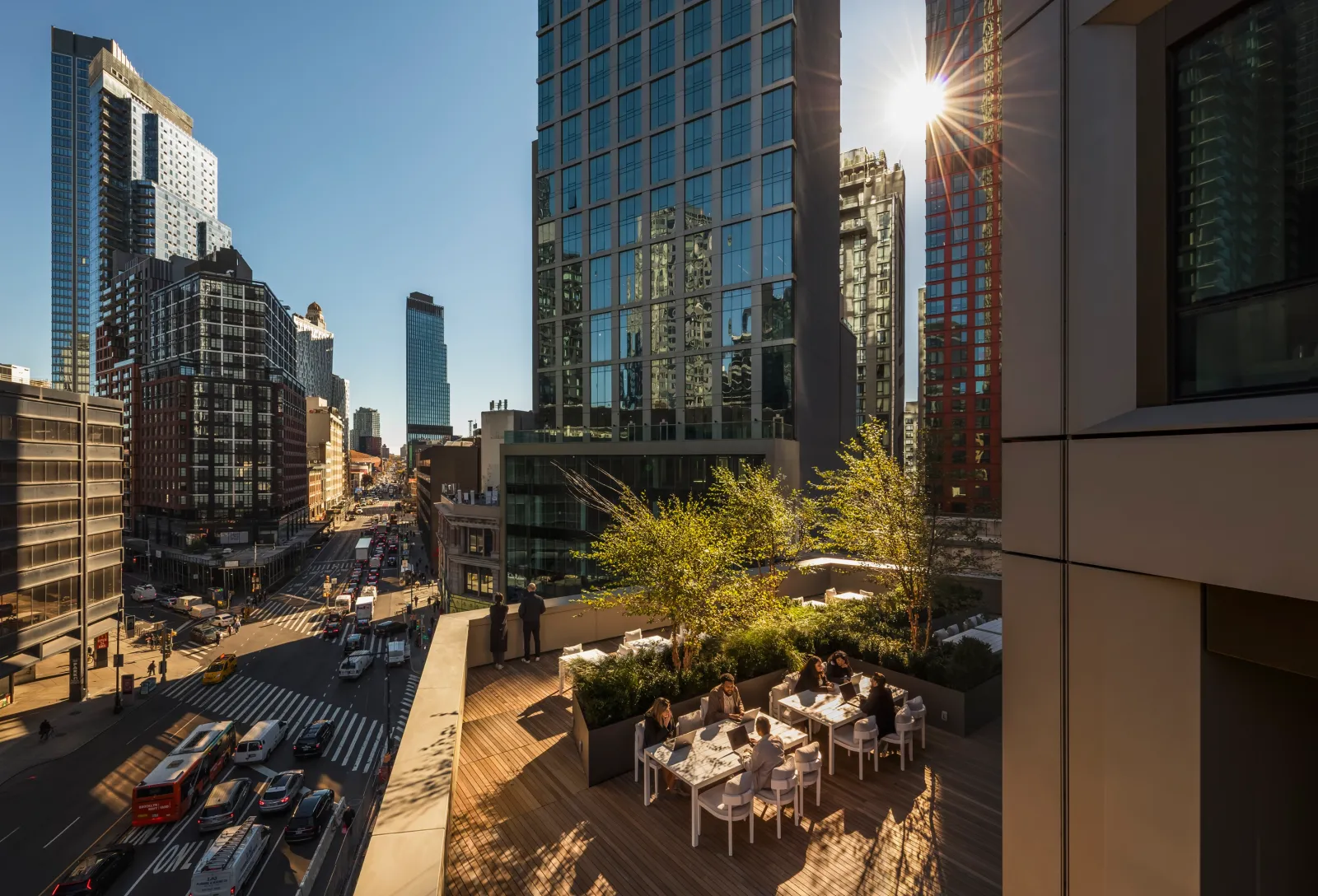
Sato said the building opens at a moment of historic growth. “Downtown Brooklyn is entering 2026 on the heels of a record-breaking year in new development,” he added. “The Brook epitomizes that growth, with a steady flow of residents moving in, a strong tenant community, and dumpling hotspot Din Tai Fung opening in the building in 2027.”
Ultimately, Sato sees the skyscraper as a defining marker for the borough’s next phase. “The Brook stands as a visual anchor for this next chapter, sitting at the heart of what has become a true live-work-play destination for people from all walks of life,” he said.
Do you have an architecture or design-related video or story to share? Let us know via life@newsweek.com, and your story could be featured on Newsweek.