
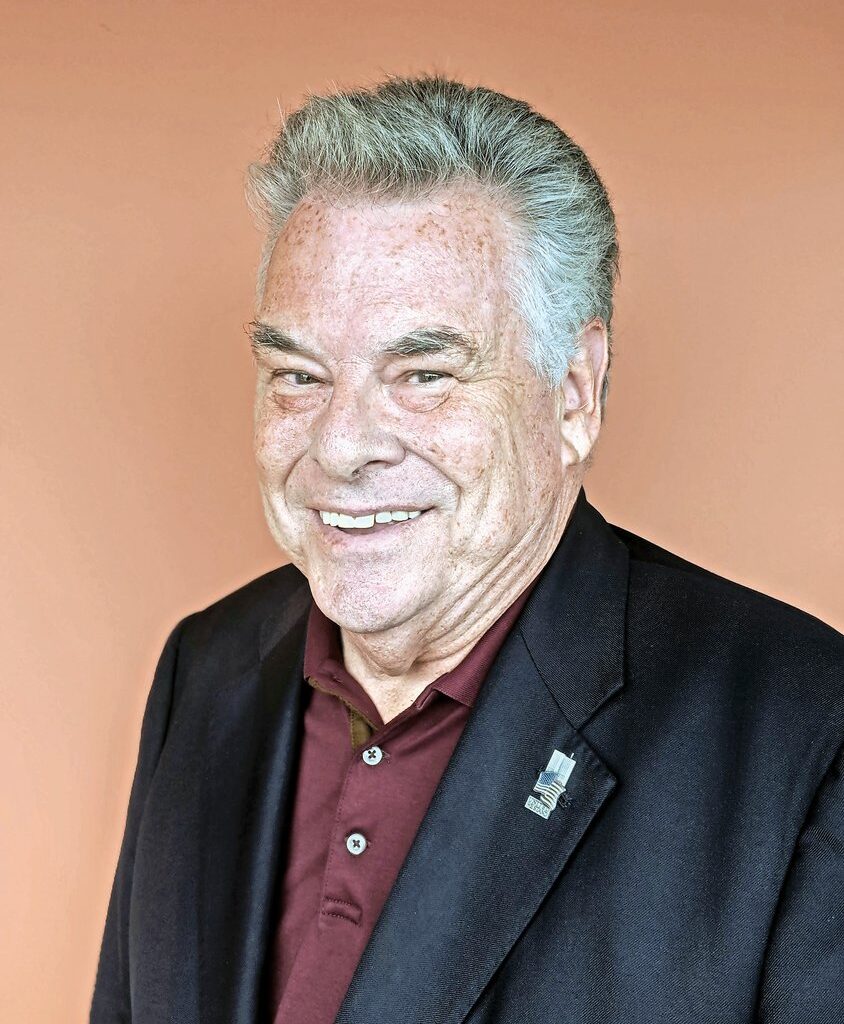
By Peter King
Pope Leo’s decision to accept the resignation of Cardinal Timothy Dolan, effective in the next several weeks, has significance for the entire New York metropolitan area. Going back to the 19th century, the archbishop of New York has played an often outsized role in the life of the city, with an influence extending beyond Catholics and beyond the city itself, into the suburbs.
There was Archbishop John Hughes, in the 1860s, mobilizing support to protect St. Patrick’s Cathedral from threats by the Know Nothings to burn it down. In the mid-20th century, Cardinal Francis Spellman spoke out about national issues and against what he viewed as remnants of anti-Catholicism. He met regularly with government, political and business leaders, which led friends as well as critics to label him “the American Pope” and St. Patrick’s “the Powerhouse.”
Cardinal John O’Connor, who held the position from 1984 to 2000, came from a working-class and military background. He mastered the art of communicating through the media, taking outspoken stands on various issues such as workers’ rights in New York and human rights in Ireland and, most significantly, working extensively to strengthen interfaith relations with the many other religions mixed into the city’s ecumenical melting pot. Particularly memorable was O’Connor’s close friendship with Mayor Ed Koch and their joint efforts against antisemitism, including a popular book they coauthored.
Also meaningful was a television special on which O’Connor and Holocaust survivor Elie Wiesel decried the evil of antisemitism and all religious bigotry. Personally, I had a strong friendship with O’Connor, highlighted by his refusal to back down to pressure from the British government when its consulate urged him not to review the 1985 St. Patrick’s Day Parade because I served as its grand marshal.
O’Connor’s funeral, at St. Patrick’s in May 2000 — attended by countless luminaries, including President Bill Clinton and first lady Hillary Clinton, and future President George W. Bush and future first lady Laura Bush, befitted an acknowledged national leader.
Dolan was chosen by Pope Benedict in 2009 to lead New York’s Catholics, and, though he was born and raised in St. Louis, he immediately established himself as a true New Yorker. My wife, Rosemary, and I got to know Dolan well, and are proud to call him our friend. We were privileged to have him as a guest for dinner in our Seaford home, and attended numerous events with him, including Midnight Mass, on Christmas Eve; private lunches at his residence, with retired New York City Police Commissioner Ray Kelly and his wife, Veronica; and Dolan’s annual St. Patrick’s Day brunches, replete with a cross-section of elected officials including Mayor Eric Adams, Gov. Kathy Hochul and Nassau County Executive Bruce Blakeman as well as religious leaders such as Rockville Centre Bishop John Barres and Rabbi Joe Potasnik, of the New York Board of Rabbis.
Now that he has reached the mandatory retirement age of 75 and the pope has accepted his retirement, Dolan’s omnipresence in New York, and his unfailing sense of humor, will be sorely missed. He was always there, for those of all religions, especially in times of need. I distinctly recall being with him at meetings with officials from the Department of Homeland Security, trying to obtain funding to protect houses of worship from terrorist attacks.
Similarly, I remember discussing with Dolan and Potasnik strategies for requesting Covid relief funds for religious entities from the Trump administration. I particularly recall Dolan being a lone voice speaking out on behalf of the police during the violent demonstrations in the summer of 2020.
Dolan has been a gift to New York. Fortunately, he has chosen to remain here, and take up residency in a Manhattan parish. I wish him the best of health, happiness and peace, and congratulations on a job well done. An era has passed.
Peter King is a former congressman, and a former chair of the House Committee on Homeland Security. Comments? pking@ liherald.com.