
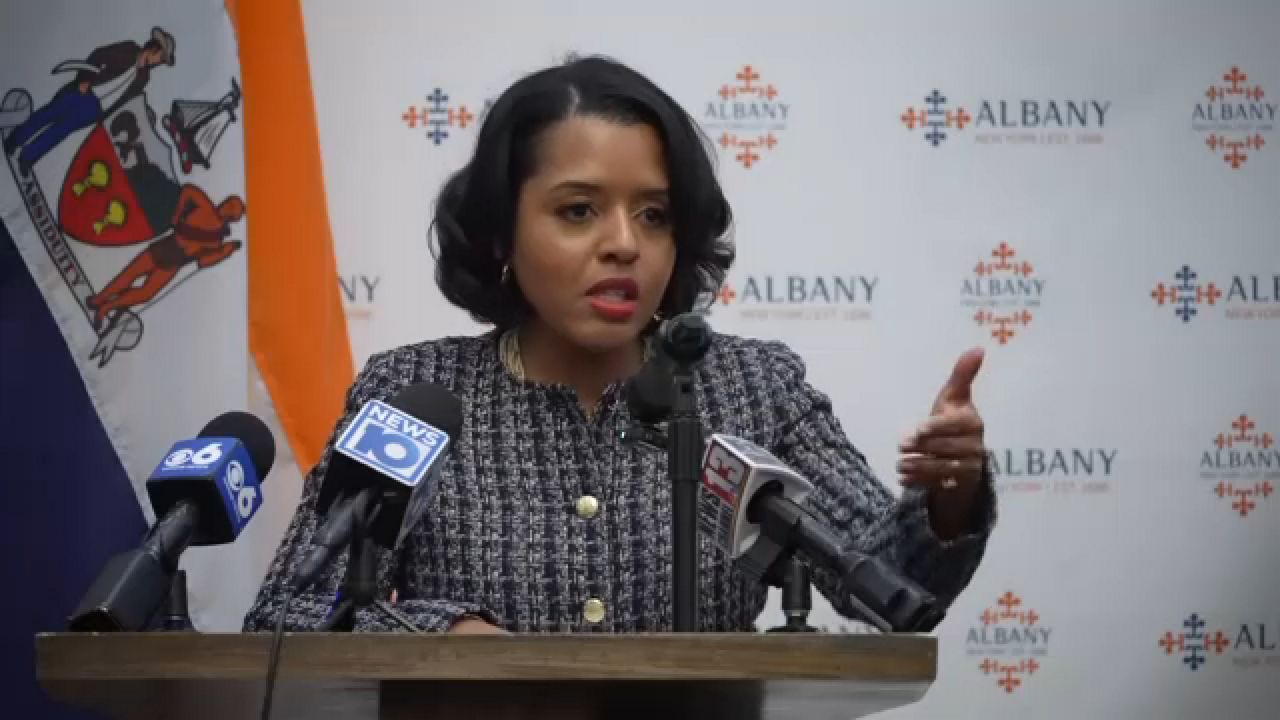
In Albany, Mayor Dorcey Applyrs took office earlier this month as the city’s first person of color elected to the position.
She takes the helm at a crossroads for the Capital City as it prepares to embark on a $400 million state-funded improvement project, but also faces significant public safety challenges and quality of life issues.
Applyrs says she has ridden a wave of optimism and history during her first days in office.
“People feel connected to city hall in a way they say they haven’t in some time,” Applyrs said.
She added that her place in Albany’s history is a distinction that not only belongs to her, but the community she serves.
“Not only what it means to be the first person of color mayor, what that means to me and my family and I, but what that means for this city,” she said.
But Applyrs is inheriting a city which faces significant challenges. Still reeling from a July 4 shooting in which 10 young people were shot and one killed, the mayor is facing pressure to prioritize public safety — especially among the city’s youth.
Applyrs said conversations around plans for youth safety protocols and initiatives have included discussion of a curfew as previously reported, but strong opinions on both sides have left whether or not it will be implemented into the administration’s plan up in the air. Applyrs explained that some involved were in favor of the measure while others saw it as overly “punitive.”
“It’s not off the table, however we are taking the opportunity to learn best practices, there has been money already earmarked for youth safety and support hubs,” she said.
Applyrs added that the learning process will include visiting Baltimore, where Mayor Brandon Scott has invited a ‘delegation’ from Albany to learn about how that city has dealt with youth crime.
“I’m excited to be able to take some of our community stakeholders who invest their time and energy into violence prevention, specifically who work with youth and young adults, we will be heading to Baltimore to learn and bring back some of those innovative strategies to address the violence that we have in our city,” she said.
The new mayor has also made structural changes in her first two weeks at the helm which emphasize that youth focus, separating the Department of Youth and Workforce Services from the Recreation Department.
“We have young people living in some of our neighborhoods unfortunately who don’t see a lot of professionals,” she said of the move, which she hopes will emphasize career development. “We know given some of the data that exists as it relates to our graduation rates and our unemployment rates, we have some families in our city who are barely making it.”
Applyrs has also made some leadership changes.
She appointed Valerie Scott to lead the city’s building department, which faces significant headwinds. The former deputy director replaced former Commissioner Richard LaJoy, and takes over at a time when the city is facing a housing crisis fueled by an aging stock and the department faces scrutiny over a fatal fire last month on Western Avenue in a building which had a history of compliance issues.
“It’s not to take away from the commissioner who occupied that position for a long time,” she said of the change. “It’s just that I am looking to go in a different direction with my vision and that department being more inclusive and available to the community.”
The new mayor is actively digesting feedback on that housing crisis from an audit she conducted as city auditor. According to the audit, 95% of Albany’s housing stock predates 2010 and nearly half predates 1940. Just over 4,000 units remain vacant due to legal or repair issues.
Applyrs said the audit could inform changes when it comes to the city’s oft-criticized inclusionary zoning law and has already resulted in a new mayoral fellow position focused on keeping young people in Albany.
“We have a huge population of young people, and we are losing them,” she said.
Also a first week move and her first executive order: a new panel of city business insiders intended to find ways to bolster the city’s lagging nightlife, with the mayor describing the city’s night scene as a primary complaint she heard during her time campaigning.
“This is the Capital City, and this should be the city to come to and be able to find community and find things to do, and that’s important to me,” she said.