
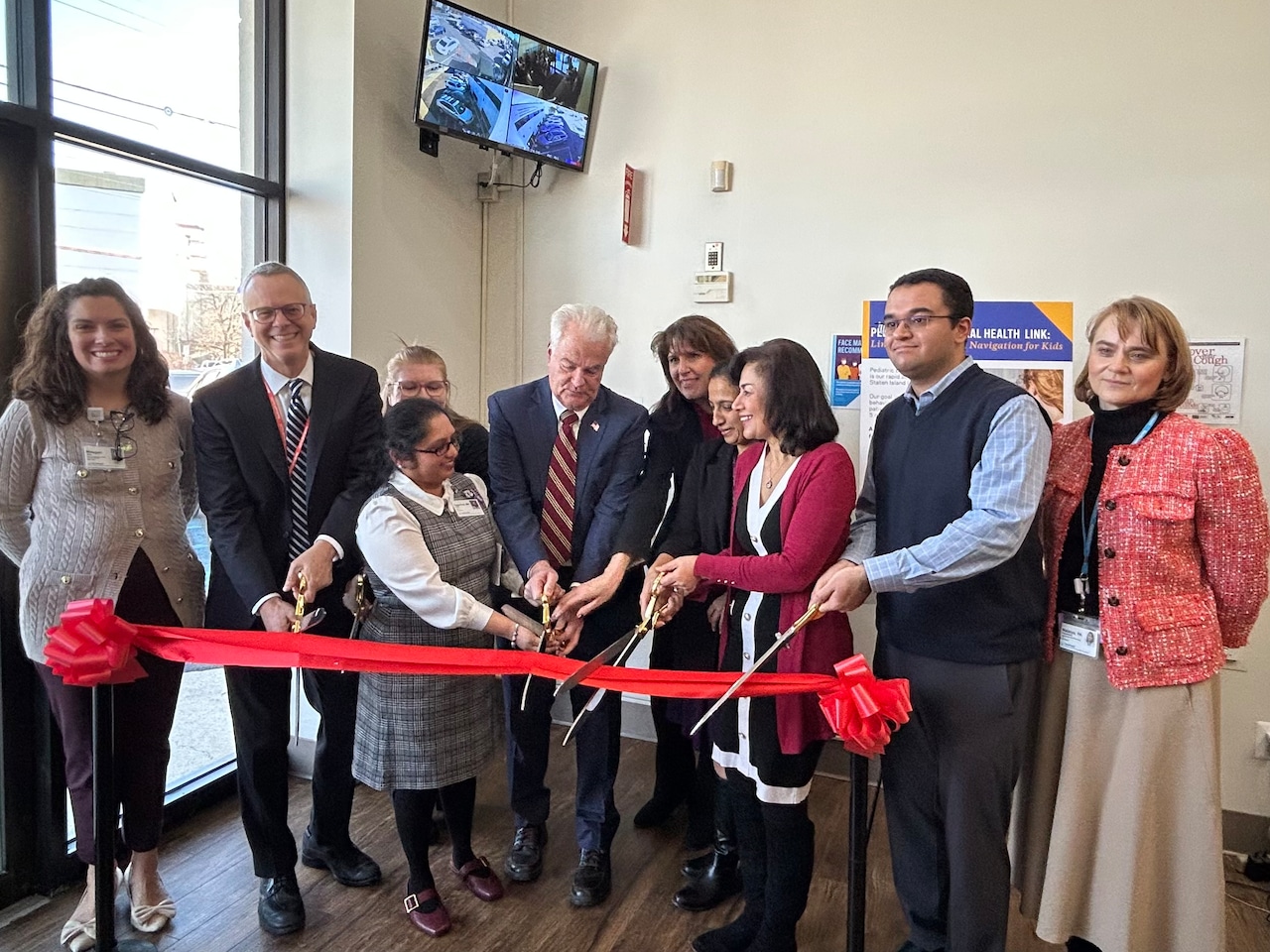
STATEN ISLAND, N.Y. — Northwell Staten Island University Hospital on Thursday officially opened a new program aimed at providing children and adolescents with rapid access to mental health services.
The soft opening of the Linkage, Intake, and Navigation for Kids program comes amidst a surging mental health crisis across New York state, as cost, provider shortages and long wait times prevent or delay families from accessing timely mental health care.
LINK serves children and adolescents ages 5 to 17.
Early care has been shown in studies to reduce the chances of mental health issues in adulthood. LINK is the first program on Staten Island to bring together pediatrics, emergency medicine and behavioral health teams, with the goal of providing immediate care and ensuring every child is connected either to appropriate community-based services or to ongoing care within the pediatric clinic.
Calling youth mental health one of the most pressing health challenges of our time, Meagan Sills, president of SIUH, said the hospital’s goal is to intervene early, stabilize patients and connect families with ongoing care before symptoms escalate into crises.
“This helps prevent hospitalizations, school disruptions and longterm consequences of untreated mental health conditions,’’ Sills said during a ribbon cutting ceremony in the SIUH Outpatient Behavioral Health Center, located across the street from the hospital’s main entrance.
In addition to staff and administrators from the hospital, the ceremony was attended by Richmond County District Attorney Michael McMahon, Dr. Ginny Mantello, director of health and wellness for the office of Staten Island Borough President Vito Fossella, and Micheal J. Pardo, representing the office of New York City Councilmember David M. Carr.
Located within the outpatient center, the program features seven dedicated clinical rooms designed to support patient- and family-centered care, allowing providers to rotate in and out, so children do not have to be moved during their visit. Care teams comprise a medical assistant, psychiatrist, and social worker.
The program is open to the full community, and it supports the Island’s multi-million dollar suicide prevention program, “Zero Suicide Model,’’ part of a blueprint devised by the borough president’s office in response to the urgent need for early intervention as pediatric suicide rates doubled during the COVID-19 pandemic.
According to the New York City Department of Health, 48% of teens report experiencing depressive symptoms, and suicide is among the leading causes of death among children ages 10 to 14. And the agency’s research shows that more than half of all mental disorders in adulthood start in childhood or adolescence.
Statewide, youth suicide is among the leading causes of injury-related deaths among children ages 10 to 14, according to the state Department of Health.
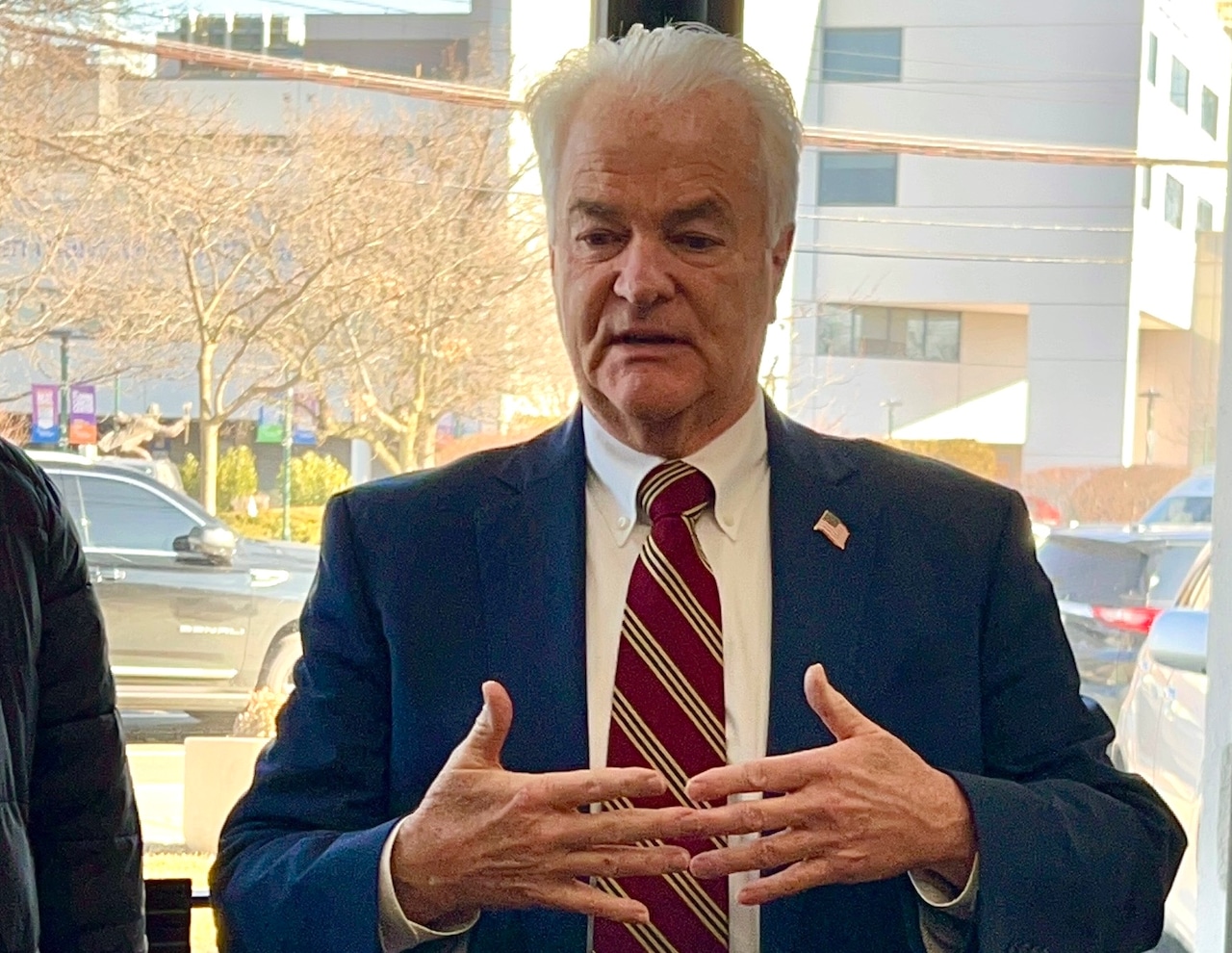 Richmond County District Attorney Michael McMahon speaks of the dire need for rapid access to mental health care for youth and adolescents on Staten Island. He speaks during a ribbon cutting ceremony at Northwell Staten Island University Hospital’s LINK program mental health facility. (Advance/SILive.com | Ann Marie Barron)(Advance/SILive.com | Ann Marie Barron)Frustrating battle for families
Families searching for mental health care on Staten Island take on a confusing and frustrating battle, said Dr. Rashi Aggarwal, head of psychiatry and behavioral science at the hospital.
“On the clinical side, what we see, again and again, is not just families struggling to find care, they’re struggling to navigate care,’’ she said. ”Not only are there long waits and fragmented systems, but after finally getting an appointment, your’e told your child needs a different kind of care.”
By streamlining access and shortening the time between referral and treatment, the LINK program will close critical gaps in the current behavioral health system, she said.
Dr. John Young, senior vice president for behavioral health at Northwell, said one thing he often wakes up and goes to sleep worrying about is the fact that 18% of our children have seriously considered suicide in the past 12 months.
“That’s true in the country, that’s true in New York and that’s true in Northwell’s geography, and it’s right here on Staten Island,’’ he said, noting that half of the people who need care don’t get it. ”We have real issues of quality, we have real issues of access and we have real issues of fragmentation.“
LINK is a powerful, yet simple approach to addressing all of these things, he said, by “trying to build a cohesive continuum of care for children and adolescents.”
McMahon said the hospital’s focus on mental health was important to him personally, as his family is affected by mental health issues. “In our family, mental health is very real,’’ he said. ”My family, like most of the families in our country, our state and our city, (is) affected by mental health issues.”
He also said the recent vandalism of a Dongan Hills Catholic Church and subsequent injuries to two police officers in attendance highlight an undeniable link between undiagnosed and untreated mental health conditions and crime in our communities.
He said he was relieved that previously threatened federal cuts to substance abuse mental health funding across the nation had been rescinded, and that he was grateful for the work done with mental health at SIUH every day.
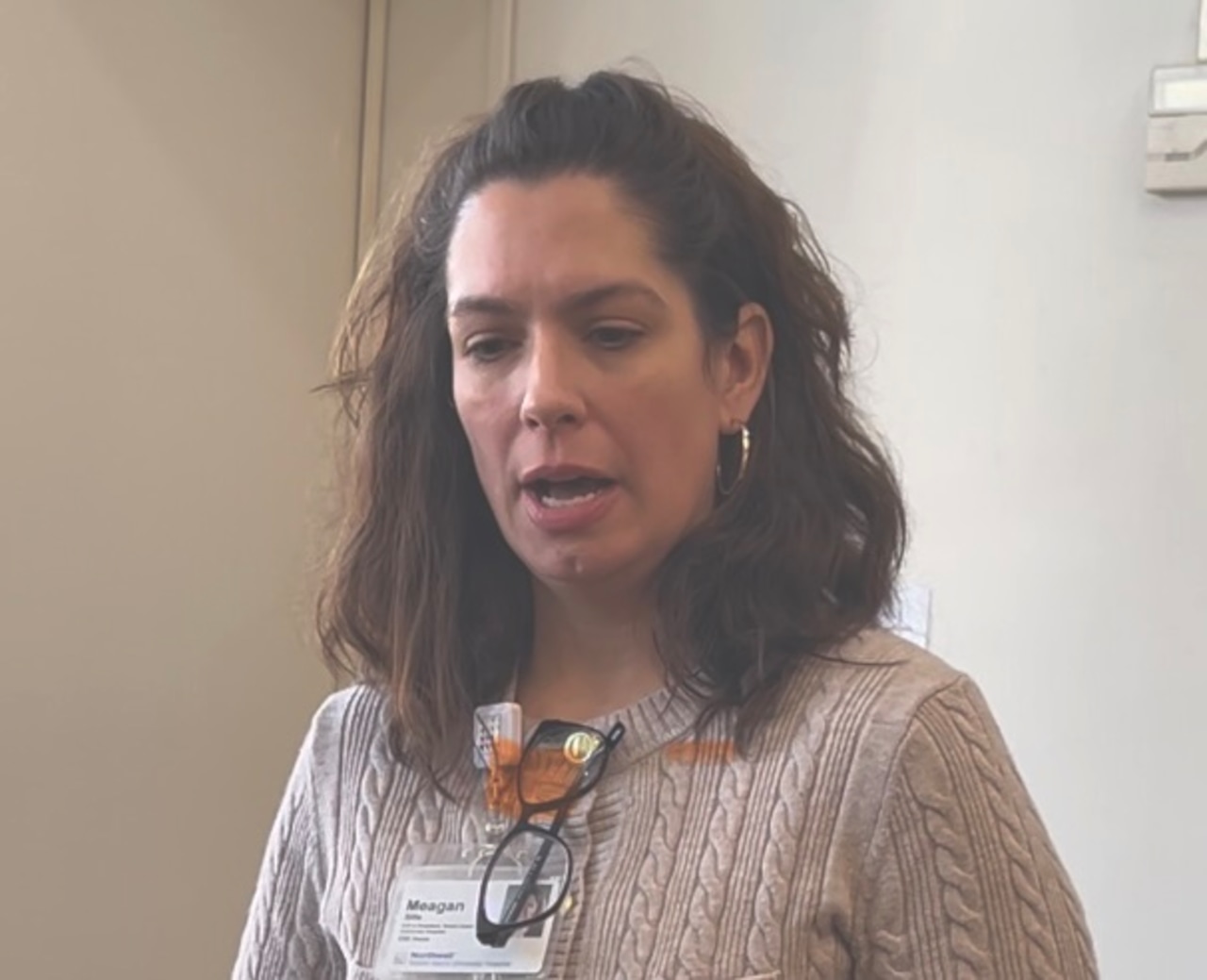 Meagan Sills, president of Northwell Staten Island University Hospital, addresses those gathered Thursday for a ribbon cutting at the hospital’s new LINK program, which provides children and adolescents with rapid access to mental health care. (Advance/SILive.com |Ann Marie Barron)(Advance/SILive.com |Ann Marie Barron)
During the ceremony, Sills thanked the hospital’s auxiliary board members, current staffers and public officials for supporting the effort.
Mantello said it was wonderful to see the LINK program come to fruition, noting that the need is very great and mental health continues to be a priority of the borough president’s office.
“We all know that we don’t want to send children and families to the emergency room when they’re in crisis,’ she said. ”We want to make sure that they stay in their normal environment and their setting . . living at home, going to school, instead of being admitted into the hospital.”
When elected officials and healthcare providers work collaboratively, magic can happen, she said, calling the efforts “a recipe for success.”