
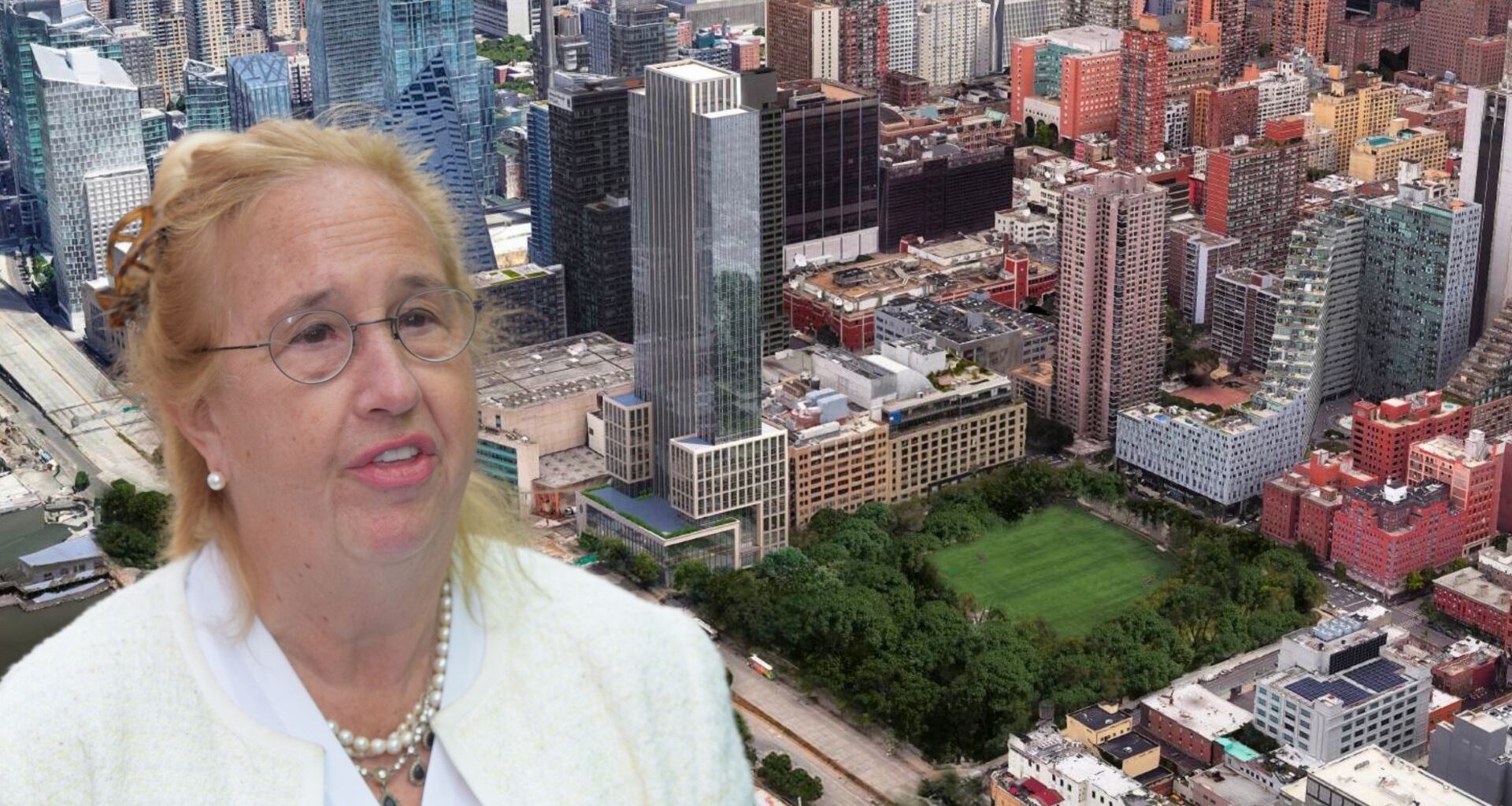
Councilmember Gale Brewer delivered a clear message to developers behind a proposed pair of residential skyscrapers on Hell’s Kitchen’s Far West Side — a project that would bring more than 1,000 apartments to the blocks near DeWitt Clinton Park and Hudson River Park.
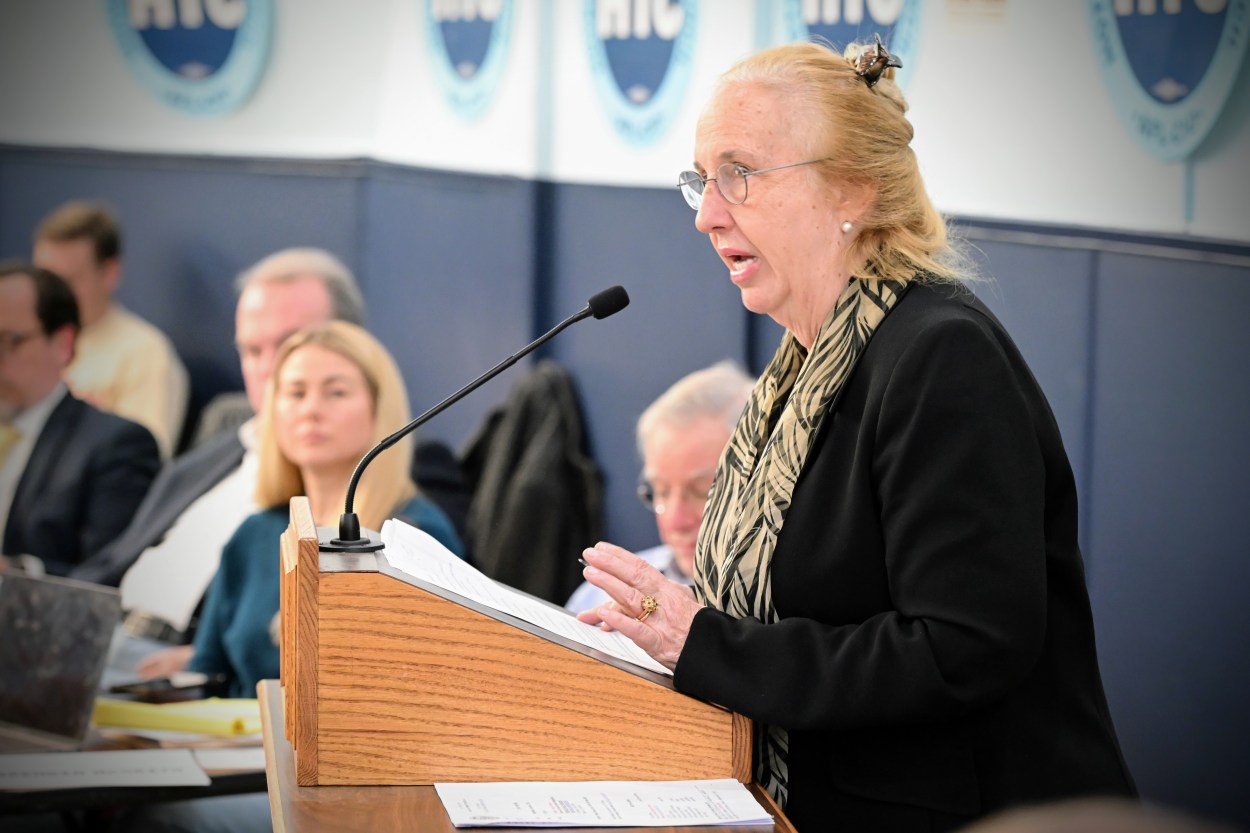 Councilmember Gale Brewer speaking at a MCB4 meeting in December 2025. Photo: Phil O’Brien
“I will go along with what the board says,” Brewer said in a phone interview with W42ST after attending Manhattan Community Board 4’s Clinton/Hell’s Kitchen Land Use meeting on Wednesday evening. She said she plans to “follow very closely” the board’s recommendations, citing its “high level of knowledge about zoning.”
Her involvement matters because the City Council has the final say on major land use changes, and in practice it typically follows the lead of the local Councilmember — a norm known as “member deference.” The project is now in ULURP (Uniform Land Use Review Procedure), the City’s public review process for major zoning and development decisions, and would move from Community Board review by the end of February to Borough President review in March, then to the City Planning Commission in April and May, before reaching the City Council for a final vote in June or July.
The proposal, known as DeWitt Clinton Park North, would allow two residential towers at car dealership locations: one planned for 629 W54th Street on 12th Avenue, and the other for 801 11th Avenue between W55 and W56th Streets. Together, the plan would create more than 1,000 apartments, with a portion set aside as permanently affordable under the city’s inclusionary housing rules.
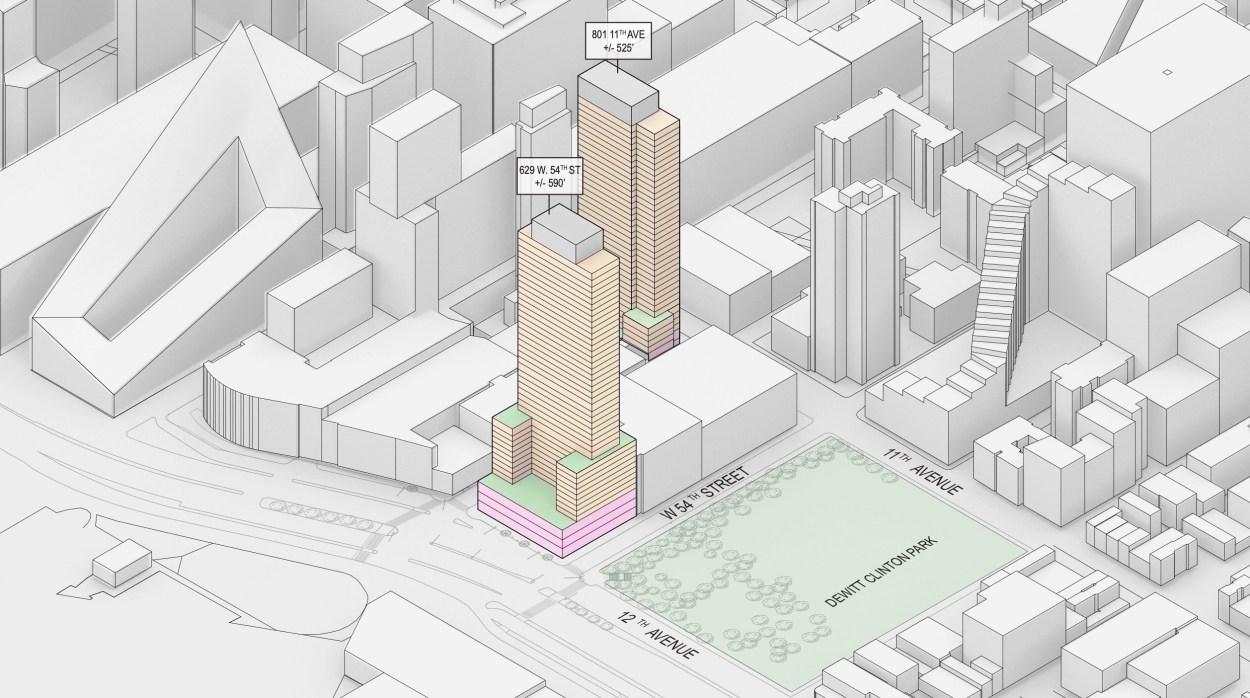 The DeWitt Clinton Park North development project presented by developers to MCB4 during Wednesday’s meeting. Rendering: Hill West Architects
At the meeting, the development team’s presentation was led by Wesley Ryan of Fried Frank, the applicants’ land-use attorney, speaking on behalf of The Chapman Group and Friedland Properties, the developers behind the two-tower proposal. Ryan described the plan as a paired rezoning designed to unlock new housing and park funding at the same time. “We are here to discuss those rezonings of two sites… to facilitate the development of two mixed-use buildings north of DeWitt Clinton Park,” he told the committee.
He said the sites would be rezoned to allow residential use and additional height tied to the purchase of Hudson River Park air rights, resulting in “approximately 1,094 residential units, 273 of which would be permanently affordable.” Ryan added that the air-rights purchase would generate “not less than… $29 million” for park improvements in Community District 4, and asked the board to support the application.
Community Board members noted they have been tracking the plan for nearly a year. The board previously discussed the proposal and, in February 2025, submitted a detailed letter to the Department of City Planning outlining concerns and recommendations. At this week’s meeting, several committee members indicated that the version now moving through the process reflects limited changes compared with what they had already flagged.
Land Use co-chair Paul Devlin also criticized the timeline, saying the volunteer committee had been given too little time to review a large and complicated application.
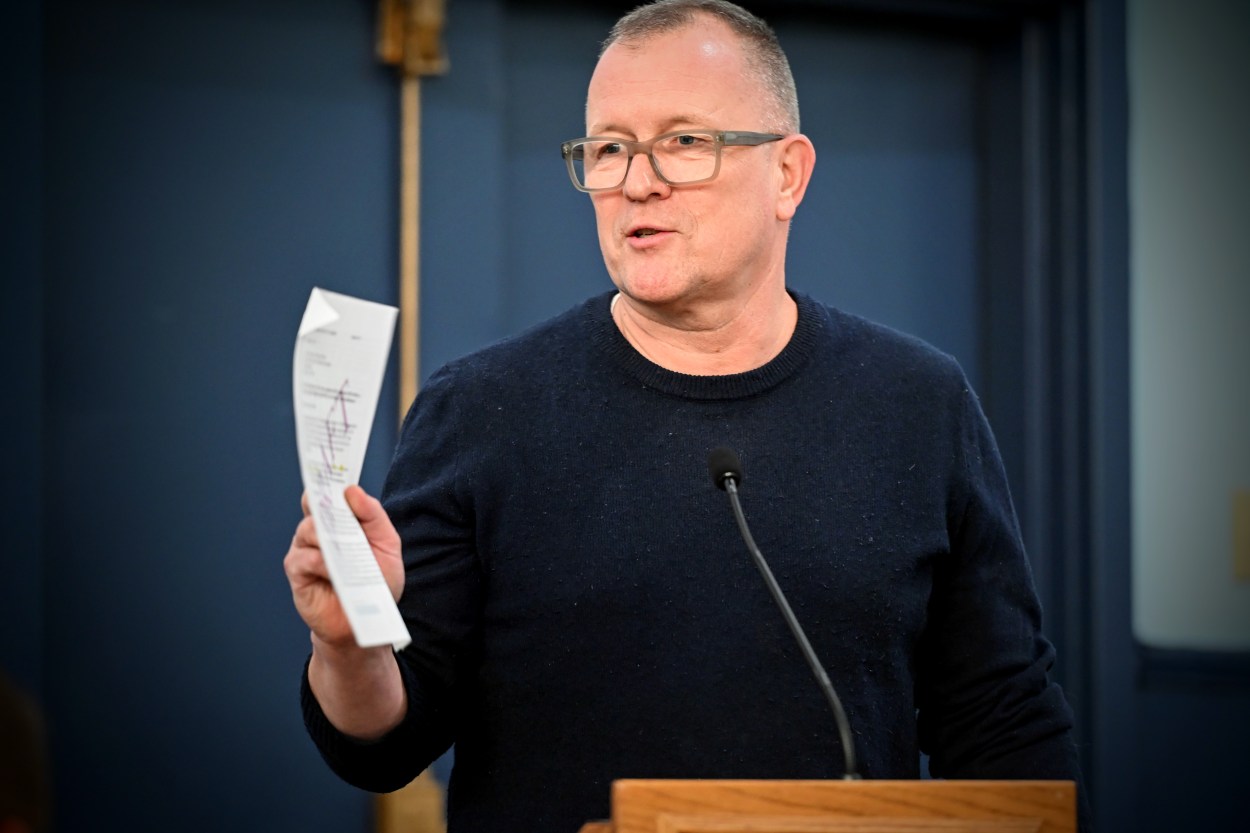 MCB4 Clinton/Hell’s Kitchen Land Use co-chair Paul Devlin speaking at meeting in December 2025. Photo: Phil O’Brien
“You can’t sign off on this kind of stuff… with 10 days of lead time,” Devlin said.
Brewer said she supports new housing, but stressed that the project must be shaped to fit the neighborhood — and deliver meaningful public benefits.
“It’s not just housing,” she said. “It has to be done correctly.”
In her comments to W42ST, Brewer said she wants the towers to feel like residential buildings rather than commercial ones, and highlighted priorities including a less glass-heavy design, a stronger building base, and more family-sized apartments. She also said the developers should contribute to nearby DeWitt Clinton Park, which would see increased use if the new buildings are approved.
“These guys look directly over DeWitt Clinton Park,” Brewer said. “We want that park to be funded by the developer.” She added that upgrades to the park could cost “$6 or 7 million or more” and noted that, during rezonings, it’s not unusual for a developer to make a direct contribution to NYC Parks so the funds are protected and tied to a specific park.
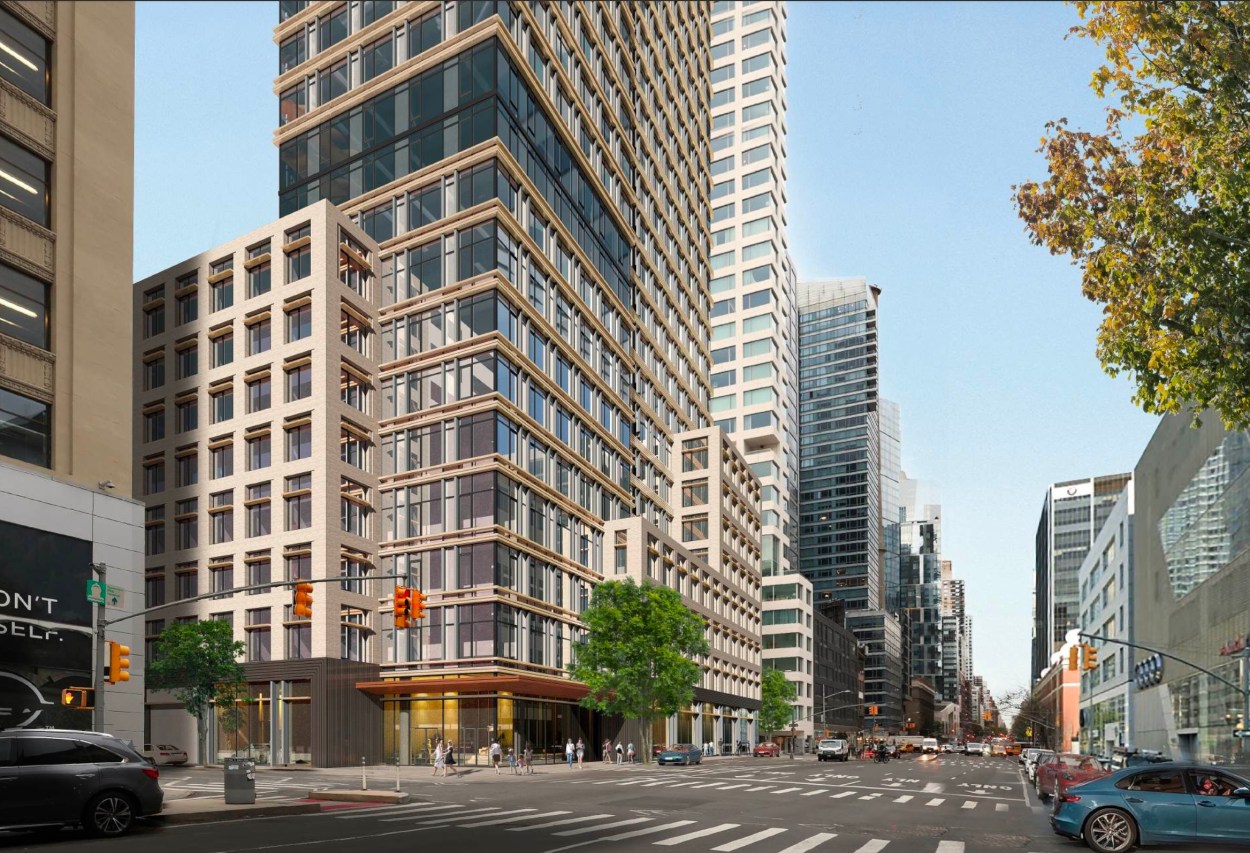 Rendering 801 11th Avenue
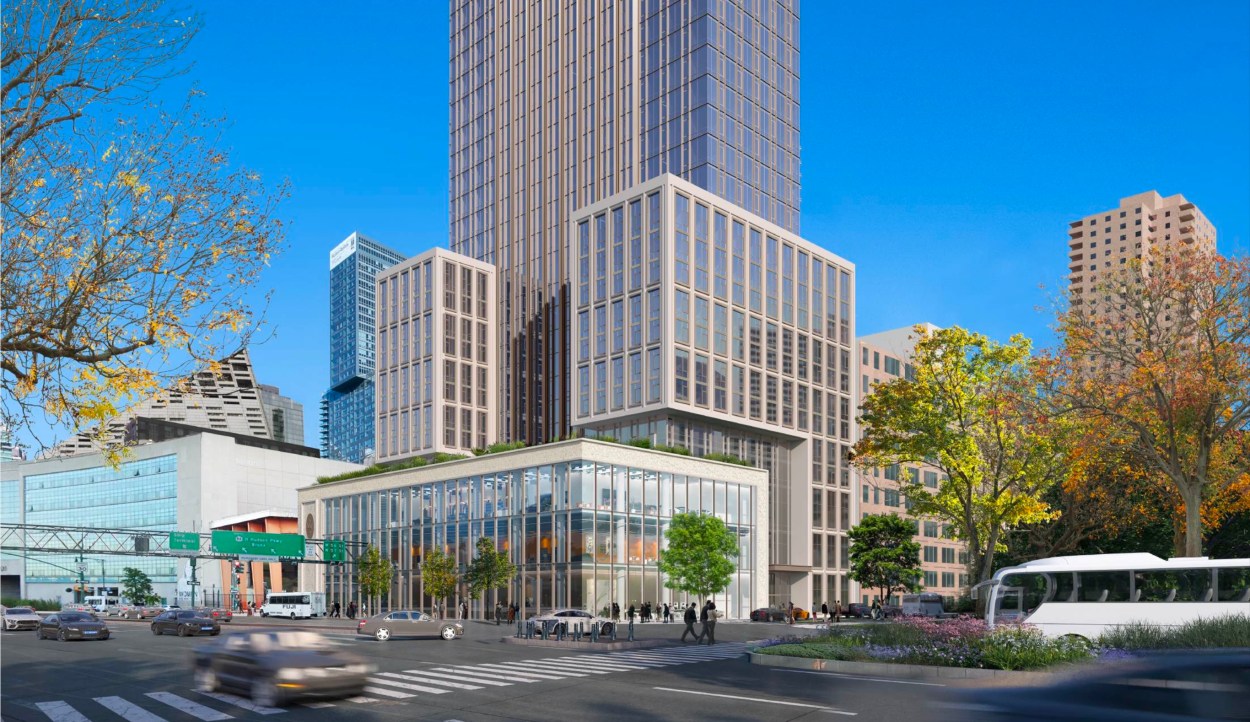 Rendering 629 W54th St
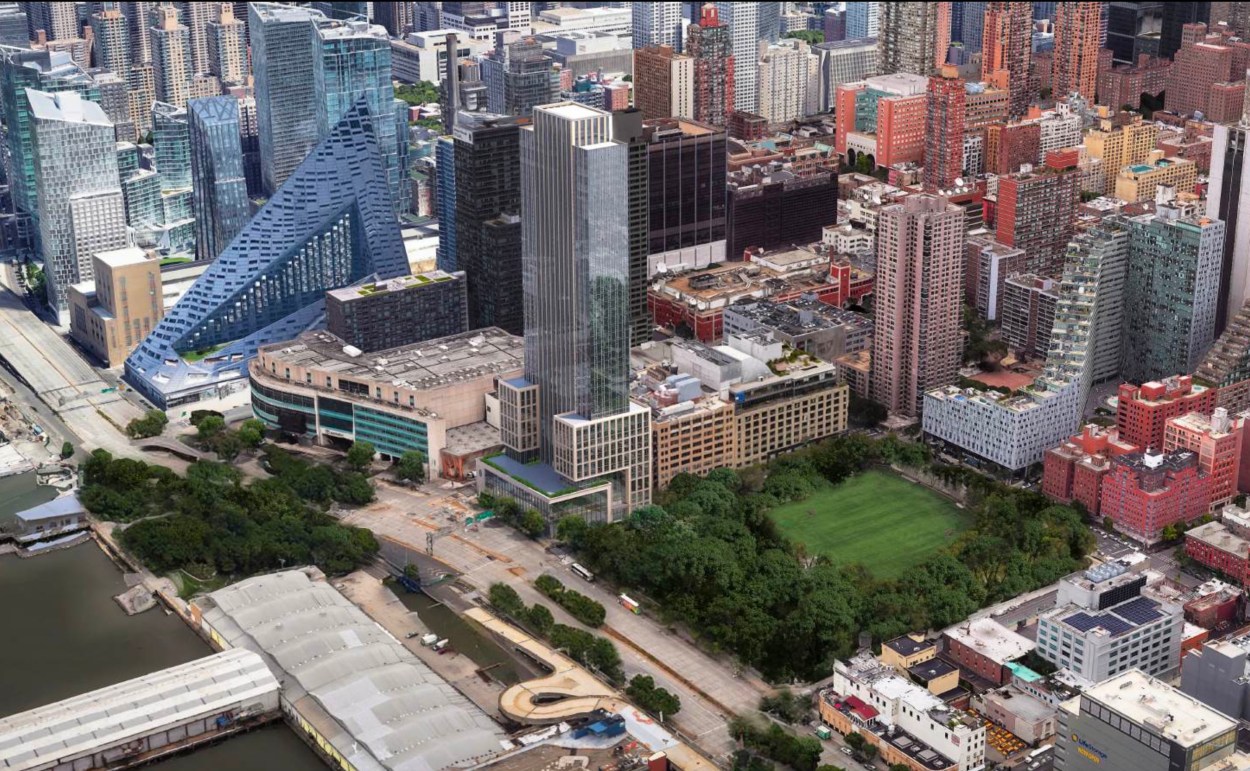 Aerial Rendering 629 W54th St
Renderings of the DeWitt Clinton Park North development project presented by developers to MCB4 during Wednesday’s meeting. Renderings: Hill West Architects
The plan is also tied to the future of Hudson River Park — and specifically Pier 76 in Hell’s Kitchen, the former NYPD tow pound that has long been promised as new parkland but still requires major capital investment.
To build larger than current zoning allows, the development team is seeking to purchase unused air rights from Hudson River Park piers and transfer them inland. At Wednesday’s meeting, Hudson River Park Trust representatives said the special district rules set a minimum price of $200 per square foot, and that the deal under discussion totals 148,000 square feet — generating not less than $29.7 million for the park. But Land Use co-chair Devlin questioned whether that figure reflects true market value, calling $200 per square foot a “ridiculously below market value.”
In an email to W42ST after the meeting, Hudson River Park Trust executive vice president Robert Atterbury said the $200 figure is meant as a protective floor, not the expected final price. He said that if ULURP is approved, the Trust would wait until the developers formally notify it they want to proceed with an air-rights purchase, then commission site-by-site appraisals “to make sure the purchase prices reflect current market value,” followed by a public hearing and comment period required by law. Atterbury said the Trust expects the appraised value will be higher, but “can’t predict with certainty.”
Under the framework presented at the meeting, 80 percent of the proceeds would be directed toward Pier 76, while 20 percent would support broader Hudson River Park capital and maintenance needs.
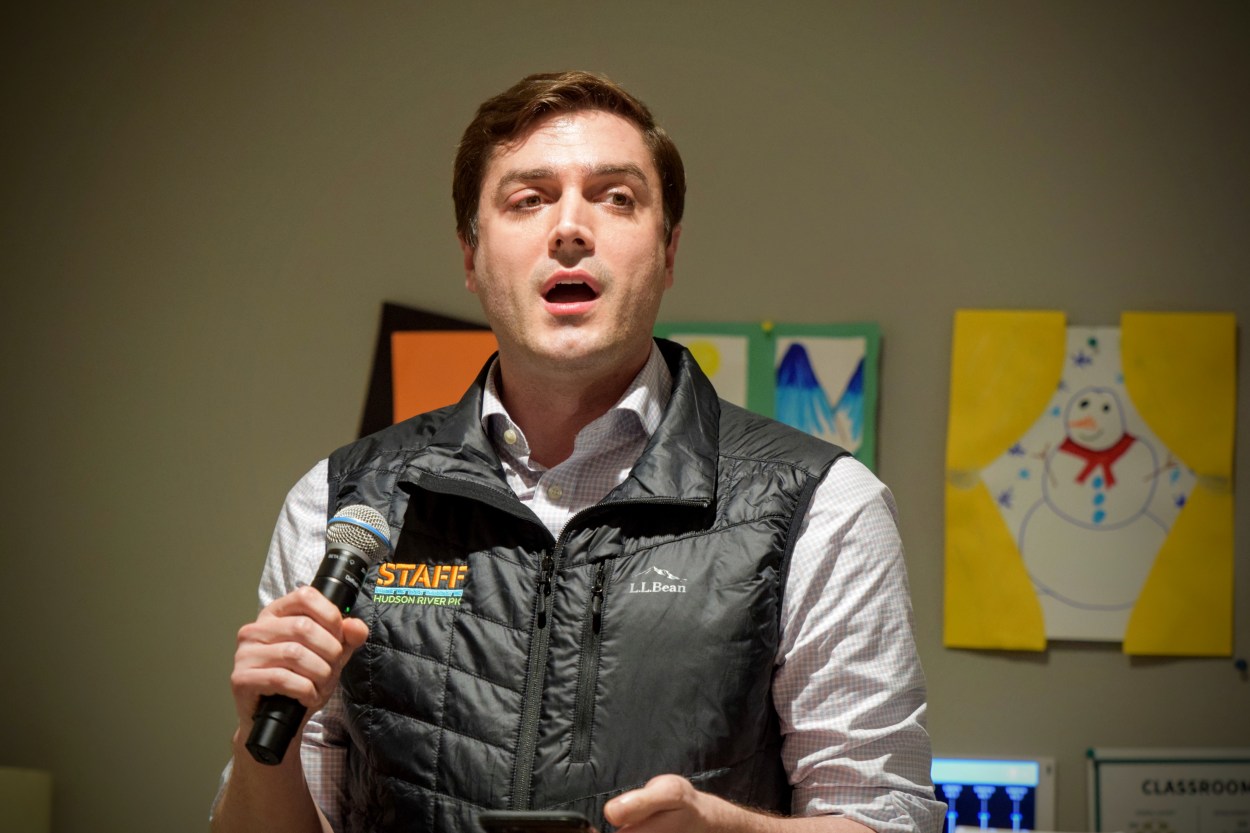 Hudson River Park Trust executive vice president Robert Atterbury speaking at an MCB4 meeting in March 2024. Photo: Phil O’Brien
Atterbury added that the Trust has already secured $85 million in state capital funding toward Pier 76’s infrastructure costs, is seeking a matching commitment from the City, and has said the Trust would contribute an additional $50 million — with air-rights revenue potentially helping close the remaining gap. He said the existing structure at Pier 76 will need to be removed, and that rebuilding a pier of its scale for full public park use will be “very costly,” calling it one of the Trust’s highest overall priorities.
The MCB4 committee is expected to continue reviewing the proposal in the coming weeks as it advances through the city approval process. To meet the official timetable, the Land Use committee will need to bring a draft recommendation letter to MCB4’s full board meeting on February 4 for approval — giving members and the public only a short window to weigh in.