
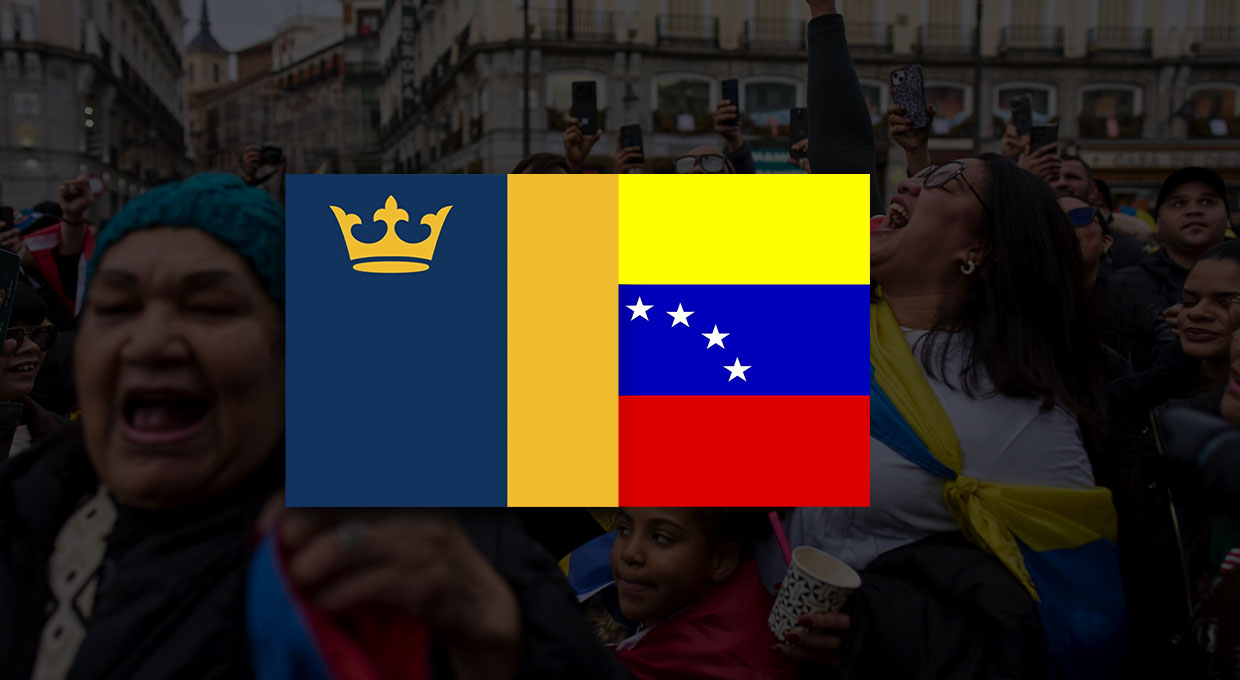
The United States capture of Venezuelan President Nicolás Maduro has sent shockwaves far beyond Caracas.
On Jan. 3, the United States (U.S.) conducted a large-scale strike against Venezuela that culminated in the capture of its president. United States President Donald Trump has since said that the United States would now be overseeing the country and its oil revenue, suggesting such supervision could continue for years.
Karen Dubinsky, an associate professor with an interest in Canadian-Global South histories, spoke with The Journal about Trump’s motives in targeting Venezuela.
“It hasn’t instituted, quote, unquote, regime change. It hasn’t instituted democratic reforms,” she said. “So, when Trump keeps interrupting everybody else’s conversation, saying it’s about oil, maybe this is one time we actually ought to believe him that it’s about oil.”
Dubinsky claims this operation marked a “sharp shift” in U.S. foreign policy and international order. “In our era, it’s the first time a political leader from the most powerful country in the world has justified [a takeover] in terms of raw, naked economic interest,” she said.
While some Venezuelans were happy to see Maduro gone, citing his jailing of political opponents and his driving millions out of the country, others are nervous about the uncertainty of the country’s future and what role the United States will play.
Nicolas David Brasset Duque, ArtSci ’25, told The Journal in an interview that while he no longer lives in Kingston, and is instead currently in the Venezuelan-bordering country Colombia, he’s spoken with Venezuelan friends still at Queen’s who are feeling these conflicting emotions.
“It’s a lot of joy that someone like Maduro is out of office, and he isn’t someone that the Venezuelan people have to be concerned about anymore,” Duque said. “But also, a lot of anxiety and uncertainty with what it means to now be essentially occupied by the United States.”
Duque, who claims to have seen a noticeable growth in the Venezuelan student population during his time at Queen’s, expressed concern over how this could affect their mental well-being and academic performance.
“It’s not easy if you’re studying, if you’re trying to go for your exams, if you’re trying to pass your midterms or whatnot, and you’re worried about your grandmother at home,” he said.
He suggested that Queen’s should improve mental health supports and academic supports accordingly, and that students—regardless of nationality—should pay more attention to what’s happening in Venezuela.
“This behaviour from the U.S. is something that’s concerning for everyone,” Duque said. “[…] The minute this new administration was elected, they started calling Canada the first the 51st state. So even if you don’t have family in Venezuela, it’s so important that you educate yourself on why this happened, how this happened, and what may happen afterwards.”
Dubinsky agreed that Queen’s students should be more educated on these topics and criticize the University for not replacing two instructors of Latin American Studies at Queen’s who recently retired: David Parker and George Lovell.
“[Queen’s students] aren’t learning enough about Latin America any longer in their courses, because the University is squeezing the history departments and the geography departments dry,” she said. “There are plenty of Latin American experts. It’s not like there’s nobody. But Queen’s isn’t rehiring in those fields. And that is even shorter after something like this happens.”
Tags
donald trump, international politics, Venezuela
All final editorial decisions are made by the Editor(s) in Chief and/or the Managing Editor. Authors should not be contacted, targeted, or harassed under any circumstances. If you have any grievances with this article, please direct your comments to journal_editors@ams.queensu.ca.