
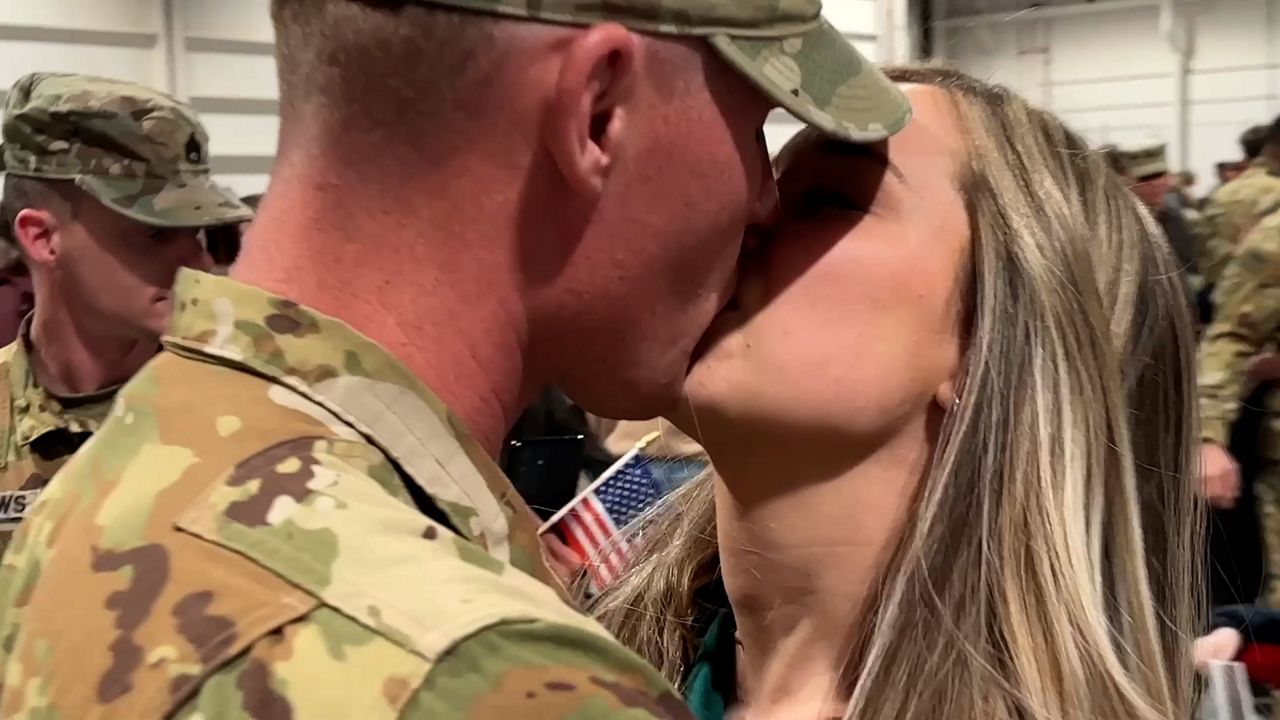
When service members put on their uniforms, their families shoulder the weight of military life alongside them. Now, New York is launching a program designed just for those families: a virtual “healing haven” for military spouses.
For Cindy Meili, whose husband has served for three decades and whose two sons are in the Air Force, the need for such a space has been clear for years.
“Our unique challenges we face, like our frequent moves or lack of child care, or just our specific needs in our relocations or career interruptions, or just the emotional toll of military life,” she said, “are often hard for others to understand.”
Meili shared her experience with her daughter-in-law, who is facing many of the same pressures.
What You Need To Know
Healing Haven is a statewide, twice-monthly virtual peer-support program for spouses of service members and veterans
Sessions are confidential and led by stress-relief expert Brett Cotter, focusing on identifying and managing emotions tied to military life
The program is in a trial phase through the end of the year, with hopoes it becomes a permanent part of state veterans’ services
“The things that she was feeling and thinking were normal. Are normal,” Meili said. “It’s OK sometimes not to be OK and to be able to cry it out if you need to … but don’t be afraid to build that support network.”
That kind of support is at the heart of Healing Haven for Military Spouses, a new statewide, peer-to-peer program from the New York State Department of Veterans’ Services. The initiative offers confidential virtual gatherings twice a month for spouses of service members and veterans, giving them a place to connect, share and be heard.
“At 25 years old, I had a 6-month-old baby boy, and I put my husband on a plane to Iraq,” recalled military spouse and advocate Tracy DuShane. “In 2003, we didn’t have those supports as an active-duty military spouse.”
Sessions are led by Brett Cotter, a stress-relief coach and CEO of Stress Is Gone.
“We’ll find out what the biggest stressors are, what emotions are fueling their stress reaction, what thoughts are perpetuating it and where the tension is stored in the body,” Cotter said.
The program is in a trial phase through the end of this year, but state officials hope it will become a permanent part of New York’s veterans’ services.
“They’re serving right along with their spouse who is in military uniform,” said Benjamin Pomerance, deputy counsel at the Department of Veterans’ Services. “We want to make sure that we have resources for them and opportunities for them to be in community with each other.”