
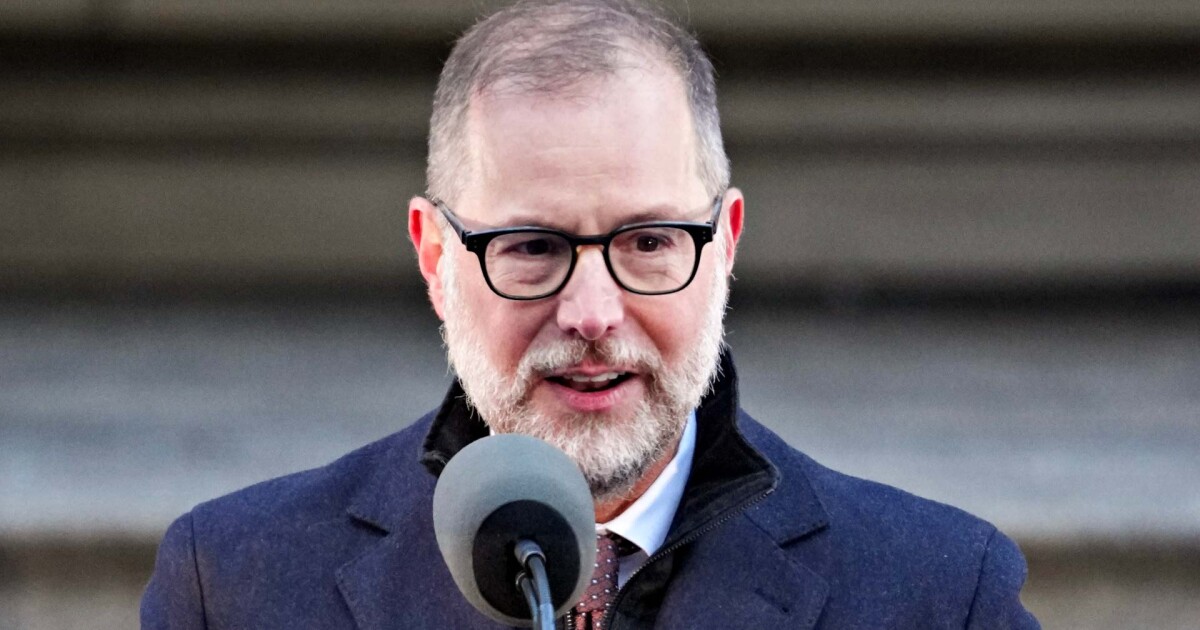
 New York City Comptroller Mark Levine was sworn in on Jan. 1.
Bloomberg News
New York City is staring down a $12 billion budget gap, Comptroller Mark Levine announced Friday.
Processing Content
The freshly-inaugurated comptroller’s projections are more dire than the most recent forecasts from the city’s Office of Management and the Budget; they’re even more dire than those of the watchdog group Citizens Budget Commission. Levine predicts a $2.2 billion shortfall for fiscal 2026 and a $10.4 billion shortfall for fiscal 2027.
Levine was inaugurated Jan. 1, along with Mayor Zohran Mamdani.
Levine attributed the gap to the bad budgetary habits of Mamdani’s predecessor Eric Adams, including under-budgeting for certain expenses. Mamdani will need to address the gap when he submits his first executive budget at the end of the month.
Out-year budget gaps are not new territory for New York, but $10 billion is nearly 9% of the current year’s budget. And having a significant shortfall mid-year is uncommon, Levine said.
“What we’re seeing here is remarkable — unique, I believe, since the 2008 financial crisis,” Levine said.
The shortfall does not stem from lower-than-expected revenues, Levine said — tax receipts are actually up — but from higher-than-expected expenses.
For years, he said, the city has under-budgeted costs for police overtime, shelters, public assistance, Department of Education due process cases, and a rental assistance program called CityFHEPS.
This under-budgeting grew worse throughout Adams’ tenure, and for fiscal 2026, Adams’ last budget, under-budgeted expenses reached $3.6 billion, according to Levine.
Levine drew special attention to CityFHEPS, formally the City Fighting Homelessness and Eviction Prevention Supplement. The cost of the Section 8-style program has been growing at roughly 4% each month, he said. But when New York City writes its budget, city councilors always assume the cost will be flat.
“This is a really important program for New York City. It’s helping families leave the shelter system and keeping them in their apartments at a time when we do have a housing affordability crisis,” Levine said. “But we’re not honestly accounting for [the cost].”
In fiscal years 2028 and 2029, CityFHEPS is likely to cost $3 to $4 billion more than the city projected in its most recent financial plan, Levine estimates.
Neither the city’s projections nor Levine’s projections include the potential cost of expanding CityFHEPS; a policy to do so is held up in court, and, if the court allows, he expects the expansion could add $6 billion to $20 billion to the city’s budget over the next five years.
The comptroller took swipes at other budgeting practices of the Adams administration, such as a reliance on one-time revenue sources to cover recurring expenses. Under Adams, the city also shrank its pre-pays for future expenses, which is akin to spending down reserves.
On the bright side, Levine said the budget gap has nothing to do with the city’s revenues. Economic indicators seem good, he said, noting fast-growing commercial leasing, rebounding tourism numbers and a very strong stock market. The one caveat: the city’s only job growth has been in low-paying jobs in the social services sector.
New York Gov. Kathy Hochul and Mamdani recently announced that their FY 2027 budgets will include the first phase of a universal childcare program. Hochul stressed in her State of the State address that she was not willing to permit tax hikes in New York City.
When asked how Mamdani’s bold agenda would fare given the budget gaps, Levine voiced support.
“I actually don’t believe [the budget gap] means we can’t do bold things programmatically,” Levine said, “but it’s got to be done in the context of honest budgeting, or we’re simply going to make these problems much more acute in the years ahead.”