
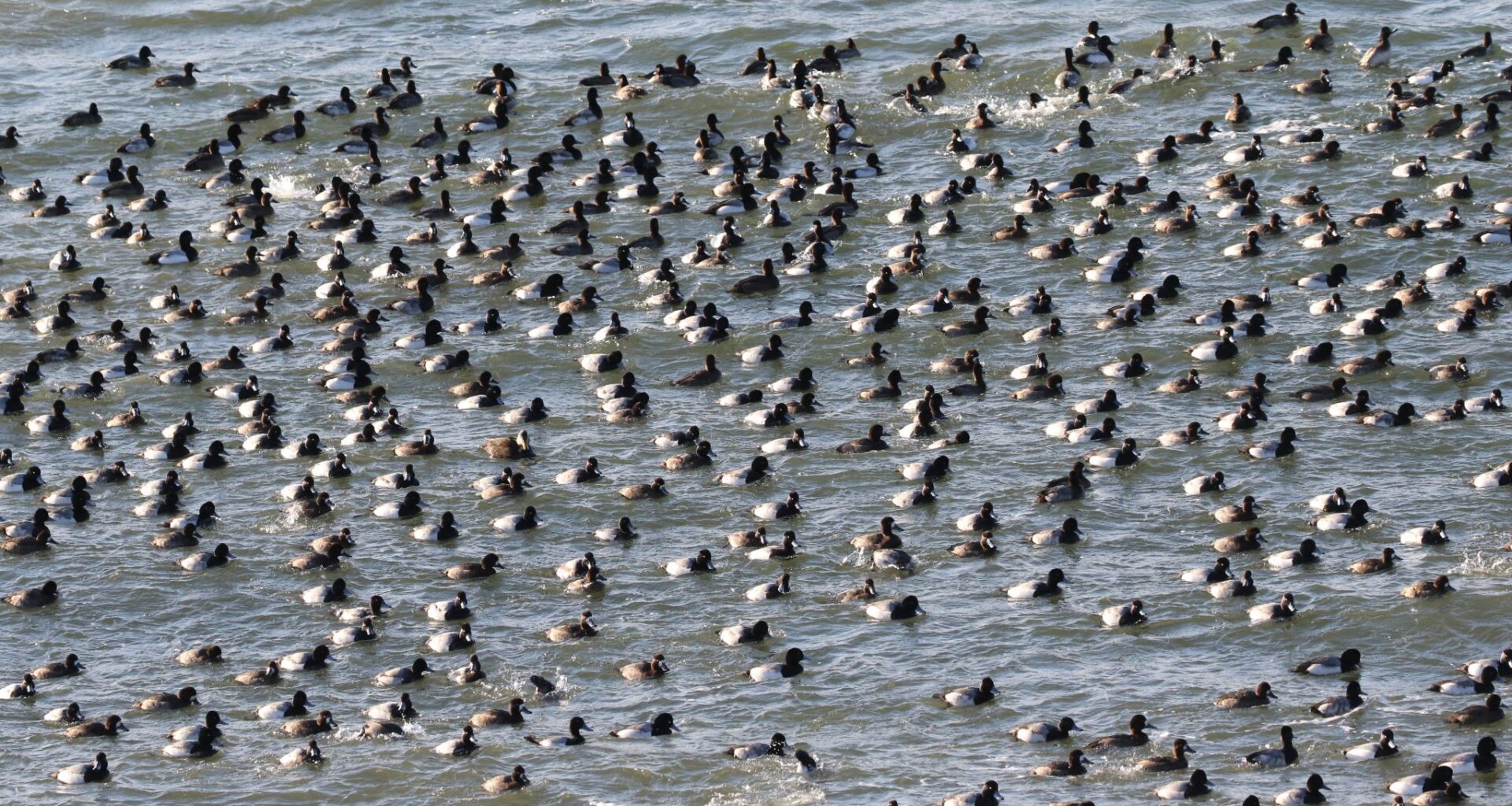
Highly Pathogenic Avian Influenza (HPAI) continues to infect birds and mammals across the U.S. and Canada, including New York State.
This “bird flu” is carried by free-flying waterfowl and other waterbirds, such as ducks, geese and shorebirds, but can also infect domestic poultry, raptors, corvids and mammals. DEC’s Wildlife Health Program is monitoring the spread and impact of HPAI throughout the state and has an online reporting tool the public can use to report suspected HPAI mortalities: NYSDEC Avian Influenza Reporting Form. Updates on HPAI can be found on the Cornell Wildlife Health Lab website.
Avoid contact with sick or dead birds and mammals
There is no way to contain HPAI infection in wild birds. Be aware that the clinical signs for HPAI infection in wildlife are nonspecific and may be similar to other diseases or injuries. Waterfowl, waterbirds, raptors and scavenging birds are at higher risk of infection, but any species could potentially be infected. HPAI-infected birds may be asymptomatic or may exhibit signs of respiratory distress (sneezing or nasal discharge), lethargy, neurologic malfunction (ataxia, stargazing or seizures), diarrhea, weakness or sudden death.
State Health Commissioner Dr. James McDonald said, “While avian influenza continues to affect wildlife, the risk to humans remain low. New Yorkers can stay safe by avoiding contact with sick or dead birds and animals and reporting anything unusual. We’re keeping a close eye on the situation and will continue to share updates as needed.”

New York wildlife biologists examine the remains of a bald eagle for avian flu. Warning: Graphic images may be disturbing for some viewers.
Where DEC staff do not provide a physical response and removal is deemed necessary by the landowner, DEC advises landowners to use disposable gloves, a mask and eye protection. Additionally, DEC advises against direct contact with the carcass or carcass fluids by recommending the use of a shovel and washing hands and clothing with soap and hot water immediately afterward. Carcasses disposed of in this way should be triple bagged (garbage or contractor bags) and put in an outdoor trash receptacle for trash pickup or deposited at a local landfill.
There is no treatment for HPAI, and transporting suspected HPAI-infected birds to wildlife rehabilitation facilities is discouraged to prevent the spread of the disease to other animals in care. Guidance has also been provided to licensed wildlife rehabilitators to help them minimize risks to animals in their care and to aid them in their interactions with the public.
The U.S. Centers for Disease Control and Prevention states that the recent HPAI detections in birds pose a low risk to the public. HPAI H5N1 has been detected in more than 70 humans in the U.S., including two mortalities; most of these cases involved close contact with infected domestic birds or cows. There is likely little risk for the public, but people with close or prolonged unprotected contact with infected birds or virus-contaminated environments, especially immunocompromised people, are at greater risk of infection. No human-to-human transmission of the virus has been documented.
Status of avian influenza in New York
Since it was first introduced into New York state in January 2022, HPAI has been documented in captive birds in multiple counties and detected in free-ranging wild birds and mammals throughout the state. Wild bird mortalities from HPAI increase in late fall and peak over the winter months, then typically decrease in the late spring and summer months. At this point, it is widespread in wild birds and even suspected to be present in counties where it has not yet been detected.
In addition to wild birds, avian influenza has also been confirmed in red fox, striped skunk, Virginia opossum, raccoon, fisher, gray squirrel, muskrat, and bobcat in New York State and in a wide range of mammals, particularly carnivores, in other parts of the U.S. In addition to domestic poultry, dairy cattle in other states have also been infected.