

Massimiliano Malagò’s design Materializes Voting Paradoxes
Vox is a modular brass chair designed by architect Massimiliano Malagò that examines the structural challenges of collective decision-making through the lens of mathematics. Drawing on the work of economist Kenneth Arrow and 18th-century mathematician Nicolas de Condorcet, the project materializes logical paradoxes that arise in ranked-choice voting (RCV) systems. Using New York City’s recently adopted RCV system as a case study, the design explores how electoral mechanisms intended to ensure fairness can instead produce paradoxes, dissatisfaction, and instability.
The project focuses on the act of voting as both a civic ritual and a site of systemic tension. Vox addresses structural concerns within voting systems, rather than issues such as low turnout or fraud, highlighting how different electoral methods can yield conflicting results. In November 2019, New York City voters approved a charter amendment implementing RCV for mayoral primaries and other municipal elections. While RCV was intended to address limitations of the previous first-past-the-post system, including runoff costs and low voter engagement, it also introduces potential structural contradictions, which Vox seeks to examine in material form.

all images by Helene Helleu, Cristina Colussi
letter-patterned brass panels assemble Vox sculptural object
Designer Massimiliano Malagò’s Vox is constructed from 75 waterjet-cut brass panels connected by 100 custom 3D printed interlocking joints, forming a lattice that functions as both structure and ornament. Each panel’s fold extends into a flange with an X-shaped cut, receiving a two-part joint that locks the elements together. The panels represent individual votes, with letters A, B, C, D, and E applied in vinyl to denote candidate rankings.
Three hypothetical electoral scenarios are embedded within the object, each illustrating a structural limitation of the voting system. One scenario demonstrates a violation of monotonicity, in which ranking a candidate higher can paradoxically cause that candidate to lose. Another highlights the violation of the independence of irrelevant alternatives, showing how the addition or removal of a losing candidate can alter the election outcome. The third scenario references the Condorcet paradox, where collective preferences form a circular loop that prevents the emergence of a clear winner.

Vox is a modular brass chair designed by architect Massimiliano Malagò
Vox turns abstract political concepts into spatial experience
By translating abstract mathematical reasoning and electoral theory into a three-dimensional object, Vox exposes the inherent instability of democratic systems. The brass lattice functions as both a symbolic seat of power and a physical representation of the complexities of collective choice. Each panel and connection visualizes the interplay of individual votes and systemic rules, revealing that instability is not an error but an intrinsic feature of democratic processes.
Through this material exploration, Vox demonstrates how design can transform abstract political and mathematical concepts into a tangible, spatial experience, highlighting the structural limitations and paradoxes embedded within contemporary electoral systems.
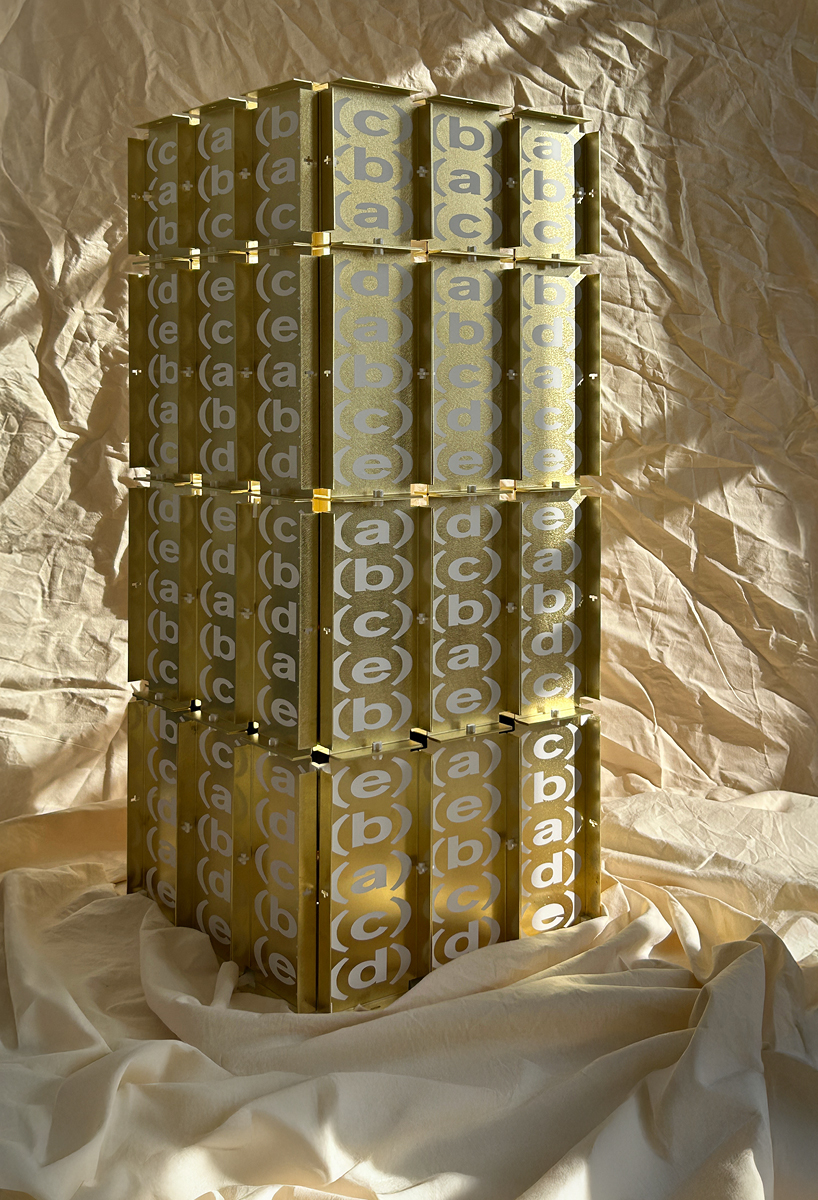
the project examines collective decision-making through mathematical principles
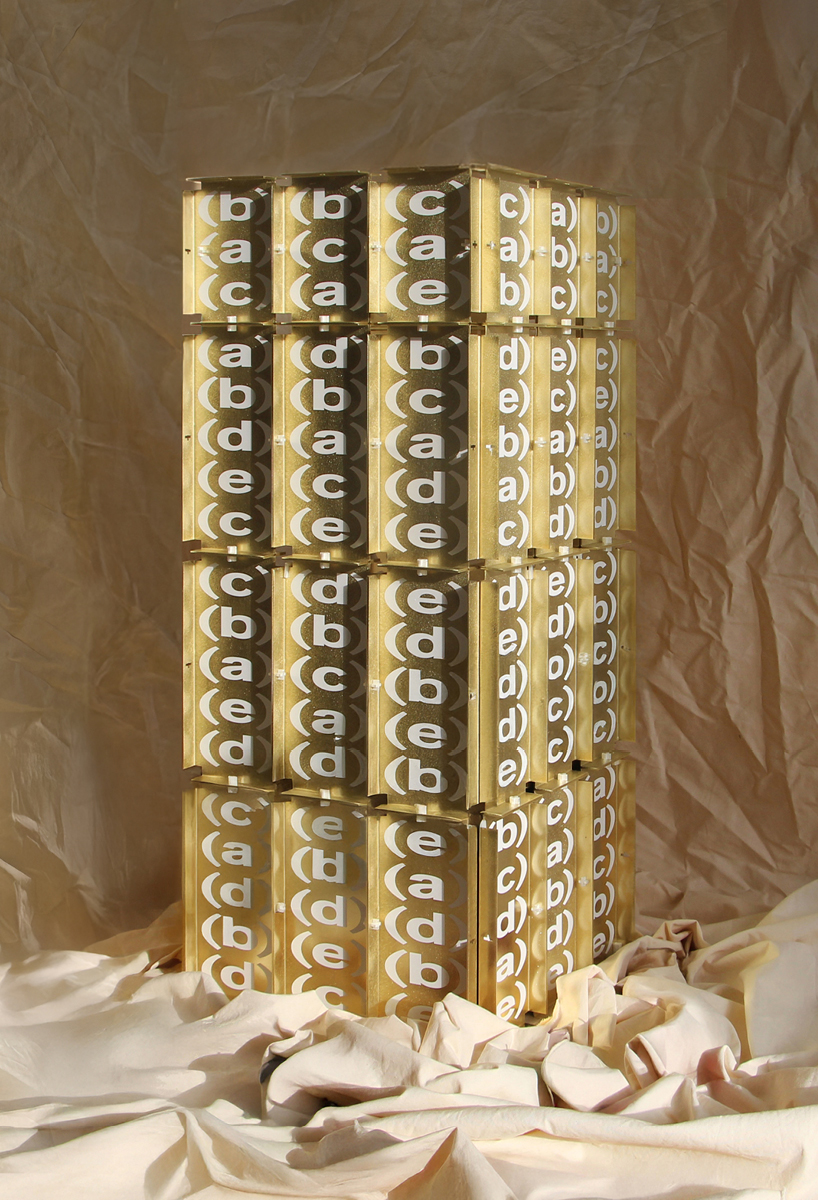
the design translates voting paradoxes into a physical object
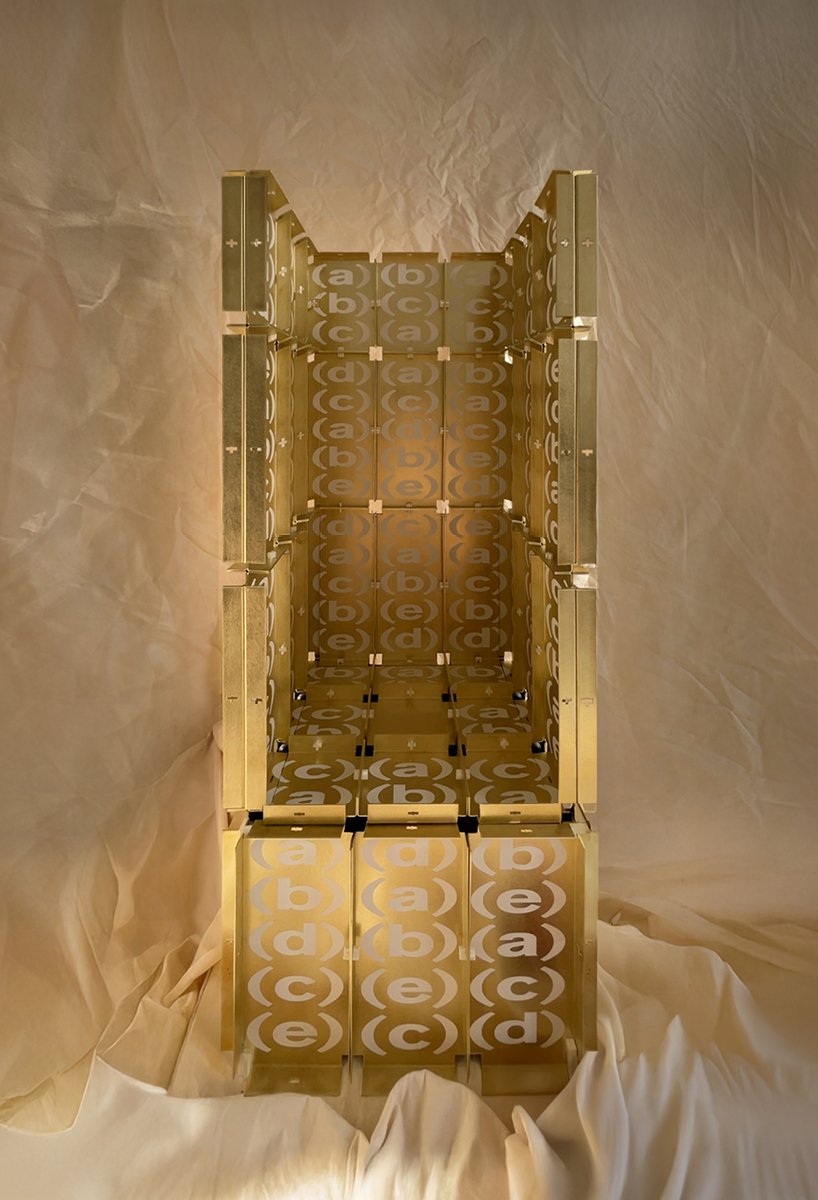
New York City’s ranked-choice voting system serves as the project’s case study