
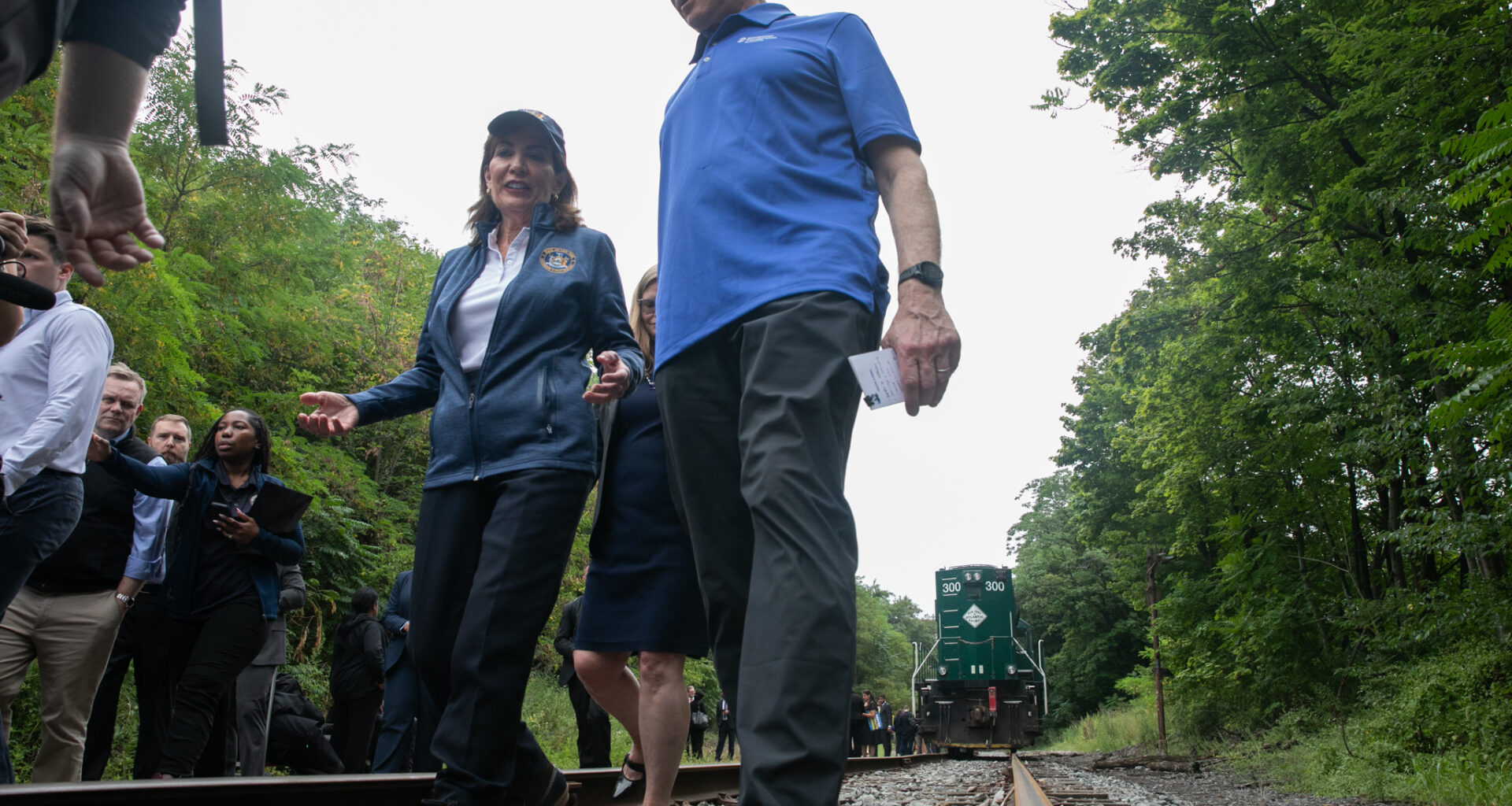
New York City’s mass-transit system is potentially on track for what could be its most ambitious expansion in close to a century thanks, in part, to a booster from the state’s western edge.
Gov. Kathy Hochul’s proposal last week to advance the possibility of someday extending the Second Avenue Subway west to three new stations beneath 125th Street marked her latest move to put her stamp on signature transportation projects.
While Hochul took a lot of heat from advocates for pausing congestion pricing less than a month before its original June 2024 start date, she’s now won many over with sustained support for major projects to build out the system that moves millions of New Yorkers daily.
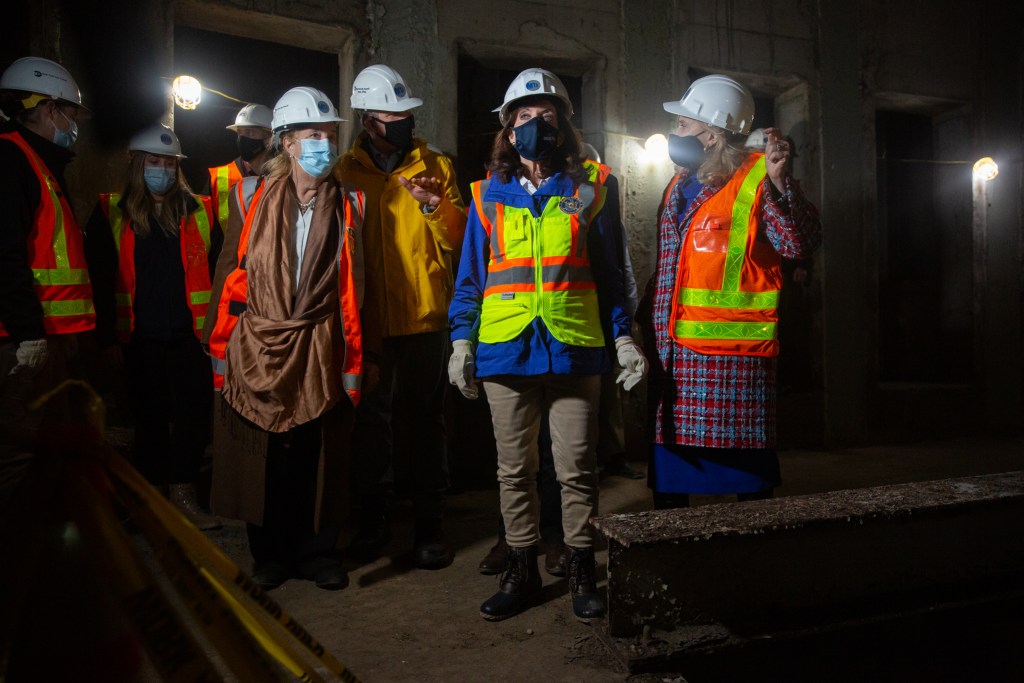 Gov. Kathy Hochul speaks to reporters in a never-used Second Avenue Subway tunnel built in the early 1970s, Nov. 23, 2021. Credit: Ben Fractenberg/THE CITY
“She’s building a transit legacy for herself,” said Kate Slevin, executive vice president at Regional Plan Association. “New Yorkers, for generations, will benefit if this comes to fruition.”
The high-profile focus on mapping out and possibly building multiple expansion projects at once — even as the MTA’s current $68 billion five-year capital program is centered almost entirely on maintaining the existing system — comes about a decade after three sizable MTA expansion efforts were in the works.
That’s when the authority was extending the No. 7 line from Times Square to 34th Street-Hudson Yards, building a cavernous Long Island Rail Road hub deep beneath Grand Central Terminal and finishing three new Q line stations beneath Second Avenue on the Upper East Side.
The earlier expansion wave began moving from renderings toward reality under then-Gov. Andrew Cuomo, who resigned in 2021.
While the MTA completed a nearly 10-mile third track LIRR expansion on Long Island in 2022, its more recent big-ticket capital projects in the city have largely been geared toward upkeep of a subway system that is more than a century old.
“Our focus in the last couple of years has been making sure that everybody understood it was time that we must invest in the existing system in New York’s interest, in the interest of our riders,” Janno Lieber, MTA chairperson and chief executive, told THE CITY.
Hochul, a Buffalo native, announced in her January 13 State of the State address that the MTA will look at the potential westward expansion of the Second Avenue Subway. She also unveiled plans to fund design work on a reimagined Jamaica Station that would better integrate subway, LIRR and AirTrain service at the Queens transportation complex.
One construction option for the Harlem subway proposal would be keeping the 700-ton tunnel boring machine that will carve north to 125th Street in the ground on its path to a Broadway terminal.
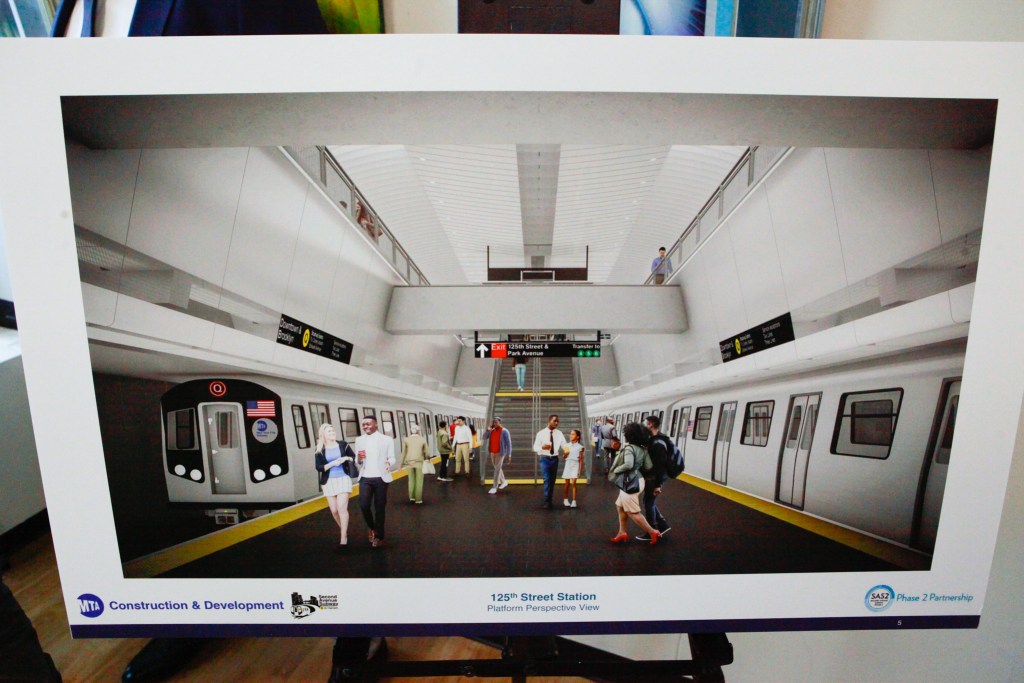 The MTA released renderings showing the planned 125th Street terminal for phase two of the Second Avenue Subway, Aug. 18, 2025. Credit: Alex Krales/THE CITY
“We’re preserving the opportunity to save hundreds and hundreds of millions of dollars by continuing west,” Lieber said. “So we haven’t made the final commitment, but we know we don’t want that opportunity to slip away.”
It came after Hochul previously backed proposals to stretch the Second Avenue Subway from 96th Street to East Harlem and to link Brooklyn and Queens via the Interborough Express light rail line. The MTA is also pushing to bring Metro-North trains to Manhattan’s West Side through the Penn Access project, which includes building four new commuter rail stations in The Bronx.
Hochul touted the long-term prospects for transit at an August event marking the start of design and engineering work on the IBX.
“We’re turning bold ideas into real results and transforming the way New Yorkers live, commute and travel,” she said at the time.
The IBX would be the first end-to-end mass-transit route constructed in the city since the IND Crosstown Line — now the G — fully opened in 1937.
“Once the governor says she likes it, that changes the ballgame,” said Philip Plotch, principal researcher and senior fellow at the Eno Center for Transportation and a former MTA planning and policy manager. “That raises its profile, it means there’s going to be more resources.”
“Every project needs a champion,” added Plotch, author of “Last Subway: The Long Wait for the Next Train in New York City,” a history of the Second Avenue Subway.
The MTA’s own 20-Year Needs Assessment in 2023 identified the IBX and the Second Avenue Subway West extension as the most promising in a comparative evaluation of 25 potential expansion and enhancement projects.
“It checks the boxes in terms of really high value for money, in terms of transportation and time savings and equity, as well, opportunities for people of limited means,” Lieber said.
Among the other unrealized projects included in the analysis were building a No. 7 line station at 10th Avenue, extending the W line to Red Hook, reviving the LIRR’s long-dormant Rockaway Beach Branch and building out the Second Avenue Subway south of 63rd Street.
“We know it’s a great project,” Lieber said of the Hochul-boosted idea for 125th Street. “How great and whether we can fund it and getting into all those specifics, that’s what we’re going to do in the next year.”
U-Turn for the Gov
The governor’s transition into championing MTA expansion efforts — while also backing key regional transportation projects such as the Gateway Program to build a new Hudson River rail tunnel — follows the 2024 period when she paused congestion pricing for months, until reviving it at a reduced rate days after Donald Trump was elected president in November of that year.
“She’s certainly the best governor for transit in more than a generation,” said Danny Pearlstein, policy analyst for Riders Alliance, an advocacy organization. “Partly, that comes from not being a New Yorker, by coming from Buffalo and showing up in the city and demonstrating that state government can work for the people.”
The Manhattan vehicle-tolling scheme was designed to help pay for transit improvements that include extending the Q north to stops at 106th, 116th and 125th streets. This month marked one year of tolling motorists south of 60th Street, a period highlighted by less traffic, speedier buses and a new funding stream for the perennially cash-strapped authority’s capital projects.
The MTA’s operating budget is also financially stable for the near term, after a 2023 effort by Hochul and Albany lawmakers pulled the transit system from the so-called fiscal cliff of service cuts, layoffs and higher fare increases.
“What sets her apart is she’s funded both the capital projects and the operations,” Slevin said. “She’s investing her political capital in longer-term projects that will go beyond the tenure of her being governor of New York.”
Congestion pricing is now seen as a crowning achievement for Hochul and Lieber, who led MTA Construction & Development from 2017 to 2021, when he was nominated as acting chairperson and chief executive by Cuomo.
After Cuomo resigned, Hochul tapped Lieber for the top job at the MTA in January 2022 and she has found an influential ally in the construction and federal government veteran.
“I think Janno’s not-so-secret power is that he has been extraordinarily effective in hyping the governor up for this stuff,” said Eric Goldwyn, an assistant professor at the NYU Marron Institute and a member of its Transit Costs Project.
That has Hochul and MTA officials looking beyond the next section of the Second Avenue line, which would go north from 96th Street. With the governor in attendance, the MTA board last August approved a $1.9 billion contract to bore a new tunnel to East Harlem, as part of the $7.7 billion, three-station extension that makes up the second leg of the line.
“She likes visionary, challenging stuff,” Lieber said. “So she dug in on the IBX very early and she’s been a great supporter.”
The feasibility study for the westward extension projects that proposed stations at Lenox Avenue, St. Nicholas Avenue and Broadway could be built by having one or more tunnel-boring machines carve out the full length of a route now heavily used by crosstown bus passengers.
As he waited in sub-freezing temperatures Friday for an eastbound bus near 125th Street and Broadway, construction worker Lazaro Ramos said commuting at street level is often frustrating.
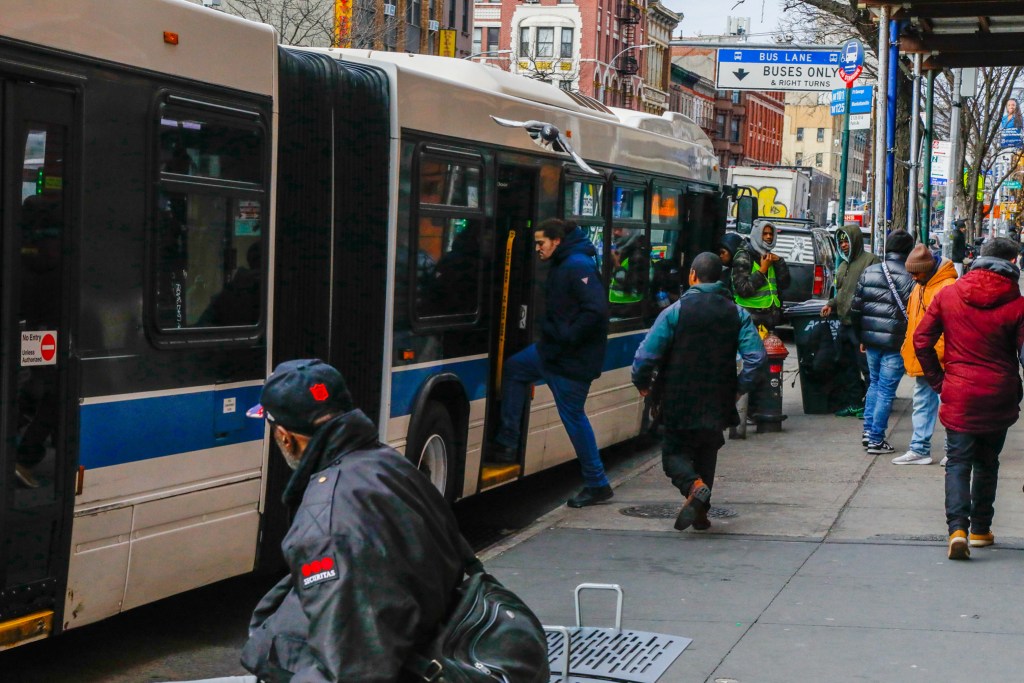 Commuters board an MTA bus on East 125th Street, Jan. 16, 2026. Credit: Alex Krales/THE CITY
“A train would be so much faster to get across town,” said Ramos, 38. “We wouldn’t have all that traffic and the bus stopping, stopping, stopping and filling up with people.”
The next step in the process would be to start design and preliminary engineering work on how to advance tunneling west from East Harlem.
“Doing this on 125th would really shorten a lot of subway commutes or eliminate a bus transfer for very large numbers of people,” Pearlstein said. “[Buses] crawl and this is the most important route between 53rd Street and Fordham Road, but it’s very, very slow.”
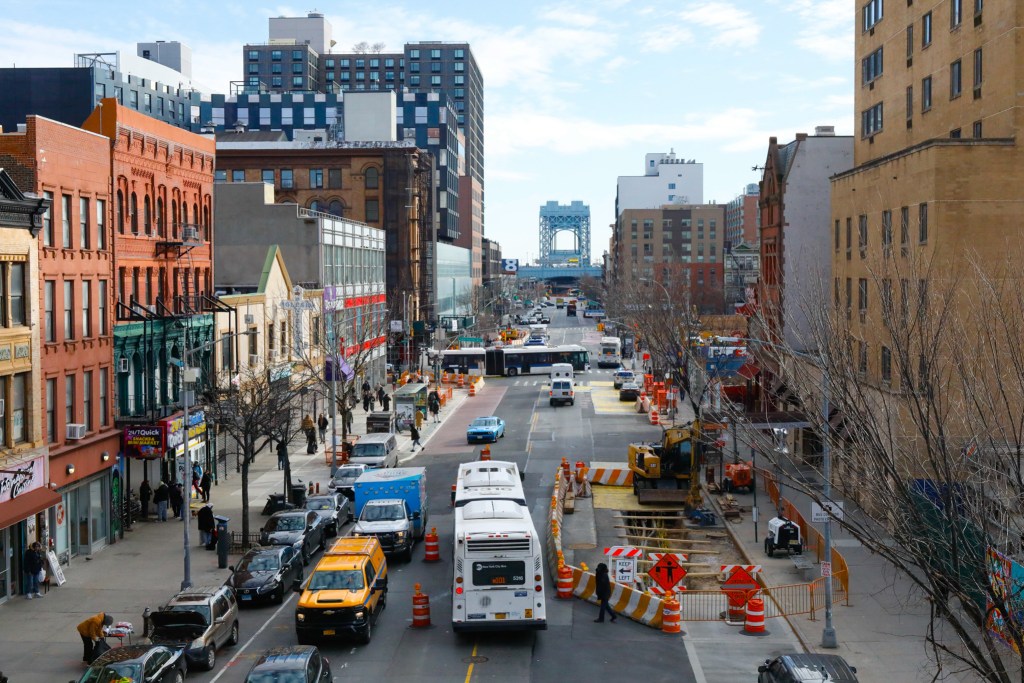 A proposed subway extension along 125th Street could someday connect to seven existing lines and 27 MTA bus routes, Jan. 16, 2026. Credit: Alex Krales/THE CITY
Each of the Hochul-backed expansion projects faces obstacles, questions over how they would be paid for and an unclear appetite for funding from the federal government.
“The big issue in New York is, how the hell do you pay for this stuff?” Goldwyn said.
The 19-station, $5.5 billion Interborough Express light-rail line — which would run on an existing freight route between Jackson Heights and Bay Ridge — is in its early engineering and design stage and not yet fully funded. President Donald Trump has threatened to withhold funding from Phase Two of the Second Avenue Subway. The plan to study the line’s western extension is in its infancy, with Hochul set to reveal its anticipated cost for design this week.
Construction of the $4.5 billion first stretch of the Second Avenue Subway and of the $11 billion LIRR terminal beneath Grand Central Terminal was marked by high costs and excessive staffing.
A 2017 New York Times investigation famously labeled the first leg of the Second Avenue line the “Most Expensive Mile of Subway Track on Earth.”
But Lieber told THE CITY that coming in on time on and under budget on recent capital projects such as the LIRR third track expansion and the 2020 completion of the L line repairs from Sandy-related damage has given the MTA “a ton more credibility” for managing megaprojects such as those that could eventually come off the drawing board.
“That’s part of how we’ve garnered the governor’s support and support in general for taking these next steps,” Lieber said.
Related