
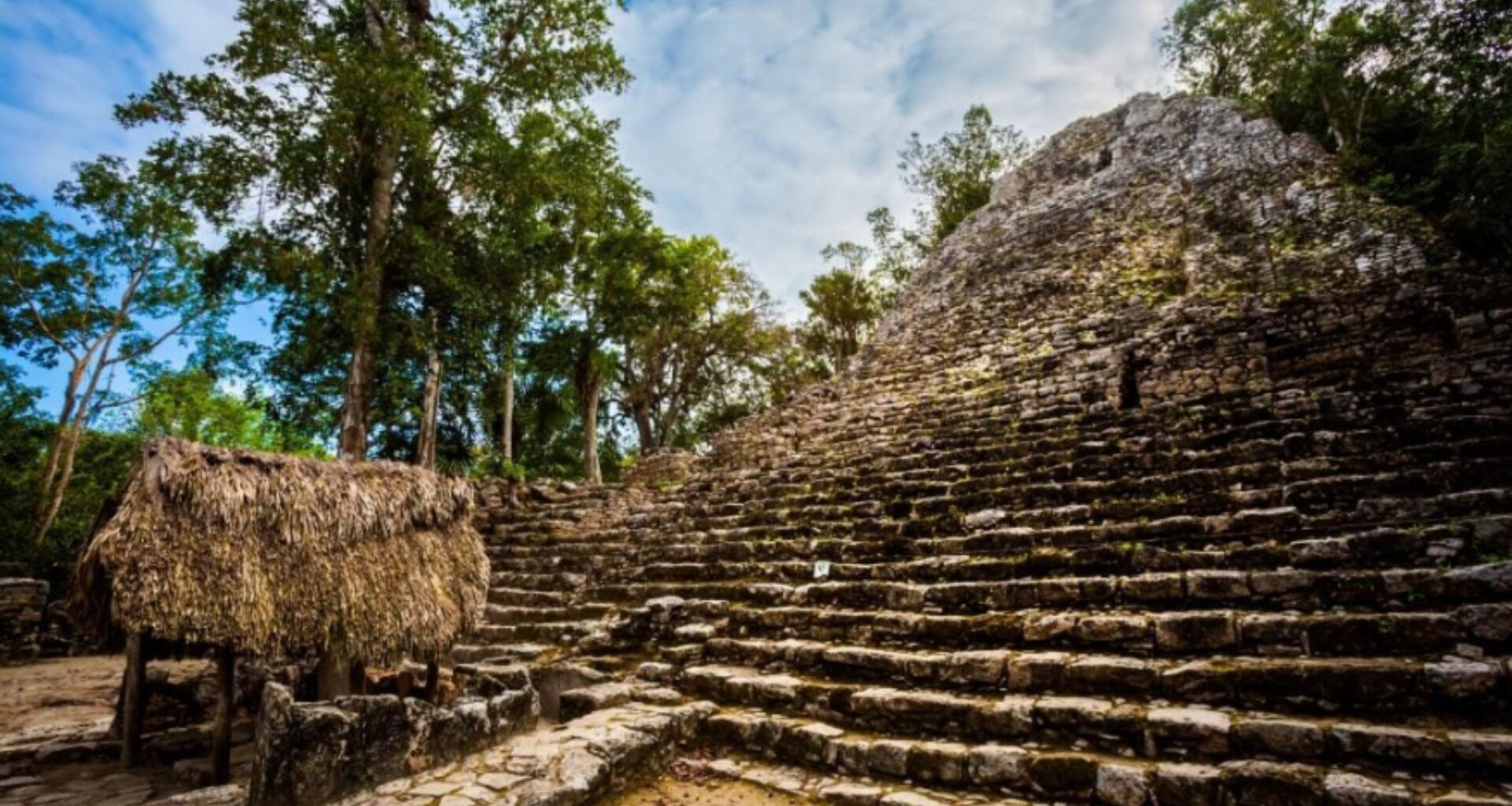
A woman’s name has reappeared in the historical record of an ancient city named Cobá in southern Mexico, altering what is known about the queen who held power there.
The discovery identifies a female ruler whose authority shaped that city during a decisive moment in the sixth century.

The evidence comes from a newly interpreted inscription at the Maya city of Cobá in present-day Quintana Roo, where carved text on a limestone slab links rulership to Ix Ch’ak Ch’een.
Ix Ch’ak Ch’een ruled Cobá during a period when the city was expanding its influence across the northern Yucatán.
Ancient queen of Cobá
Agreement across several monuments strengthens the case that the name belongs to one ruler, not a cluster of lookalikes.
Researchers at the University of Texas at Austin are comparing letterforms and dates across monuments to test whether the inscriptions point to a single ruler.
The work is led by David Stuart, Ph.D., and at UT Austin his research focuses on Classic Maya writing and dynastic politics.
The emerging picture suggests a ruler who consolidated power rather than founding it outright.
“She was not the founder of the dynasty, but she definitely helped to establish Cobá as a regional power,” Stuart said.
Stone found in shade
Under a stairway near the Nohoch Mul complex, the slab sat beside a natural waterhole for centuries.
Conservators scraped away salt crusts that blurred fine cuts, letting hieroglyphs, symbols that write sounds and words, show again.
The 14-by-11-foot surface required detailed imaging to trace lines that had faded beyond the naked eye.
Broken edges and mineral buildup still erase parts of the message, so every translation has to leave room for revisions.
Queen’s name etched in Cobá rock
A detailed paper matched the slab’s lettering with other carvings to confirm that a single queen was being named.
References appear on stelae, upright carved stone monuments set up in plazas, including numbers 26 and 30, and on Panel 7 nearby.
Scribes sometimes paired her name with different deity titles, yet the surrounding dates remain consistent.
Because several glyph blocks are eroded, the identification rests on patterns rather than a perfect, untouched name spell-out.
One line of the text records a precise date tied to the creation of a top leadership office. Converted to the modern calendar, it falls on May 12, 569, and points to a place called Kehwitznal.
That name likely refers to the Nohoch Mul group, where Cobá built its largest platforms and pyramids.
By tying an office to that precinct, the text suggests political reorganization, even though the ruler’s enthronement date remains unclear.
Ceremonial construction milestone
Another passage marks the end of a roughly 20-year period, which falls on December 8, 573. That moment coincides with the construction of a major ceremonial ballcourt.
Adding a ballcourt reshaped movement through the complex, because long masonry walls created a defined playing lane for ceremonies.
Period endings were public, so the carved record implies that the ruler’s court staged authority for a large audience.
Roads extend Cobá’s reach
Cobá’s leaders built sacbeob, raised stone roads surfaced with pale plaster, to connect districts and project authority across distance.
One celebrated causeway called Sacbe 1 runs about 62 miles (100 km) from Cobá to Yaxuná.
By lifting travelers above low, wet ground, these roads made dry-season and rainy-season routes more predictable for trade and visits.
Because building and maintaining that network took coordination, it hints at a government that could marshal labor beyond one construction season.
Water and gods on stone
Set beside the Nohoch Mul waterhole, the inscription links the ruler to protective deities tied to Cobá’s lineage.
By naming divine patrons, the text presents royal authority as sanctioned and protected beyond the human realm.
Cutting the text at the water’s edge placed names and gods where people gathered daily, which could reinforce loyalty through routine visits.
Eroded blocks leave uncertainty about whether these lines describe public ceremonies, origin stories, or private claims of legitimacy.
Titles hint at alliances
One phrase introduces kaloomte’, a top war and leadership title, in connection with the ruler and a founding event.
Such titles mattered because they organized status in writing, letting distant courts compare rank without meeting face to face.
Comparisons with inscriptions elsewhere suggest a tie to the Kaanul polity and its ruler Sky Witness during the sixth century.
Because Cobá still lacks clear references to that foreign dynasty, the proposed connection remains uncertain while study continues.
Lessons from this Cobá queen
Across the Maya lowlands, carved texts show royal women acting as rulers, diplomats, and sometimes war leaders.
These records work because names, titles, and parentage are written into public monuments, which lets historians trace careers across sites.
Ix Ch’ak Ch’een now joins that roster, yet the surviving passages still say little about daily governance or succession planning.
Pinning down her decisions will require more readable stone surfaces and more excavation that links texts to households and graves.
Together, restoration and cross-checking are turning damaged signs into a clearer timeline for a queen long reduced to fragments.
What remains unread may matter just as much as what has already come into focus.
Future work may refine her alliances and titles, but gaps in the carving will always limit how complete the story becomes.
—–
Like what you read? Subscribe to our newsletter for engaging articles, exclusive content, and the latest updates.
Check us out on EarthSnap, a free app brought to you by Eric Ralls and Earth.com.
—–