
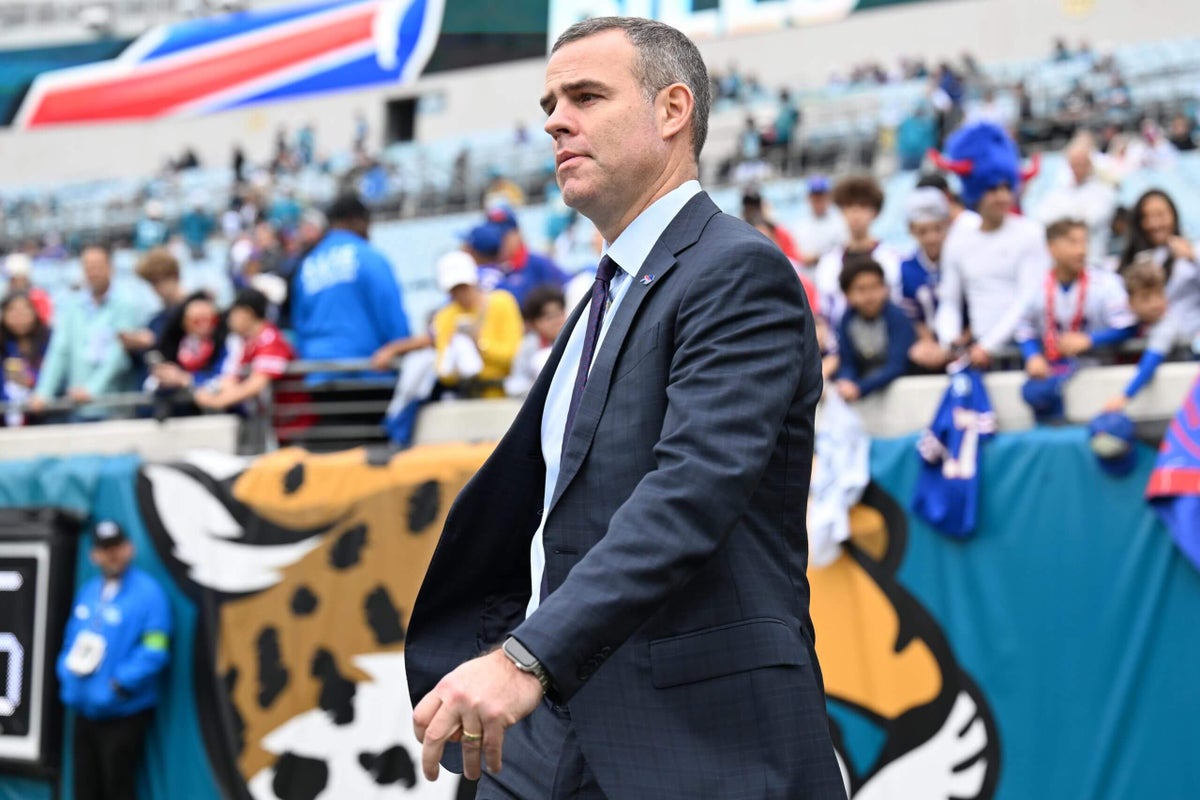
Sean McDermott gets fired, and Brandon Beane gets a promotion.
How does that happen?
Terry Pegula has been an enigma when it comes to how he hires and fires his top employees with the Buffalo Bills and Buffalo Sabres. There is no playbook for guessing.
For years, Pegula was adamant that it made sense for his NFL and NHL teams to operate with different front office structures. With the Bills, he preferred the coach and the general manager report individually to the owner. With the Sabres, he wanted the coach to report to the general manager, the general manager to the owner.
Now, he wants them to be the same. And with Beane as president of football operations, the flow chart goes through him to Pegula. Now there is no confusion. Beane will have final say and no longer must compete with McDermott for Pegula’s attention.
And that’s why it’s easy to see how Beane not only gets to stay after his most disastrous season as Bills general manager, but also strengthens his place in the organization – similar to how Russ Brandon did it as an executive and Kevyn Adams as Sabres GM.
Beane and Pete Guelli watch the games with Pegula. Beane talks to Pegula about the team as the game transpires. We saw a glimpse of Pegula watching film with Beane during “Hard Knocks: Training Camp with the Buffalo Bills,” when the owner asks Beane who No. 44 is and whether he’d changed positions. Beane calmly answered both questions: second-year linebacker “Buffalo Joe” Andreessen, and no.
Beane has Pegula’s ear, and when it comes to power in a Pegula sports enterprise, that’s what matters most.
It’s also easy to imagine Beane being peeved at McDermott’s repeated, veiled swipes at the Bills’ roster holes by talking about other teams seemingly with envy.
An hour after losing to the Denver Broncos in overtime, a source close to McDermott said he believed his job was safe. A veteran Bills player said all seemed well on Sunday, with McDermott conducting exit interviews, as is the norm.
To announce, less than 32 hours after the Bills’ plane landed in Cheektowaga, that McDermott had been fired while Beane and Guelli had been promoted shows this was in the works for a long time. Guelli has been chief operations officer but now he’s president of business operations, a title that grants him added access at the league office and consolidates his power at One Bills Drive.
Pegula embraces those he trusts. That’s how Russ Brandon went from the verge of dismissal when Pegula bought the team in 2014 to president of both the NFL and NHL clubs by 2015. That’s how former Bills GM Doug Whaley went from being nearly fired to keeping his job two more years.
Pegula was unable to convince Hall of Fame executive Bill Polian to leave retirement and join the Bills’ front office. Then, former coach Doug Marrone executed a weird exit clause in his contract upon a change of ownership and left Buffalo with a $4 million payment. So the men Pegula wanted to move on from — Brandon and Whaley — suddenly became too valuable to dismiss because the new NFL owner had no one else to lean on to hire the next coach. So they huddled in the Pegula home office in Florida for the next couple of weeks and forged a bond. Until Pegula fired them, he swore by Brandon and Whaley as his top confidants.
Pegula was always miffed by angry fan sentiment that Russ Brandon meddled with football decisions and once asked me why people think a business executive would have such influence. I said it stemmed from the three years Brandon was Bills GM under Ralph Wilson’s ownership from 2008 to 2010. Pegula pushed back about that being true; he did not know Brandon was once the general manager of the team he owned.
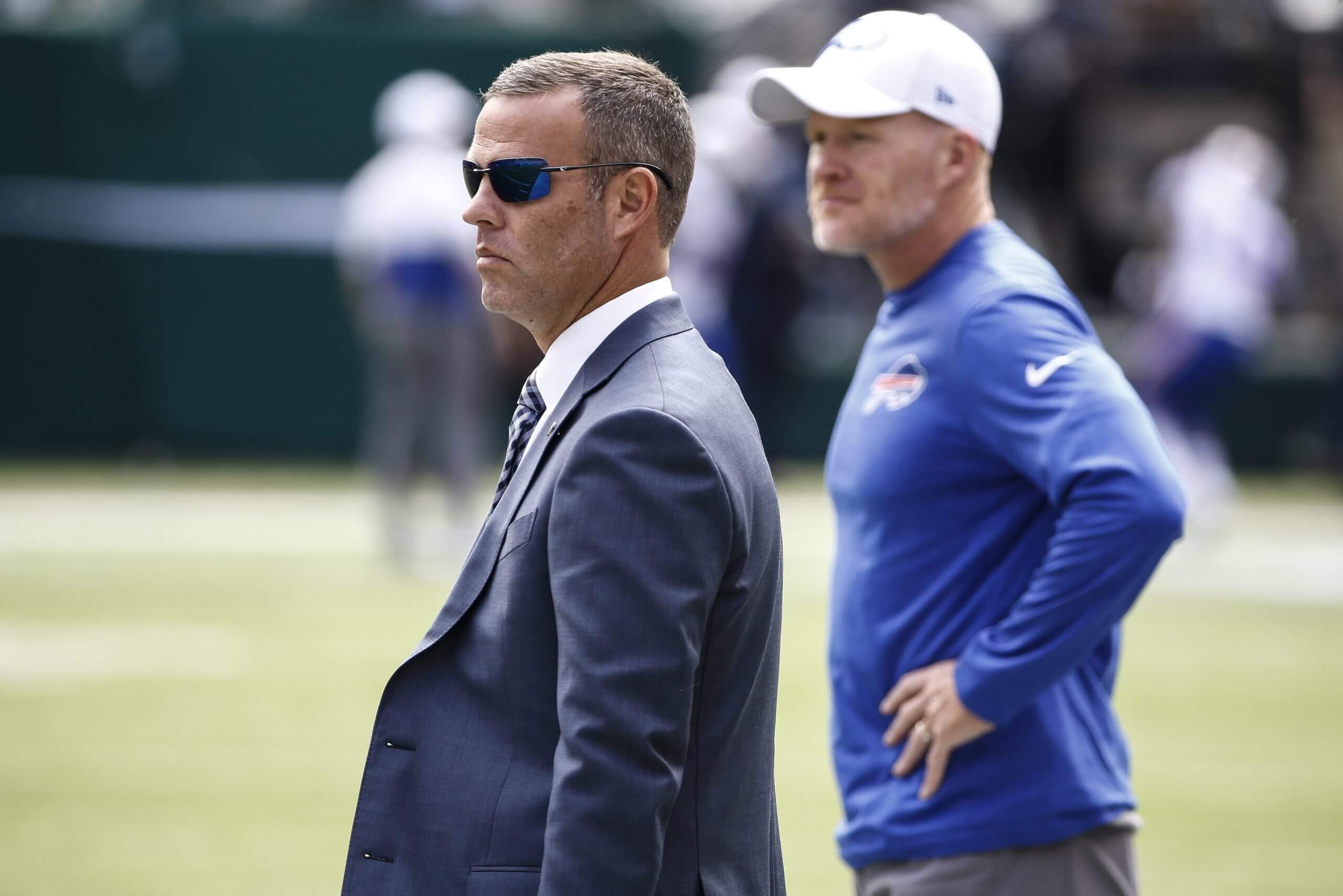
Brandon Beane had his most disastrous season as Bills general manager, but was not fired along with coach Sean McDermott. (Jeff Zelevansky / Getty Images)
Adams became Sabres GM despite lacking high-level scouting or executive experience, partly because he watched games with Pegula and constantly shared opinions with the owner.
Beane’s 2025 offseason will be remembered most for his condescending comments to WGR 550-AM morning co-hosts Jeremy White and Joe DiBiase about their belief the Bills were weak at wide receiver and didn’t draft one early. The Bills loved Beane’s rant so much they made it the opener to their behind-the-scenes draft documentary, replaying the audio before mentioning the names of any rookies they actually selected. The radio folks turned out to be correct. Joshua Palmer, Khalil Shakir, Keon Coleman, Curtis Samuel, Elijah Moore and other fill-in-the-blank wideouts were Buffalo’s biggest offensive weakness.
Injuries limited Palmer to eight starts. The others were healthy scratches at some point. Coleman was benched for repeated tardiness. Moore was dumped in November to make room for the 32-year-old Brandon Cooks, who, aside from Shakir’s short-yardage reliability, became Josh Allen’s most potent wideout just like that.
Beane’s turbulent offseason included a contract standoff with running back James Cook. Beane gave contract extensions to several of Cook’s draft classmates but was reluctant to pay the running back top dollar. Their stalemate lasted into the preseason before a deal was brokered. Cook led the NFL with 1,621 rushing yards and scored 14 touchdowns.
A significant stumble was Beane claiming disgruntled Pittsburgh Steelers cornerback Darius Slay off waivers and cutting defensive back Ja’Marcus Ingram to make room. Slay refused to report to the Bills, and they lost Ingram to the Houston Texans. McDermott smoldered whenever asked about it. The Bills usually keep four boundary cornerbacks on their 53-man roster, but the fallout left them with three.
As if McDermott knew he was fighting for his reputation and standing within the organization, he praised opponents’ rosters specifically in areas where Buffalo was considered lacking. He lauded the Philadelphia Eagles’ defensive line as “a reason why they won the Super Bowl last year” and the Jacksonville Jaguars for trades that landed cornerback Greg Newsome and receiver Jakobi Meyers.
Beane admitted he tried to acquire a receiver at the trade deadline but was unable to swing a deal.
While finding some later-round gems such as Shakir, nickel back Taron Johnson and cornerback Christian Benford and many solid starters were accumulated, too many earlier picks failed to be game-changers. The most notable whiffs were edge rusher Boogie Basham, cornerback Kaiir Elam and Coleman.
Beane’s draft record is checkered, although he holds the trump card of making the trades to move up in the 2018 order to select Allen seventh overall.