
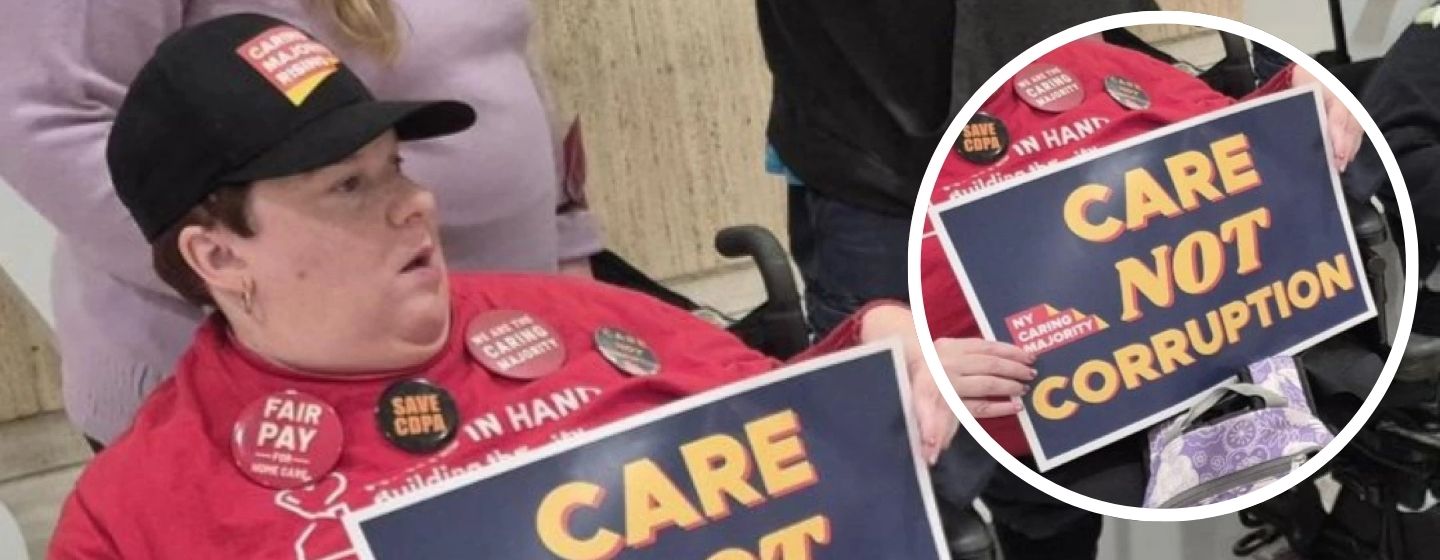
“I’ve heard from advocates. I’ve heard from families. I’ve heard about real problems, real problems with the transition,” he said. “We need to make sure people are not going without during this transition. We need to make sure we’re doing what we need to do to make sure that any transition doesn’t disrupt services.”
Hochul has previously defended the transition, calling it a much-needed reform. A spokesperson for the governor said this week that the “improved CDPAP system will continue,” claiming it has already saved taxpayers $1 billion “by cutting out middlemen and eliminating waste, fraud and abuse, while protecting home care for those who need it.”
Santabarbara said he is supportive of another priority for advocates: They’re seeking a 2.7% state spending increase for the direct services support system.
“We are making progress on providing solutions to real challenges. But the most important thing we can do is invest in our direct care system,” he said. “That is something that … we’ve seen a decline in it, and it has affected a lot of families.”
A “significant increase” in spending a couple of years ago helped to begin reducing staff turnover across the direct care sector, said Michael Seereiter is president and CEO of the New York Alliance for Inclusion and Innovation.
But while that has been “a significant improvement in what was a widely unsustainable situation,” he continued, “we need to make sure that we don’t lose any more ground.”
But Seereiter said it is more than just money. His group is seeking policy solutions on housing that would prioritize essential workers like home health aides.
Santabarbara is also pushing a “communications bill of rights,” which would give people the right to communicate in their preferred manner. The bill passed the Assembly last year but it failed in the Senate.
Other organizations are seeking ways to continue helping connect people with disabilities to jobs.
“In New York state, individuals with disabilities are unemployed at a rate of 64% — so there’s still a ton of work to be done,” said Maureen O’Brien, president of New York State Industries for the Disabled or NYSID.
The organization hopes to work with lawmakers to streamline regulations and help them serve more people, O’Brien said.
“I think it’s super important to help the legislature continue to recognize the network of employers that we work with,” she said. “We have an infrastructure that’s in place that if we could figure out how to move faster and grow faster, we could really, I think, take a pinch out of that 64% unemployment.”
In her written State of the State message to legislators, Hochul touted her administration’s record on improving the lives of people with disabilities, including the appointment of a chief disability officer and executive orders on increasing opportunities for people with disabilities.
New proposals this year include directing the State University of New York and City University of New York systems to launch initiatives to increase access to for students with disabilities, and establish a new Assistive Technology Innovation Center. She also will direct the state to collect and analyze data about the health experiences of people with disabilities to inform plans to improve health equity.
Advocates say they are no strangers to the Capitol, and they want to make sure their voices are heard during this election year.
“And that’s what this Legislature needs to understand,” said Gina Barbara, with Downstate New York ADAPT. “Enough stalling! People’s lives are on the line here. We’re not political pawns here. We’re regular people that deserve a chance at life.”
Hochul is set to present her executive budget proposal next Tuesday.
This is a New York Public News Network story originally published by WXXI.