
Treating Traumatized Clients With Compassion and Care
1.21.2026
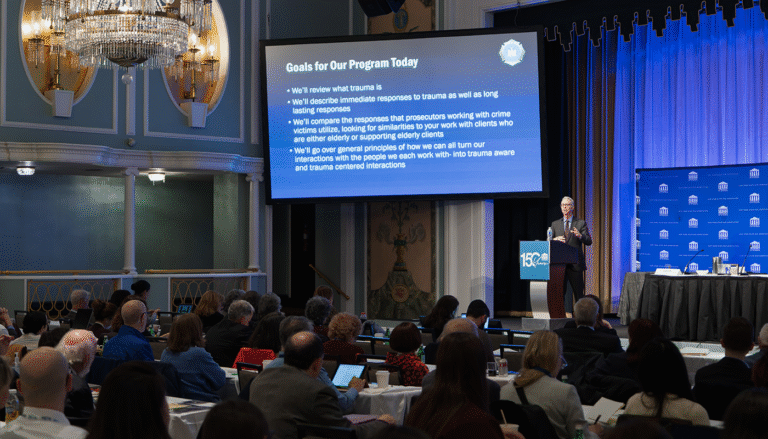 Frederic Green presented to the Elder Law and Special Needs Section at Annual Meeting.
When representing people with trauma, it is important to understand that they may act in ways that seem illogical or tell their story nonlinearly.
A seminar presented by the Elder Law and Special Needs Section at the New York State Bar Association’s Annual Meeting explained how traumatic events affect memory recall, and how attorneys can attend to traumatized clients with care and compassion.
In his presentation, Fredric Green, second deputy district attorney and chief of the special prosecutions division of the Westchester County District Attorney’s Office, explained that it is important to build trust, especially as clients may be fearful of law enforcement and the court system.
“You have to bond with them,” said Green. “It’s something that you have to teach yourself to do. You do better if you bond with them. If they’re an object in your case, and not somebody you see as a human that you have to bond with, you’re not doing it right… You can teach yourselves to do it if it doesn’t come naturally.”
Green said that while he works with victims of abuse, domestic violence, and human trafficking, these lessons are still applicable to elder law lawyers because aging, illness and navigating the healthcare system can be traumatic as well.
Green said it was important to understand the physiological effect of trauma on the brain and memory. During an assault, a person’s body may release various stress chemicals to block pain or boost energy to help fight or flee. However, these chemicals also affect the way that a person forms and recalls the memory. They may recount an assault in a disorganized fashion, add random details, or act in counterintuitive ways.
“The disclosure process isn’t an event, it’s a process,” said Green. “As trust builds, you get more information… There’s no set way for victims to act. One thing you know for sure is you don’t know how they’re going to act.”
With such clients, Green said it is important to explain in advance what will happen in interviews and throughout the legal process. He advised not to judge or interrupt while victims are sharing a story, and to offer snacks and bathroom breaks. It is also important to know the significant people in their lives – like family members – and include them in the process.
“Think about next steps at the end of interviews,” said Green. “Leave people with a plan for what’s to come next. If you say to somebody, ‘I’ll get back to you about that on Tuesday,’ there’s only one thing to do – get back to them on Tuesday. If you don’t… trust goes away.”
Green also said that it is important to ask clients what they want and how they wish to proceed in a case, and to advise on the best course of action rather than impose legal strategies.
“Propose options to victims,” said Green. “It’s very empowering… You’re honest with them. You don’t try to foist on them what you want, or what you think is the best thing. Maybe they want something a little different. It’s client-centered and victim-centered to do that if possible.”
On a final note, Green said that it is important for attorneys to care for themselves as well, as they are absorbing the trauma of their clients.