
STATEN ISLAND, N.Y. — A ribbon cutting Tuesday at PS 37R, the David Marquis School of the Arts, marked the opening of a new vocational learning space designed to help students with disabilities build independent living and job skills.
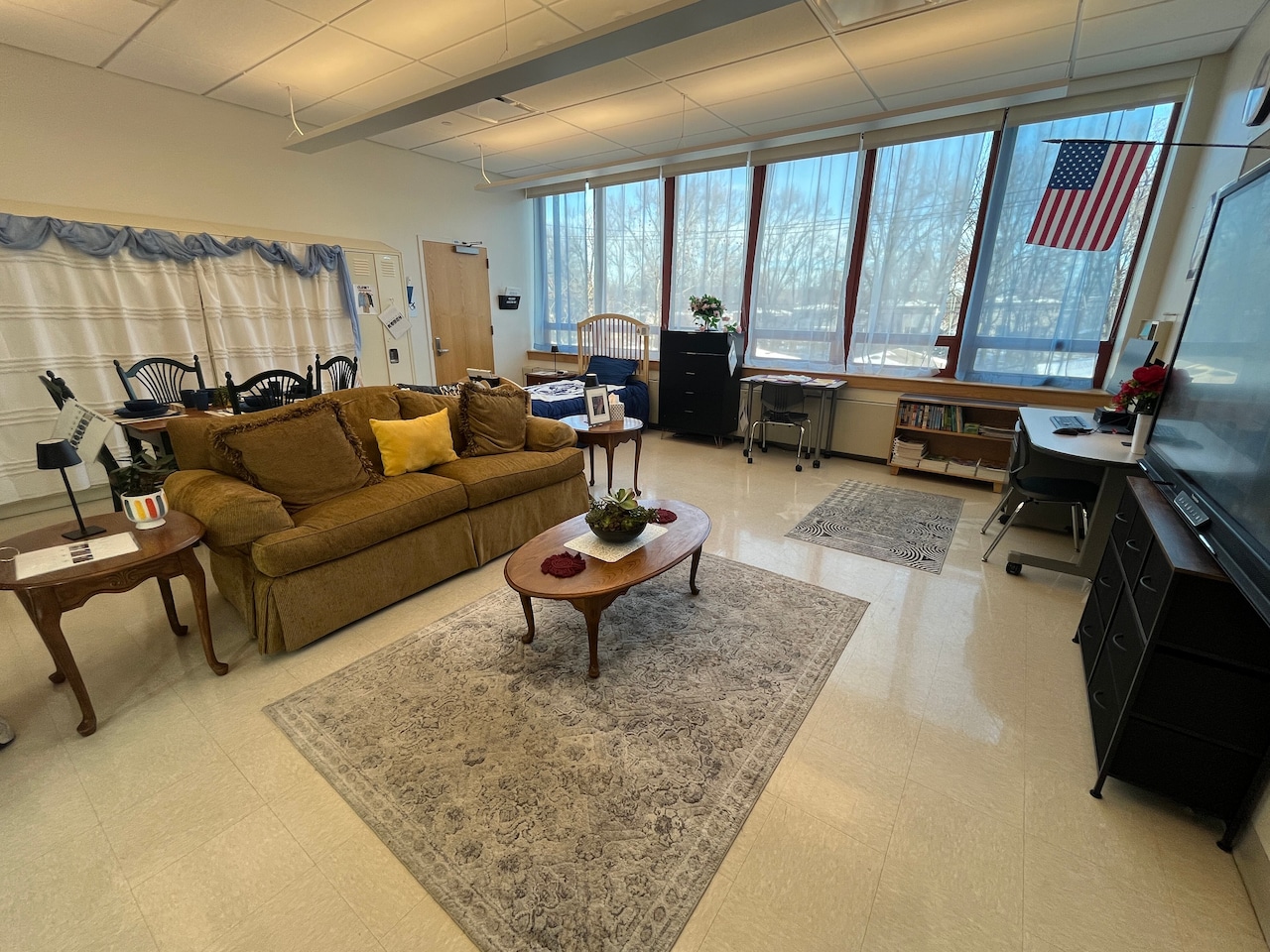
At its Great Kills campus, staff members at PS 37R transformed a room into Apt. 207, a fully furnished studio apartment designed to help students practice real-life skills for daily living.
The space allows students to learn how to manage daily tasks in a safe, supportive environment while building independence and confidence.
“It all goes back to our students. What are we doing to set our students up for success when they leave us and go on to that next step?” Principal Cori Regan said. “Our basic tenets as a school are language, literacy and communication, and that foundation helps our students become independent, develop self-advocacy skills, and find something meaningful that they love to do in the community every day.”
Apt. 207
Inside Apt. 207, students practice daily living skills in a fully furnished apartment with areas set up like a real home.
In the bedroom, they learn to make a bed and set an alarm. At the dining table, they practice setting the table. In the kitchen, students wash dishes in the sink, put them away in cabinets and stock the refrigerator.
A table next to a dresser is used to teach students to fold and sort clothes, while the closet teaches them to hang and organize them.
In the corner of the room is a desk and computer where students learn to check emails, perform online searches and manage digital tasks.
The room also includes a couch and television, where students practice relaxing and using common living room items.
Students also learn to grow herbs, like kale and romaine lettuce, in a hydroponic unit located in the room. The plants are then used by the school’s culinary chef and in the pastry parlor, another vocational classroom on the Great Kills campus.
These activities help students build independence and develop executive functioning skills needed for daily living.
To help students learn, Apt. 207 includes how-to instructions at each learning station and video modeling for students to follow. Students can scan QR codes and watch step-by-step demonstrations of tasks, a tool designed to support students with different learning needs.
Regan said video modeling is “an evidence-based practice that helps students with autism learn skills.”
Although the school is limited on space, Regan said they saw an opportunity to create a real-life learning environment.
The school allocated funds to make the room possible, and the community helped bring it to life.
Regan contributed furniture from her late aunt, a teacher from the main building donated a twin bed and a student donated a computer.
“We said, you know what, now that we have this room, let’s create an apartment space so our students can learn these skills,” Regan said. “We’re always thinking of teaching skills in a controlled school setting so they transfer out. We want them to go into a setting and be able to do things as independently as possible.”
Other Vocational Spaces
Among its vocational offerings, the Great Kills campus provides spaces where students can learn vital skills, including the adaptive room, pastry parlor and Studio 216, the Etsy shop. During a brief tour, speech providers guided students and staff through each room.
In the adaptive room, students practice workshop skills, learning to sand and work with wood.
The room provides different stations where students complete activities, such as creating an iPad holder out of cardboard. Students use various tools alongside how-to instructions that show them the sequence of each project.
In the pastry parlor, students practice culinary skills, learning to prepare dishes such as breakfast bites and applying culinary techniques used in the school’s vocational programs.
The site also operates as a real pastry shop, where students and staff can order coffee and purchase pastries made by the students. They also learn to operate a cash register and manage other front-of-shop responsibilities.
In Studio 216, students learn a variety of vocational skills, including laminating and using a Cricut machine. They customize items such as T-shirts and mugs, create candles and mats, and practice painting.
In the classroom, students work on communication and social skills while gaining hands-on experience.
The school also creates a catalog of student-made items that people can order and purchase, giving students real-world experience managing orders and products.
PS 37R
The David Marquis School of the Arts is an inclusive school community that serves students with disabilities ranging from hearing and vision impairments to other special needs, including autism.
The school offers a mix of self-contained and inclusion classes, focusing on language, literacy, communication and vocational skills.
Spaces like Apt. 207, the pastry parlor, Studio 216 and the adaptive room give students hands-on and real-world experiences that equip them with the skills they need to succeed on their own.
“The ultimate goal for all of our kids is for them to either be hired in some type of employment program, whether it’s independent or supportive,” Assistant Principal Denis Kogan said.