
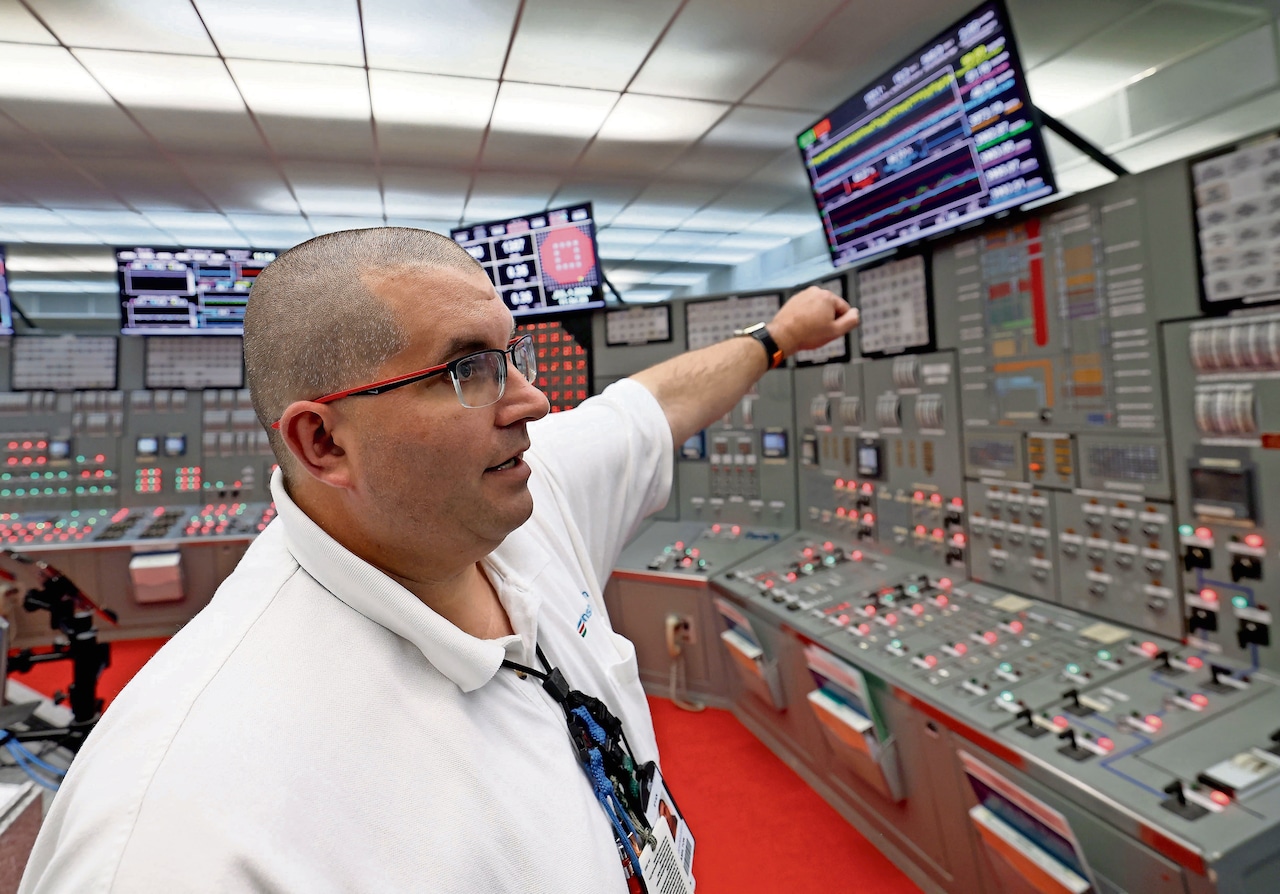
In a decision that seemed almost inevitable, state regulators on Thursday agreed that New York utility customers will pay billions of dollars in subsidies to ensure that four Upstate nuclear reactors continue to supply much-needed electricity for two decades to come.
The state Public Service Commission voted 6-0 to extend the current nuclear subsidy program for another 20 years beyond the original end date of 2029.
The cost to ratepayers could be as high as $33 billion over 20 years – “staggering,’’ in the words of New York City officials who opposed the deal.
PSC staff said the impact on a typical customer’s monthly electric bill will be $2.80 a month.
The PSC had little choice but to approve. Nine Mile Point units 1 and 2 and the James A. FitzPatrick Nuclear Power Plant in the Oswego County town of Scriba and the Robert Emmett Ginna Nuclear Power Plant in the Wayne County town of Ontario churn out 21% of all electricity generated in the state. And they account for nearly half the power that is generated without carbon emissions.
Officials did not want to risk having some or all the plants shut down at a time when New York desperately needs more power to supply rising demand. The recently released state energy plan says that officials should “ensure the continued operation of the existing nuclear fleet.”
“This is an important part of our energy mix,” commission member Uchenna S. Bright said before the vote.
The nuclear plants have received subsidy payments of roughly $500 million a year since 2017, on top of what they make selling power in the wholesale market. The payments, which are baked into the supply charges paid by utility customers, compensate plant owner Constellation Energy Corp. for the “zero-emission’’ quality of nuclear power.
PSC staff said the subsidies are needed because the revenues Constellation receives on the wholesale market for the power produced by the plants is less than it costs the company to operate them.
Regulators also cited the economic impact of losing the four nuclear plants, including the 2,000 jobs they maintain in Upstate New York.
The payments are for Zero Emission Credits, or ZECs. They were originally intended to end in 2029. That’s when operating licenses for Ginna and Nine Mile 1 -– the two oldest operating nuclear plants in the country — are set to expire. Constellation urged state officials to extend the ZEC payments for another 20 years.
With the revenue guarantee of the ZECs, Constellation plans to apply for 20-year license extensions for the two oldest plants, Nine Mile 1 in Oswego County and R.E. Ginna in Wayne County. The ZECs extension approved Thursday will start in 2029 and last until 2049.
“Failing to extend the ZEC program creates a risk of these plants closing, which could have significant impacts on reliability, resource adequacy, and achievement of statewide clean energy goals,” said commission Chair Rory M. Christian.
The commission said it also recognized the need for Constellation to make new investments at the plants because of their age.
The ZEC payments are designed to provide a revenue guarantee. The higher that wholesale power prices rise, the more the nuclear plants can make selling their power and the less they will receive for ZECs. If prices go low, the subsidies increase to make up the difference.
The commission said the program includes safeguards, including a mechanism for reducing ZEC payments in the event other financial support becomes available to Constellation, and a periodic program review process to ensure the funding provided through the ZEC program remains just and reasonable.
Either way, critics say, it’s a recipe that locks in rising costs.
“This is a staggering financial obligation for customers,’’ attorneys for New York City wrote in comments submitted in October. City officials argued that their residents should not have to help pay for the subsidies.
When the new round of ZEC payments begins, the subsidies could cost a maximum of $1 billion in the first year, according to PSC technical staff. The ZEC prices would be reset every two years and could rise to as much as $2.29 billion in 2049. The subsidies could total a maximum of $33 billion over 20 years. PSC staff estimate the actual cost will be significantly lower because they expect wholesale prices to rise.
Wholesale prices aside, a new federal tax credit will help reduce ZEC costs for the next few years.
Nuclear plants are now eligible for a production tax credit from the IRS based on their power output. Constellation recently learned that its Upstate nuclear plants will receive about $162 million in credits for 2024. Under an agreement with New York regulators, Constellation will use that money and any future revenue from the tax credit to decrease the ZEC subsidies paid by New Yorkers.
Baltimore-based Constellation is the nation’s largest nuclear operator with 21 reactors. The company reported $19.5 billion in revenue for the first nine months of this year, with profits of nearly $1.9 billion.
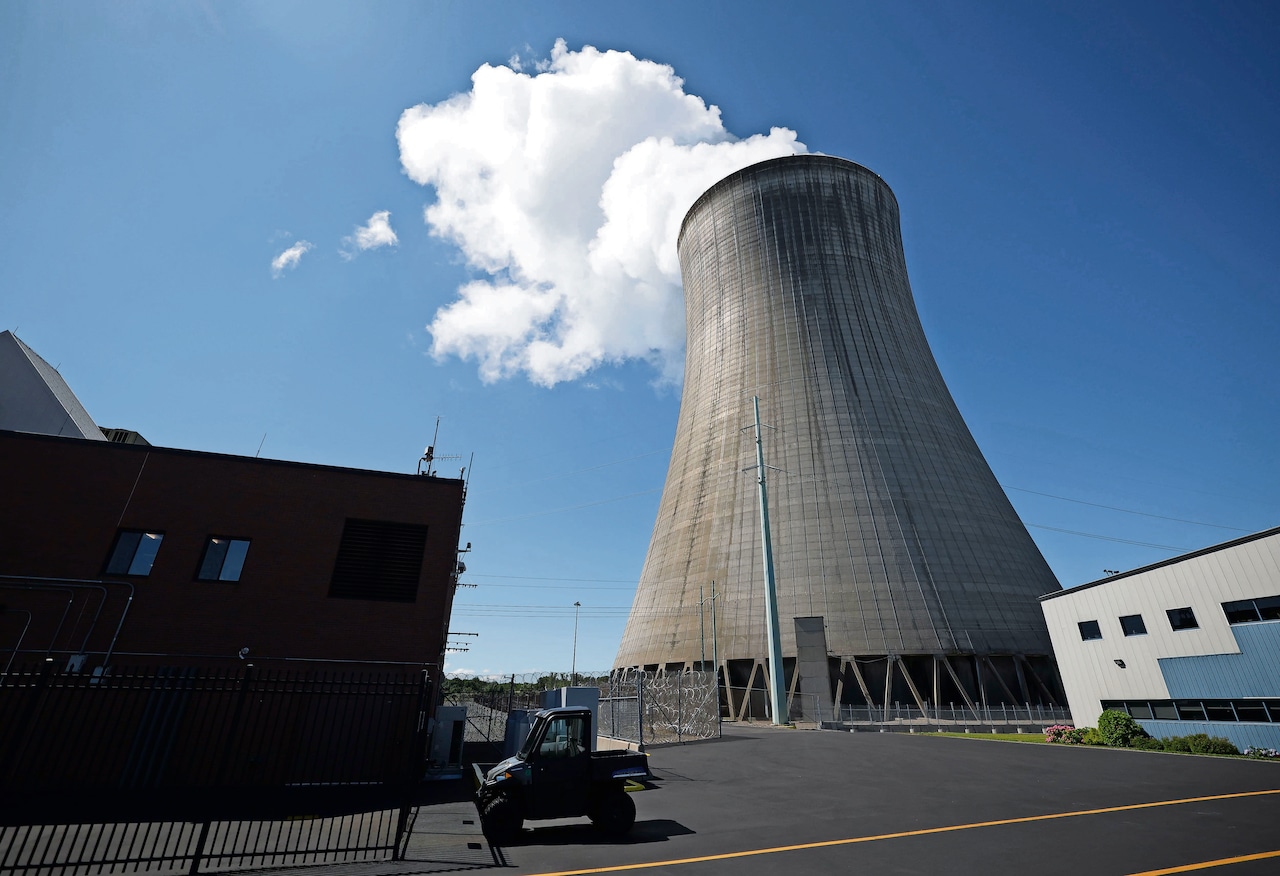 Steam rises from the cooling tower at the Nine Mile Point Unit 2 nuclear plant in the Oswego County town of Scriba. (Dennis Nett | dnett@syracuse.com)Dennis Nett | dnett@syracuse.com