
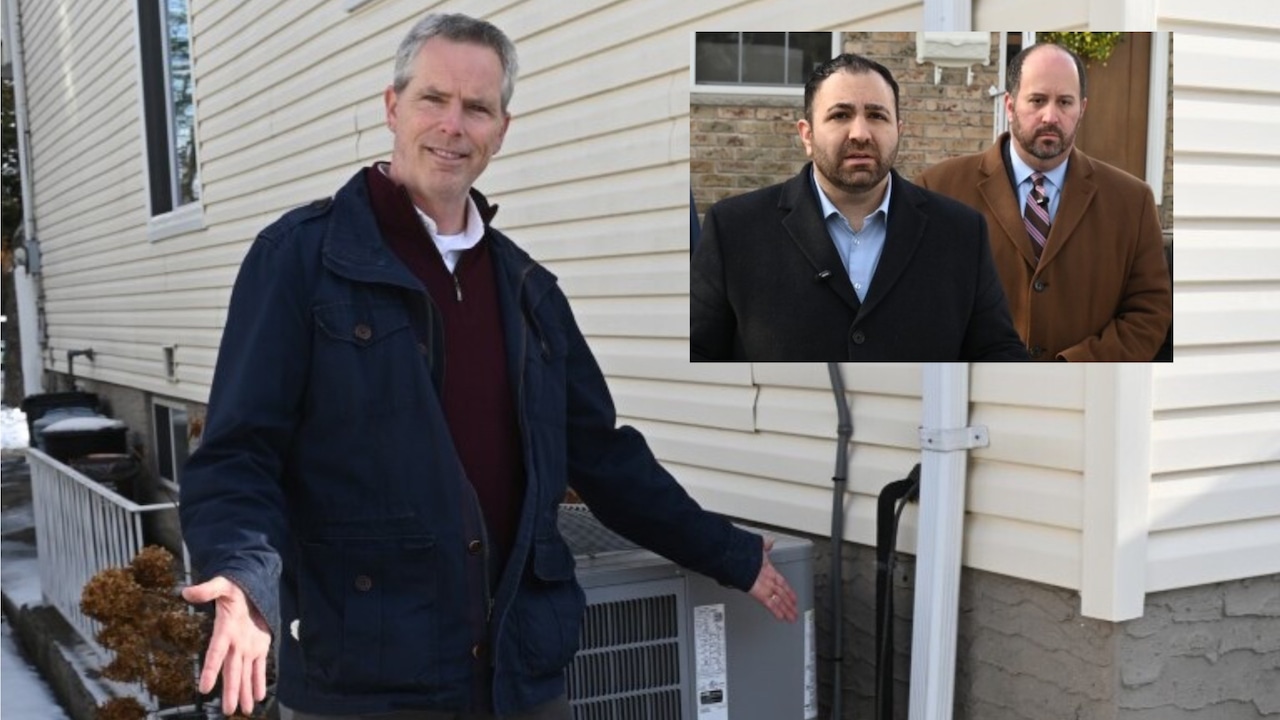
STATEN ISLAND, N.Y. — Staten Island homeowners may face thousands of dollars in repair costs and fines due to a new enforcement push by the city’s Department of Environmental Protection (DEP) regarding rain gutters connected to the sewer system.
Local politicians are pushing back against what they describe as a “hasty and overreaching” policy that burdens middle-class residents. Here are 5 things you should know.
1. The city is cracking down on a long-ignored rule
The New York City Department of Environmental Protection has bolstered efforts to enforce a rule making it illegal for home rain gutters to be connected directly to the sewer system. The agency states that these sewers are designed for wastewater and that excess rainwater can overwhelm the pipes, leading to basement backups and street flooding. Some Staten Island homes have these systems, which may have been installed by the original builder without the homeowner’s knowledge.
“They’re arguing that this is something that has been on the books for a long time, but the reality is that they have left enforcement alone for decades,” City Council Minority Leader David Carr said. “There are many homes throughout this borough that have these downspout systems and they should work with the homeowners collaboratively to try and address this over the long term.”
2. Homeowners face steep fines and expensive repairs
Residents who fail to disconnect their downspouts face significant financial penalties, starting with a $3,000 fine for a first offense, which can escalate to $6,000 for a second and $8,000 for a third, according to PIX11. Those who wish to avoid the financial burden of fines still face the potential cost of hiring a contractor to perform the disconnection. For some, like resident Patrick Mooney, a Grant City resident, the fix is impractical and would require him to run his gutter under a sidewalk or onto his walkway.
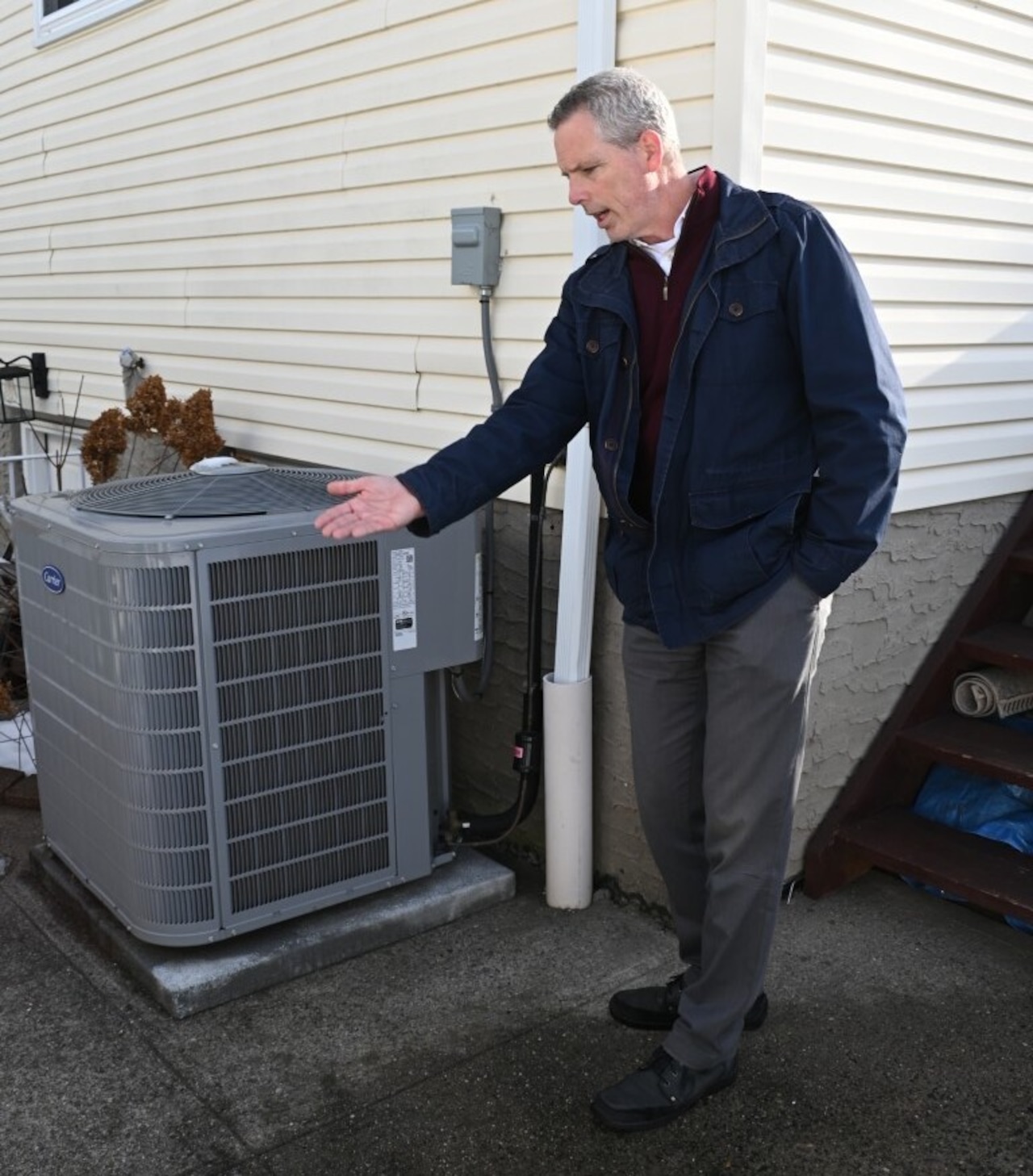 Patrick Mooney, a resident of Grant City, urges city officials to work with homeowners to address the issue of downspout connection to the sewer system. Here he is pictured on Fremont Avenue in Grant City on the morning of Thursday, Jan. 22, 2026.(Dennis Rees for the Advance/SILive.com)
“It’s a big issue for homeowners here,” said Mooney. “A lot of homeowners are having affordability issues and a lot of my neighbors are starting to think about moving south.”
3. Local officials are demanding transparency and a halt to enforcement
A trio of Republican officials — City Council Minority Leader David Carr, Assemblymember Michael Tannousis and state Sen. Andrew Lanza — have formally objected to the DEP plan. In a letter to the DEP commissioner, they argue that applying the enforcement borough-wide based on what they understand to be a single study conducted on the East Shore is “overreaching.”
They are calling for greater transparency pertaining to any related studies to understand the justification for the borough-wide enforcement and are urging the city to cease the action, arguing it will “cripple” homeowners financially for a problem many did not create themselves.
“While we appreciate DEP’s interest in better understanding the causes of flooding in the borough, the Island-wide application of this enforcement is both hasty and overreaching in its scope,” the letter read in part. “To base the application of enforcement for the entire borough on the results of the study of a single neighborhood has led to the prohibitive costs of correcting these downspout connections negatively affecting and further alienating middle class homeowners already struggling to make ends meet in neighborhoods where the effects of these downspout hookups towards flooding are negligible.”
4. The enforcement is seen as unfair to current homeowners
Some residents have lived in their homes for decades and have “inherited” the downspout connections when they purchased their properties. Mooney, who’s lived in his home for 30 years, argues that if the connections were against code, the issue should have been caught by the Building Department during the original construction and inspection. Carr echoed this sentiment, pointing out that current homeowners are being asked to “foot the bill for something that they never actually did themselves,” turning a long-unaddressed issue into a sudden and costly mandate for individuals.
“If that was code, the Building Department should have checked with the builder and made sure before they signed off on the certificate of occupancy,” Mooney said.
5. There is hope for a policy change under the new mayoral administration
The downspout enforcement initiative began under former Mayor Eric Adams’ administration, according to Carr. With DEP Commissioner Rohit Aggarwala reportedly set to step down, local officials see an opportunity for the new administration led by Mayor Zohran Mamdani to reverse course. They are calling on the incoming commissioner to adopt a more collaborative approach that works with homeowners rather than punishing them.
“I call on the mayor and I call on the incoming commissioner for DEP: Remedy this issue and make sure that whatever you do, the homeowners and the taxpayers of this Island feel that the city is working for them,” Tannousis said.
DEP responds to pushback
As explained by a DEP spokesperson, these downspout connections have been illegal since 2018 under NYC Rules (Title 15, §19-02(b)).
Moreover, in many cases, those who do have these connections to the sewer system are found to be flooding their own properties during heavy rainfall events, according to the spokesperson.
“DEP’s goal with this outreach is to remind homeowners that illegal downspout connections have been prohibited since 2018 and are a major cause of sewer backups and flooding,” the DEP spokesperson said. “As New York City sees more frequent heavy rain events, these types of connections increasingly put homes and neighborhoods at greater risk. We are urging homeowners to disconnect any gutters that drain directly into the sanitary sewer system. Addressing these illegal connections is a simple, inexpensive step that protects both individual properties and the environment – and makes New York City more resilient to climate change.”
In certain locations, these connections are impacting DEP wastewater treatment plant operations and putting the city at risk of fines for environmental violations, it was further explained. Those areas where these connections are an issue may be specifically targeted for enforcement.
Additionally, the DEP spokesperson claimed that these repairs are relatively inexpensive and can even be done directly by the homeowner.
For more information and to certify that downspouts are properly disconnected, homeowners are asked to visit nyc.gov/dep/downspouts.
A draft of this story was generated using AI. It was reviewed, edited and approved by Advance/SILive.com staff.