
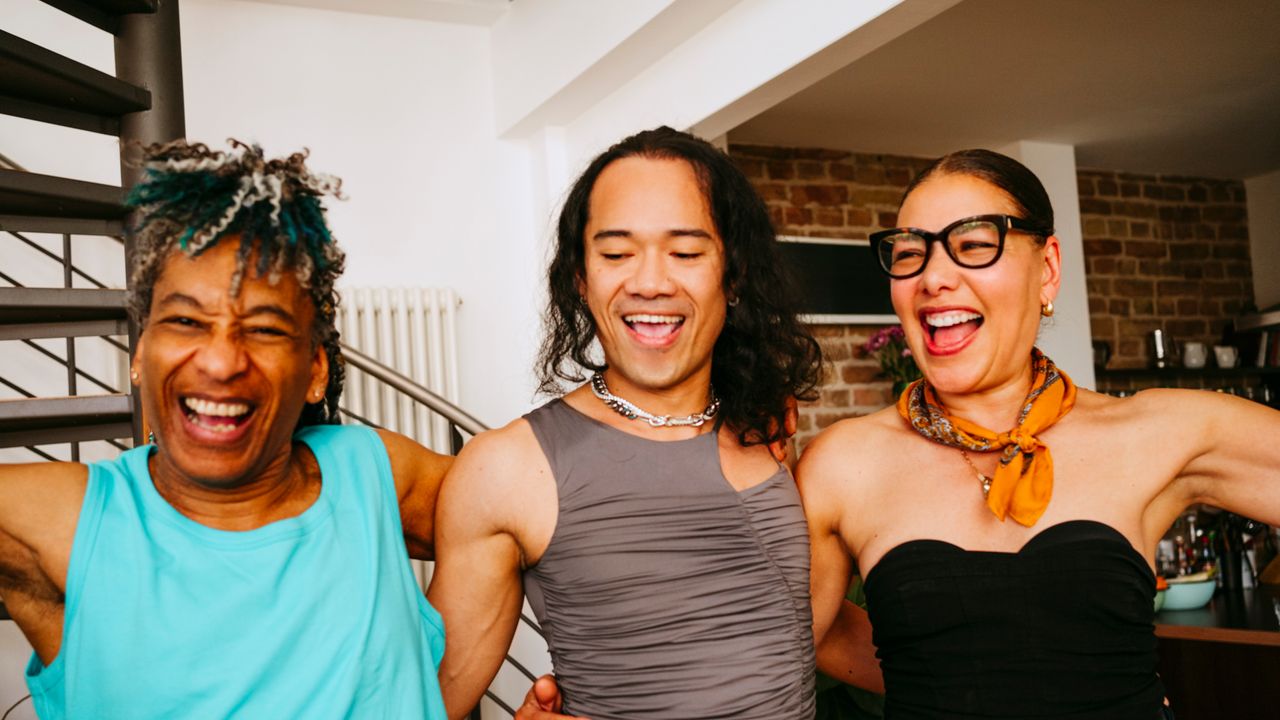
In news that will be surprising to approximately no one, bisexuality is on an explosive rise in New York City, according to data from the dating app Feeld.
The app published its Feeld Raw 2025 recap in December, which presented some of the trends and statistics from app users over the prior year. The report generally pointed to the growing phenomenon of Feeld users identifying in fluid ways, both in terms of gender and sexuality. Specifically, the report found that New York City experienced a staggering increase of 161% when it came to Feeld users who identify as bisexual.
In the report, Dr. Luke Brunning, a lecturer in applied ethics at the University of Leeds and an expert on relationships, said, “These changes speak to the growing awareness that sexuality is complex. If anything, it would be surprising if people were never sexually curious about people of their own sex or gender, or if attraction worked in neat and predictable ways.”
Brunning noted that since New York is the largest city in the country, “as well as a centre for open social, cultural, and artistic experimentation and expression,” it should “perhaps [be] of no surprise that bisexuality is growing largest there.” As anyone who has ever walked around north Brooklyn can tell you, that’s most certainly true. It’s also worth noting that trend forecasters at the esteemed website Them predicted the rise in bisexual stock price across broader culture ahead of 2025.
“Heteroflexible” was also the fastest growing sexuality on Feeld, with a 193% increase in users identifying as such — but if you referred back to our 2025 trend report, you would find a differing insight.
It’s also worth noting that yes, this is data from a dating app that’s intended for “the curious,” as Feeld’s tagline goes. So there’s certainly a degree of selection bias — of course there are more likely to be more bisexuals on Feeld in general. But other research also supports the notion that sexual openness is on the rise. According to a 2024 study published in The Journal of Sex Research, the official publication of the The Society for the Scientific Study of Sexuality, 9.6% of respondents to a nationally representative survey reported having both male and female partners in 2021, compared to only 3.1% of respondents reporting the same between 1989 and 1994.
Get the best of what’s queer. Sign up for Them’s weekly newsletter here.