
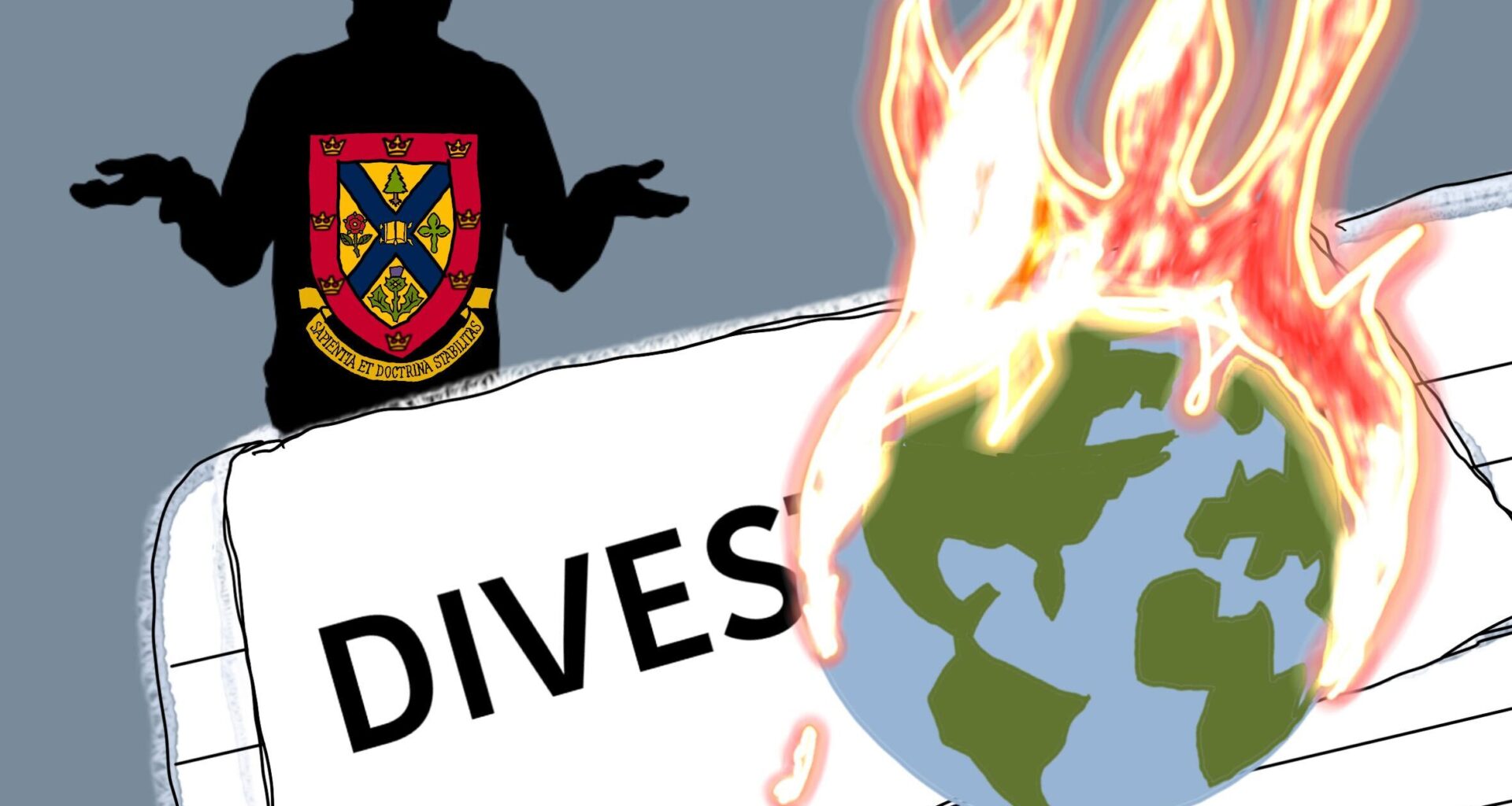
Queen’s is avoiding the divestment conversation—again.
In spite of 630 signatures from students, staff, and politicians, on Dec. 16 Queen’s decided against divesting 2.2 per cent of their endowment portfolio from fossil fuel intensive corporations. The special request was made under dowment portfolio from fossil fuel intensive corporations. The special request was made under Procedure 2 (Special Requests), a process for members of the University to request investigations by the Board of Trustees. Queen’s Backing Action on the Climate Crisis (QBACC) filed the request in March, and were only consulted once, informally, prior to the decision. The lack of consideration from the University administration is disappointing, but not surprising given its history of denying divestment requests.
According to the 2025 Plebiscite survey, over 80 per cent of students are in favour of divesting from fossil fuels. If Queen’s can’t divest even a fractional reduction that so many students are in support of, it’s difficult to imagine any requests for divestment get taken seriously.
Despite a Queen’s Gazette article claiming the University undertook a “responsible investigating review,” the seven person review committee only convened three times, and consulted QBACC once. This lack of acknowledgement—and the scheduling of a meeting during exams—is incredibly disappointing. Especially because Queen’s claims to be committed to achieving net-zero emissions by 2040.
Divestment isn’t impossible. The University of Toronto, University of British Columbia, Guelph, Laval, Concordia and Waterloo have all made commitments to divestment from fossil fuel intensive corporations. Due to the diversification of Queen’s investment portfolio, a 2.2 per cent reduction is unlikely to affect Queen’s overall financial circumstances.
QBACC has been calling for divestment since 2015, and still, their requests go unheard.
In response to the Queen’s University Apartheid Divest’s call for divestment from corporations in support of the state of Israel in 2024, the University administration engaged in an extensive consultation process, involving 44 in-person presentations and considerable research. However, the University ultimately denied the request.
When Queen’s University Faculty and Staff for Palestine released another petition for divestment from corporations supporting Israel on Sept. 18 2025, they were told Procedure 2 was under review, and not accepting requests. Five months later, the procedure is still under review.
Given the multitude of requests, and their systematic disregard by the University’s administration, it’s difficult to take their claims of “responsible review” seriously. The lack of consideration shows a disappointing intention to the student body.
The QBACC petition should’ve been afforded adequate consideration given the mounting severity of the climate crisis, and the growing fraction of the student body that feels strongly about this issue. Without an adequate systematic review process, Queen’s remains incapable of appropriate recompense.
As Queen’s tries to position itself as a leader in sustainability, the University administration needs to reevaluate their continued refusal to take divestment efforts seriously.
—Journal Editorial Board
Tags
Divestment, Environment, QBACC
All final editorial decisions are made by the Editor(s) in Chief and/or the Managing Editor. Authors should not be contacted, targeted, or harassed under any circumstances. If you have any grievances with this article, please direct your comments to journal_editors@ams.queensu.ca.