
STATEN ISLAND, N.Y.— Well, judging by the response, you all loved my article on shopping for a snowstorm—so now I’m back with how to cook during one. With a big one on the way, it feels like the right moment to dust this topic off.
When snow and frigid temperatures settle in, it can be tempting to fall for the romance of it all—lingering outside by the grill with a beer or other appropriate beverage. I’m thinking a can of appropriately named Polar seltzer from Worcester, Mass., or a beer in hand, safely tucked into a cozy. A reader once shared that his snowblower and grill sat side by side in the garage. In bad weather, he wrote, the first path he plows is the one from his back door to the barbecue.
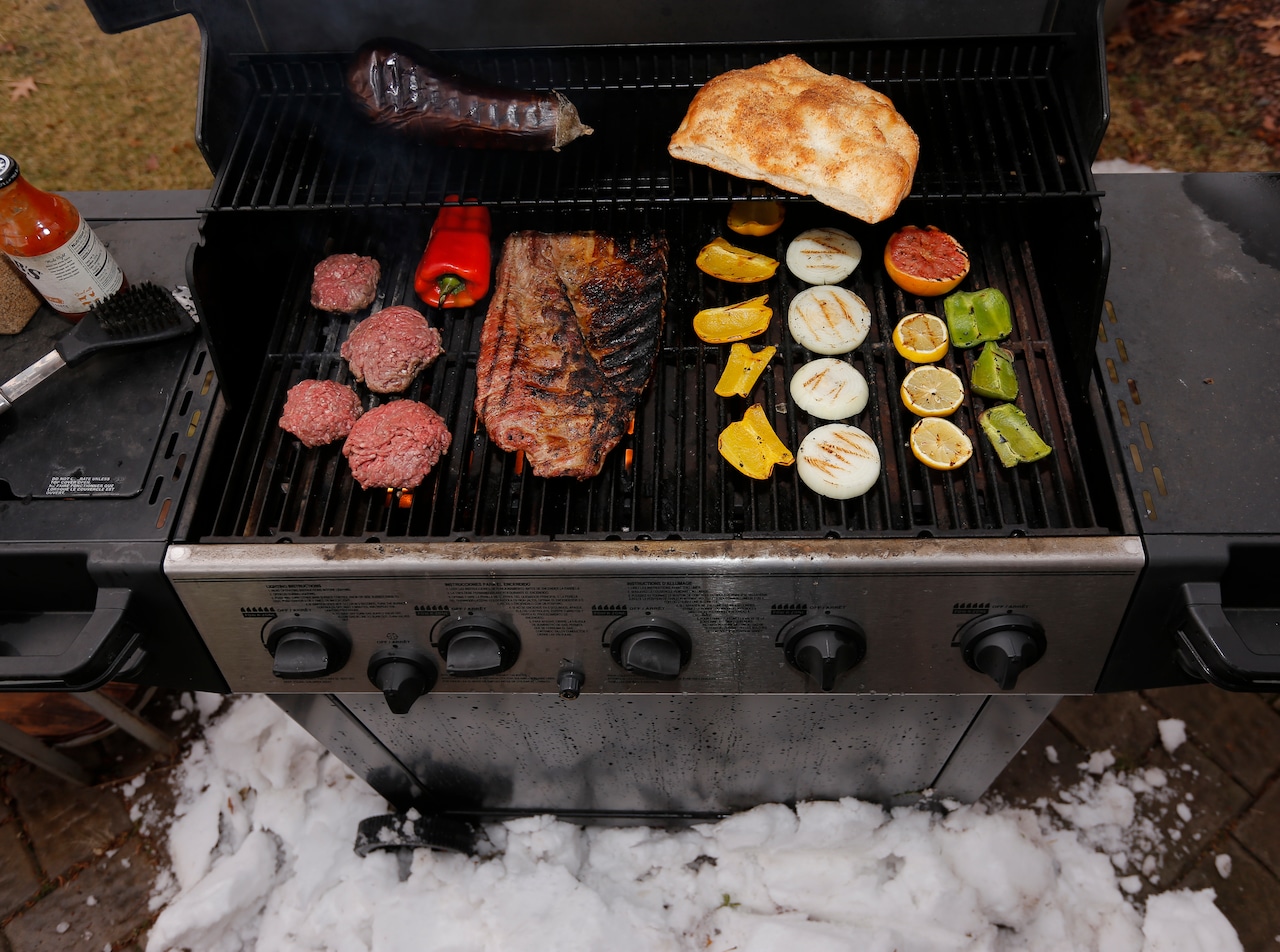
At our own home over the years, just after a snowfall, we’ve fired up the propane grill—not an easy feat, as propane struggles in sub-freezing temperatures. Coaxing the flames to stay lit takes patience and persistence. But within about an hour, the effort has paid off: charred burgers and ribs, seared vegetables, and even a smoky caponata made from an eggplant cooked on the upper rack. That is, when the wind cooperates and visibility isn’t zero.
Several years ago, when I shared my love for grilling during a snowstorm, one kind reader chimed in with a reality check. “I’ve actually tried to grill in this snowy weather, and it is too cold, believe it or not,” the reader wrote, describing an attempt using a Weber kettle and a chimney full of lump charcoal.
Still, where there’s a will, there’s often a way—or at least some professional guidance.
Michael Cappucci, the chef behind the upcoming catering operation at Kreischer Mansion, the historic Charleston complex now underway, says winter storms are also a reminder to know when to stay inside.
“If we get as much snow as expected, you’ll have to dig out the grill first,” Cappucci said. “And then I’d stick with fast‑cooking items—steaks, hot dogs. You don’t want to run in and out all day unless you’re truly committed… or smoking something.”
“When it’s snowing, there’s not much to do,” he added, “so for me it’s the best time to cook indoors. I love making roast beef or pork loin. The smell alone adds to the mood.”
For those of us who insist on winter grilling—or enlist a spouse for the heavy lifting—experience has taught me that preparation is everything. Get the grill roaring hot. Block the wind. Contain the heat. Prep everything in advance so the lid stays closed. At that point, you’re thinking more like roasting than traditional grilling.
Cappucci recommends larger cuts such as pork loin or roast beef, which don’t require constant flipping.
Local chefs have offered similar advice. Mike Campbell of Tottenville advises that oiling grill grates before lighting helps prevent sticking, especially with saucy foods. He also cautions against loose scarves or clothing near open flames and notes that poultry and pork may need longer cooking times on windy days to reach safe temperatures.
“If you’re using charcoal, don’t have the grill too close to the house,” Campbell said. During harsh weather, he wheels his metal gas grill into the open doorway of a shed, keeping the fuel source outside.
Manufacturers say winter grilling is possible—with caution. Weber advises clearing snow and ice from the grill, allowing extra preheat time, keeping additional fuel on hand and positioning the grill perpendicular to the wind. Keeping the lid closed becomes even more important in freezing temperatures. Heat-resistant grilling gloves—not snow gloves—are recommended.
One rule does not change with the season, according to Weber: Never grill inside a garage or under an overhang, no matter how cold it gets.
And of course, there are limits. A heavy cast-iron grill pan is a worthy stand-in. Get it really hot. Apply a dry rub. Sear, sear, sear—then finish in the oven.
So can you cook during a snowstorm? Of course you can! Just be prepared. Know when the romance gives way to reason, and when it’s time to head back inside.