
There is a lot of research happening at Queen’s that’s led by and involves Indigenous students and community members, but you wouldn’t always know it.
Indigenous students are leading projects, supporting community-based work, contributing to labs, writing theses, and building new ideas across health, science, engineering, education, history, culture, policy, and beyond. However, there’s no shared space where this work is regularly highlighted to all students, and many research conversations on campus still default showcasing Western ways of doing research. Our “Voices of Indigenous Research Column” series aims to be a small step toward shifting this reality.
Here, “Western” refers to the dominant research and education traditions that came out of Europe and were later built into Canadian institutions through processes of colonization. In this piece, we’re using Western” as shorthand for the mainstream academic systems and assumptions that often set the rules for what counts ascounts as valid research and knowledge.
Our goal is to create an ongoing space in The Queen’s Journal that highlights Indigenous student research at Queen’s, while also supporting a broader shift in how research is understood. We want to showcase the diversity of Indigenous research and innovation happening across campus and make it easier for people to see what Indigenous-led research looks like and open pathways for others to connect with research. In this column, we’ll spotlight Indigenous students, faculty, and alumni doing research and innovation across disciplines, including STEM, health initiatives, culture and history, community work, and more.
We also want to emphasize that research isn’t a uniquely Western process. Indigenous Peoples have carried out rigorous research for time immemorial through careful observation, questioning, testing, and learning from the land, the skies, the waters, and all things that sustain life. This knowledge has been held and shared through teachings, cultural practices, land-based learning, oral traditions, governance, language, art, and many other forms of knowledge transmission. In that sense, research has always been an Indigenous practice, and Indigenous Peoples are perfectly situated to be involved in and leading research.
The strengths of Indigenous approaches to doing research are needed more than ever as we strive to uphold ethical and safe research practices within our changing world. This includes placing values of respect, relevance, reciprocity, and responsibility at the forefront of research, engaging in practices like relational accountability, co-learning, and community benefit so that research is always grounded in the process of doing good.
A key part of sharing the voices of this column is ensuring people feel safe and respected in how their work is represented. As we build this series, we’ll put a clear review process in place so that anyone featured can review, request corrections, and approve how their words and story are shared before publication. We’ll always be guided by Ownership, Control, Access, and Possession (OCAP) principles and responsible journalism practices to ensure the process is transparent and respectful.
If you’re an Indigenous student or faculty doing research, or if you know someone whose work should be highlighted, we would love to hear from you!
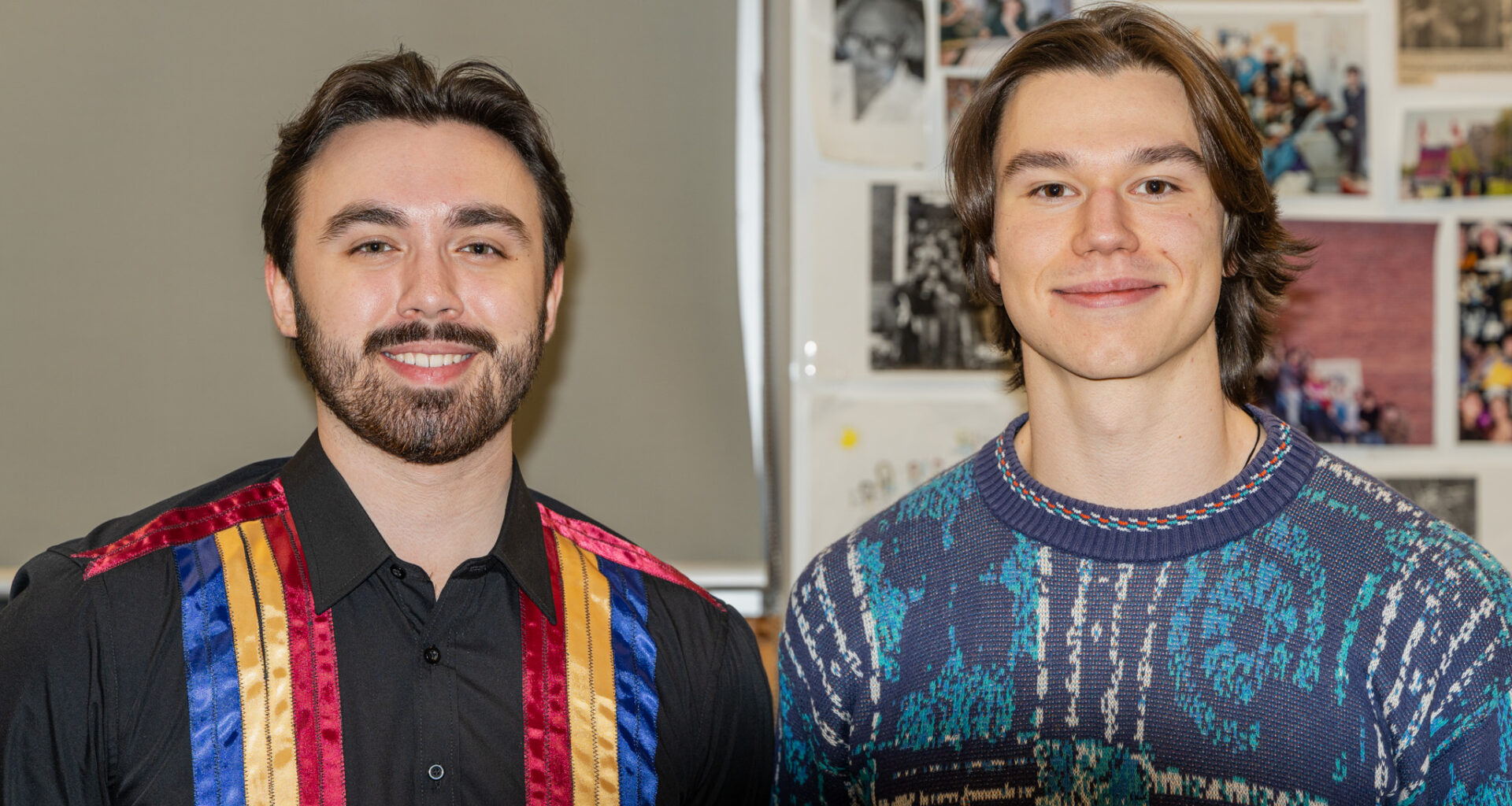
Additionally, if you want to suggest a feature, share an opportunity, or ask a question about how the series will work, please reach out via e-mail to the QJ editors, Cameron Hare, and Dylan Rietze.
Cameron Hare – hare.cameron@queensu.ca
Cameron Hare (he/him) is Métis to the Red River Settlement and of mixed European ancestry. He is a graduate student in the School of Kinesiology and Health Studies at Queen’s, where has been working in Indigenous health promotion research for the past three years, beginning during his undergraduate studies as a kinesiology student. His research focuses on culturally grounded community mobilization strategies for chronic disease prevention and wholistic wellbeing. Cameron is currently being trained as a facilitator of an Indigenous community mobilization program for health promotion and diabetes prevention.
At Queen’s, Cameron is the Senior Indigenous Peer Mentor at Four Directions Indigenous Student Centre, the SKHS Indigenous Student Representative in the graduate council of the School of Kinesiology and Health Studies, and as the Indigenous Initiatives Lead with the Social Issues Commission of the Alma Mater Society (AMS).
Dylan Rietze – dylan.rietze@queensu.ca
Dylan Rietze (he/him) is an Indigenous fourth-year undergraduate student in the Faculty of Arts and Science at Queen’s University, specializing in Biomedical Discovery. He is involved in cancer immunology and translational research at Queen’s and has previously contributed to research and science engagement initiatives through SNOLAB and NOSM University. Dylan is especially interested in questions at the intersection of biology, data, and research systems; how research is organized, how knowledge is shared, and how institutions can better support work that is community-informed and impact-driven.
Alongside his academic research, Dylan is engaged in student leadership and mentorship initiatives that support Indigenous students and strengthen pathways into research and innovation. He also works on NorCH, an Indigenous-led initiative focused on making Northern Ontario funding and innovation opportunities easier to discover and navigate. Through this column series, Dylan hopes to highlight the breadth of Indigenous research happening at Queen’s across disciplines and knowledge systems, while supporting a process grounded in respect, consent, and responsible storytelling.
Tags
indigenous perspectives, indigenous research, Opinions
All final editorial decisions are made by the Editor(s) in Chief and/or the Managing Editor. Authors should not be contacted, targeted, or harassed under any circumstances. If you have any grievances with this article, please direct your comments to journal_editors@ams.queensu.ca.