
Title: Cookie Queens (2026)
Director: Alysa Nahmias 👩🏼🇺🇸
Producers: Michael Dweck 👨🏼🇺🇸, Gregory Kershaw 👨🏼🇺🇸, and Jennifer Sims 👩🏼🇺🇸
Reviewed by Li 👩🏻🇺🇸
Technical: 4.25/5
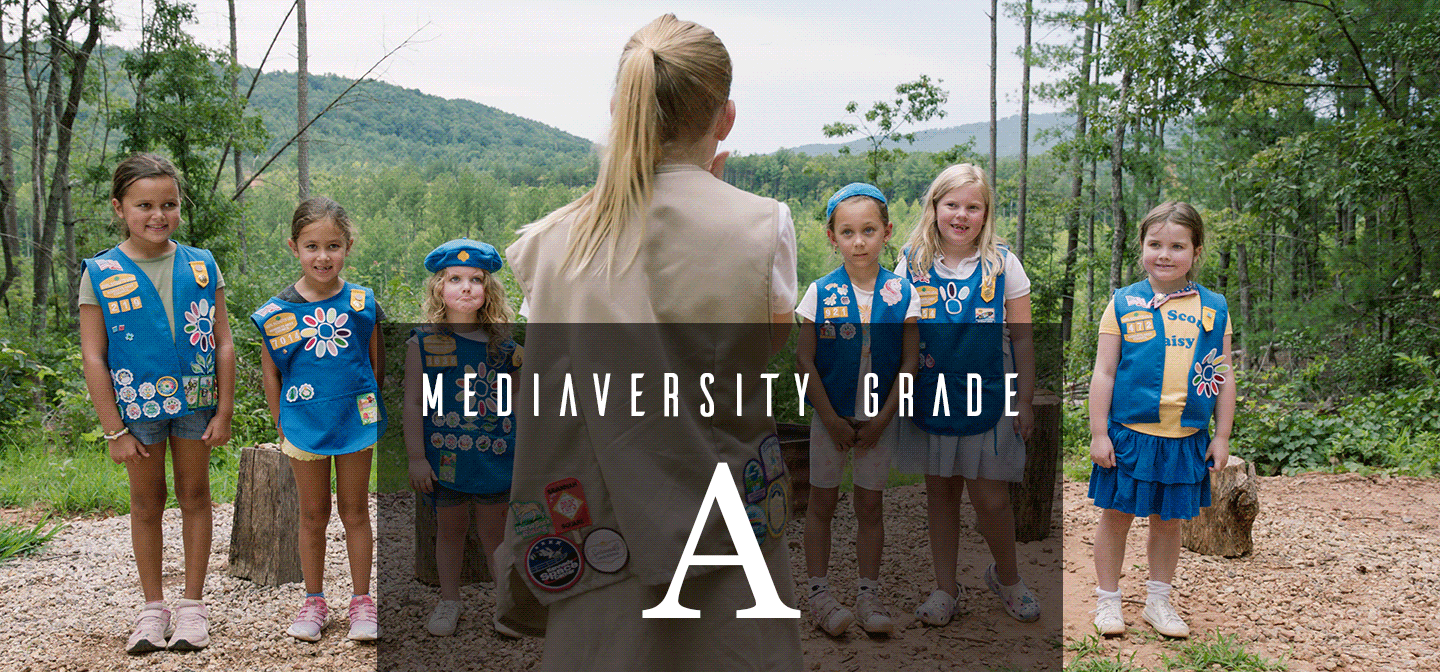
Premiering at Sundance Film Festival this morning, Alysa Nahmias’ charming Cookie Queens follows four Girl Scouts ages 5-12 during cookie season. It’s a big business, earning $800 million in revenue in just six weeks, every year. But this is hardly an exposé on Girl Scouts of the USA. Instead, the documentary uses the over 100-year-old Cookie Program’s social and economic impact as backdrop for its true focus—intimate character studies.
Viewers meet Ara from San Diego, CA (5), Shannon Elizabeth from El Paso, TX (8), Nikki from Chino, CA (9), and Olive from Charlotte, NC (12). Nahmias and director of photography Antonio Cisneros lavish their subjects with gorgeous cinematography: Low angles meet the kids at eye level, and nostalgic throwbacks like backyard tents and campfires are made romantic with glowing sunsets, firelit faces, and flashlights that swing around in the dark. Shallow depth of field renders young faces (and their emotions) in sharp clarity, while backgrounds soften into a blur behind them.
The Cookie Program’s chronological structure, with its tight 6-week deadline, creates a natural sense of urgency and keeps the story compelling. Human dramas unfold, especially for Shannon Elizabeth’s family, who struggle to sell the 2,750 boxes they’d ordered—and will have to pay back—while their mortgage looms over their heads.
The documentary’s greatest strength lies in Nahmias’ careful attention to relationships. Cookie Queens marches through most of its scenes with pep and cheer—the word “cute” might sum up the whole of the film—but thanks to the director’s observational style, scenes can also turn heartbreaking. In one, Shannon Elizabeth’s mom sits across from her partner, despairing at their lackluster cookie sales with just one week until the deadline. Her voice aches as she wishes she could send her daughter to camp, saying, “We can’t afford it. We can’t do it,” and when she starts to hear her daughter come downstairs, she quickly wipes her tears and gamely pretends that everything is okay for Shannon Elizabeth’s sake.
Just as powerful are the smaller moments. Nahmias notices gestures of parental love, like a mom stroking her daughter’s hair or rubbing the back of her daughter’s small, chubby hand with her thumb. As a parent, these quiet scenes resonated, mirroring my own primordial need to stay physically connected to my 1- and 3-year-olds for as long as they’ll let me, their pudgy toes and downy hair irresistible. Cookie Queens might not be the most expansive or informative documentary out there, but it makes you feel. Love, tenderness, anxiety, and hope paint the film in watercolor washes. By that metric, it’s a rousing success.
Gender: 5/5
Does it pass the Bechdel Test? NOPE
Women like Nahmias and producer Jennifer Sims, alongside male producers Michael Dweck and Gregory Kershaw, tell a story that centers around girls. They’re shown to be ambitious—Olive, the undisputed “cookie queen” of the year with over 12,000 boxes sold, neatly tells someone, “I’d like to be a Supreme Court Justice.” They’re adorable and confident, singing a song into a megaphone to draw customers to their booth. Yet, they show doubts: In a moving conversation with her best friend and fellow Girl Scout, Olive wonders aloud, “If I’m not the top seller, what am I?”
In this vein, female relationships form the bedrock of this film. Nikki and her two older sisters echo the playful, sometimes annoyed dynamics of so many sisters around the world. At the same time, one of the toughest conversations in Cookie Queens takes place between Olive and her mom, as Olive tries to articulate the pressure she feels during cookie season. Even fleeting relationships reveal facets of girlhood, as female clothing store owners talk to Girl Scouts about sales and margins, demonstrating the knowledge and mentorship that women and girls exchange every day, yet media narratives tend to ignore.
Race: 4.5/5
The four main subjects are racially diverse. Shannon Elizabeth is Latinx and Native American, Nikki and her sisters are Black, Olive is white, and Ara is multiracial. Racial identity isn’t a focus of the film, but it weaves into the subjects’ lives with realism. Shannon Elizabeth’s mom brushes her daughter’s hair, musing, “Do you know why we keep our hair long? … It is part of our culture, and part of our culture says that our long hair is part of our spirit.” In another scene, Nikki and her sisters style the hair and makeup of their brown-skinned dolls.
Bonus for Disability: +0.50
Ara has Type 1 diabetes and is shown taking insulin, refilling her pump before bed, and determining with her dad how to sample the cookies she’s selling while keeping her blood sugar levels safe. Ara also meets a neighbor who mentions his diabetes, and later she bakes sugar-free cookies with her mom and sells him a box. Unlike many portrayals of chronic illness, such as in Greenland (2020), which uses diabetes as a plot device, Ara’s daily insulin maintenance and related medical devices are never sensationalized. Rather, disability is woven into Ara’s narrative while staying consistent with Nahmias’ focus on family and love: Ara’s dad checks her blood sugar levels and gently clucks, “Oh no, 290, no wonder you were tired. Let me zap you a little bit.”
Mediaversity Grade: A 4.75/5
While it follows its four subjects with dedication and sensitivity, Cookie Queens doesn’t go deep into their psyches. Or if you wanted to learn more about the Girl Scout cookie industrial complex, you’re out of luck. But this inclusive documentary is full of lovely hangout scenes that depict family bonds and friendships with glowing warmth, making it a joy to watch.