
Joseph Mangano, MPH MBA, is an epidemiologist and the director of the Radiation and Public Health Project. He is based in Ocean City, New Jersey.
Last summer, Gov. Kathy Hochul pledged her support to develop one gigawatt of new nuclear power — the equivalent of one large nuclear reactor — in Upstate New York state. And at her Jan. 13 State of the State message, she added four additional gigawatts to the proposal.
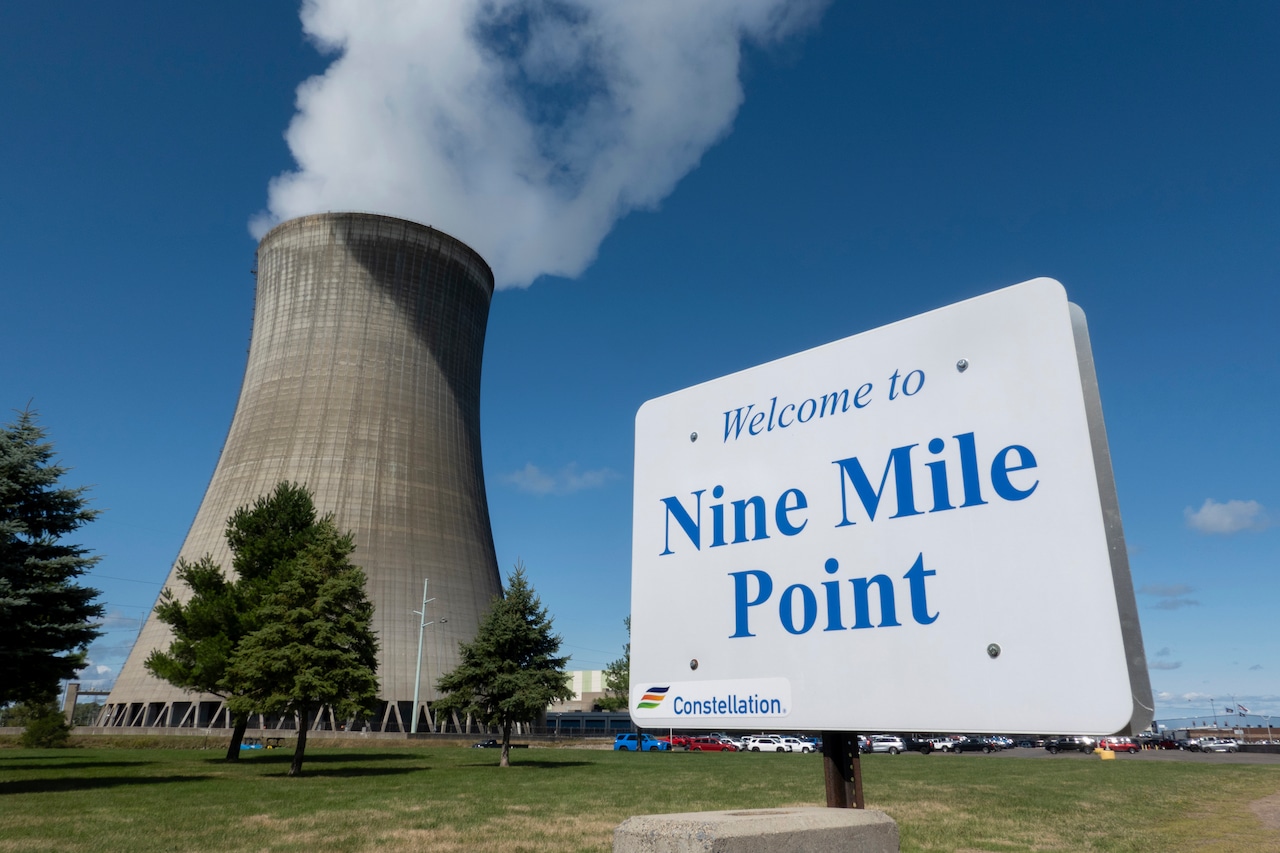
Last week, Hochul’s Public Service Commission approved up to $33 billion in subsidies, paid through higher electric bills, to Constellation Energy Corporation to keep the four reactors now operating in Oswego and Wayne Counties open through 2049.
These plans mean nuclear power would play a dominant role in future electricity generation in New York state. The proposals have drawn criticism, mostly on cost issues. Reactors have historically been slow and thus expensive to build, and financial institutions stopped giving loans to build new units. The only two U.S. reactors built in the last three decades, at Georgia’s Vogtle plant, took 18 years and $37 billion to finish, far exceeding the original estimate of $15 billion.
Keeping old reactors in operation is also expensive, as maintenance is required to replace and upgrade the many mechanical parts. The four reactors in Oswego and Wayne Counties (Ginna, James Fitzpatrick and Nine Mile Point units 1 and 2) include two that opened in 1969, the oldest in the nation. These reactors would be 80 years old in 2049, far beyond the original expectancy of their mechanical parts, and would raise not just cost issues but health and safety issues.
Backers of nuclear power use terms such as “zero-emission” or “clean” — terms not supported by facts. To create electricity, reactors split uranium atoms, which create over 100 radioactive chemicals not found in nature — the same as those generated when an atomic bomb explodes. Each of these is radioactive, and dangerous to human health.
Each nuclear plant must store these toxic products for thousands of years. The total amount of waste stored in Oswego and Wayne counties exceeds that of any U.S. nuclear plant, the equivalent of several times of releases from the catastrophic meltdown at Chernobyl. In addition, some of this toxic mix must be released into local air and water, as all reactors must do.
Once in the environment, the radioactive chemicals enter human bodies through breathing, food and water. These chemicals injure or kill cells, which raises the risk of cancer, birth defects, and other diseases. They pose the greatest risk to those who live closest to reactors. Nuclear plant owners measure emissions and report them to federal regulators each year, but there are no regulations to monitor impacts on local health.
Oswego County, the site of the Nine Mile Point and Fitzpatrick reactors, has no obvious demographic factors that would raise the risk of residents dying of cancer. Compared with New York state, it has slightly higher poverty rates, plus low rates of unemployment, persons with no health insurance, persons who did not complete high school and non-English speakers. The county consists mostly of small towns and rural areas, with few large polluting industries.
According to official health statistics, Oswego County’s cancer death rate for the years 1968 to 1973, just before and after startup of two local nuclear reactors, was 10% below the state rate. But within a decade, the county rate exceeded the state, and the gap grew steadily, peaking at 32% above New York state in 2019-2023.
In neighboring Wayne County, the site of the Ginna reactor, the same shift of below-average to above-average rates of cancer deaths occurred. If the below-average local rates of half a century ago had continued, about 5,000 fewer cancer deaths would have occurred in these two counties in the past half century. With no other cancer risk factors apparent, prolonged exposure to routine radioactive emissions from local nuclear plants should be considered as one potential cause.
Hochul’s proposals represent an unprecedented expansion of nuclear power in New York state that will last for decades. Pursuing such a course would not only be costly, but represents a risk to public health. However, there is a viable alternative. The sharp rise of safe, renewable electricity from sources like wind and solar, which now generates 26% of the nation’s power and is much easier to develop, would provide a less costly and safer alternative for the future.