
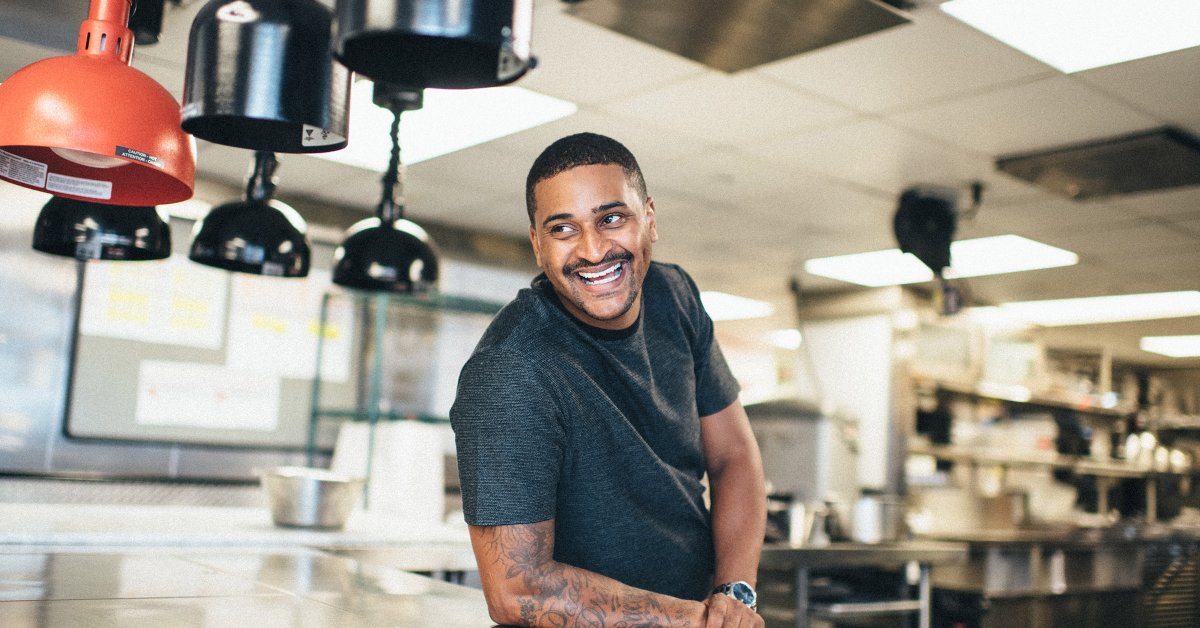
While working previously as a chef at the Cecil, the now-closed, upscale Afro-Asian spot, Johnson and his colleagues welcomed 150 of their elderly neighbors to the tables of the restaurant on 118th Street every Wednesday as part of their “Give Back” program.
As a former junior board member of the Food Bank for New York City, Johnson says that he would continually offer ideas for how restaurants could help bridge the hunger gap across the nation. “We waste so much food,” he would say, but the response was always, “‘No, you don’t know what you’re talking about.’”
When Johnson opened FieldTrip in 2019, he took matters into his own hands. At the height of COVID the following year, he and his team partnered with Rethink Food, a nonprofit organization that provides nutritious food to communities in need, to supply over 100,000 meals to nurses and doctors who were often too busy to source something to eat. Johnson knows this firsthand from his own wife, Samiyyah Chapman, who is a nurse.
“I didn’t realize that she was struggling,” he recalls. “Not eating food. She just kind of said to me, ‘Hey, I didn’t eat today. It’s 4 o’clock in the morning.’”
Then the SNAP crisis hit even closer to home for Johnson, partly because his relative, a retired member of the New York Board of Education, recently joined the program once grocery store prices escalated and she could no longer afford to both shop for food and pay her rent. That’s when Johnson began thinking about the many others throughout Harlem who would lose SNAP benefits as he and his restaurant thrived.
“I was like, ‘hold on,’” he says. “‘So, I’m going to have my doors open in this restaurant, and I’m going to watch people walk by who can’t even get their groceries from the supermarket?’” He immediately got to work.
Johnson credits his compassion for others to growing up in a working-class home where his African American father and Puerto Rican mother would share what they had with their neighbors and family. His auntie’s cookouts would later inspire him to launch the Cookout, an annual cultural celebration of food and fellowship across the Black diaspora featuring a collection of different chefs.
“I believe that chefs are community,” Johnson says. “Chefs and restaurants keep communities going, and they should be able to be there for good times and for bad times.”