
COOPERSTOWN, N.Y. — I could do a subscriber mailbag column on the Hall of Fame 12 months a year. But what better time than Hall of Fame election week.
Carlos Beltrán and Andruw Jones are in. But who’s next? Who got my vote for the best players the writers whiffed on? And are you ready for the All-‘I-Got-Exactly-One-Vote-for-the-Hall-of-Fame’ team?
I hope so, because I’m about to dive into all of that. So let’s get to it, starting with a slightly longer discussion of why a player like Andy Pettitte, with an admitted connection to performance-enhancing drugs, seems to be dodging the usual PED-guy stigmas.
(Note: Questions were edited for clarity and length.)
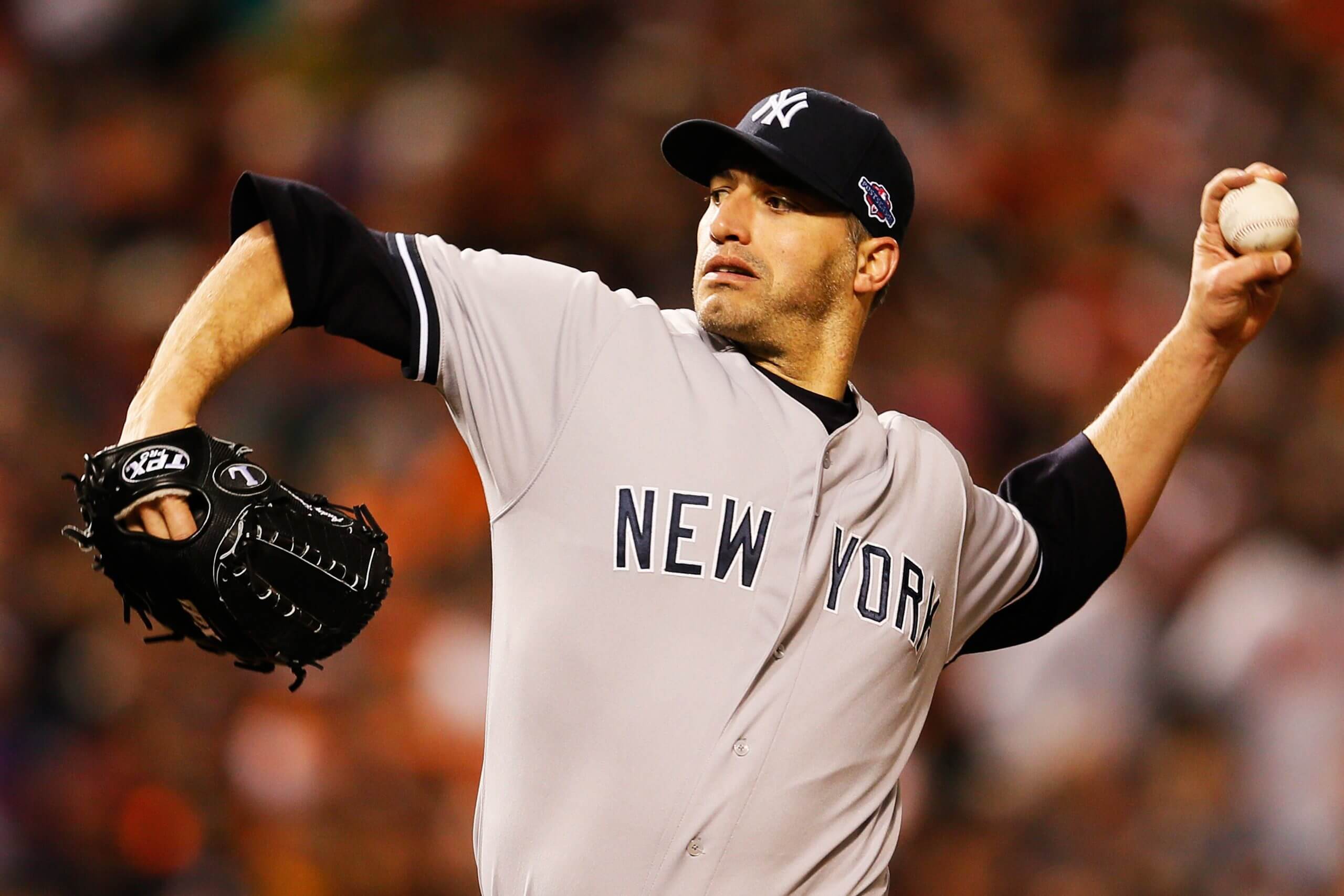
Andy Pettitte got 48.5 percent of the vote this year in his eighth time on the ballot. (Rob Carr / Getty Images)
As we approach the end of the era of PEDs impacting Hall of Fame voting, how does the Hall deal with Barry Bonds, Roger Clemens, etc.? It seems unfathomable that Andy Pettitte is predicted to get in while his clearly superior teammate would be excluded. What are your thoughts about how MLB (and the Hall) can walk the line between the “Greatest on the field” voters and the “No Cheaters in the Hall” voters? — Danny P.
Danny, let me tell you a story. A man came up to me at the Hall of Fame last week to talk about Andy Pettitte. His feeling was that there’s a big reason Pettitte should be in a different category than Bonds, Clemens or any of the other PED scoundrels:
He confessed!
Unlike almost anyone else who has had these clouds hovering over their candidacy, Pettitte admitted what he did and why. I know there are people who don’t totally believe that admission, because that’s how we roll in this age we live in. But let’s not analyze that part. Not today, at least.
That visitor to the Hall reminded me that there was a time when people used to say: We’re a forgiving country. So if these guys would just admit what they did, we’d forgive them. If we truly believed that, he argued, we should be giving credit to Pettitte for admitting what he did.
I can’t tell you for sure that that’s why, just two years ago, only 52 voters were checking Pettitte’s name and now he’s up to 206 votes. But I think there are two other reasons he suddenly has a chance to get elected, even if it’s still a long shot.
1. The pre- and post-testing era. One thing that I think helps Pettitte is that his PED “crimes” happened before 2004, the year MLB’s testing and punishments kicked in. The same was true, by the way, of Clemens and Bonds. And even though they didn’t get elected, each did rake in more than 65 percent of the vote in their last year on the ballot (2022).
But that aside, it’s now clear that most of us who vote have divided a clear line between those pre-testing and post-testing eras. If a player got caught and suspended after testing and punishment, he’s going nowhere on this ballot. Ask Manny Ramírez … and Ryan Braun … and (of course) Álex Rodríguez.
In the era before testing, though, everything was a mess. We had so little clarity about who did what, we were stuck playing a giant guessing game, and we weren’t good at that game — because it was impossible.
So that’s one reason Pettitte is gaining ground. The other was expressed by my friend Jon Paul Morosi, while we were doing a show on MLB Network this week.
2. He passes the authenticity test. Pettitte’s career feels more authentic than the careers of so many other PED all-stars, Morosi argued. Pettitte’s performance, before and after that human growth hormone “incident,” didn’t change. Because it didn’t, Morosi felt comfortable saying: “I believe in Andy Pettitte’s career.”
Honestly, I don’t know what I believe about that era. But it seems obvious that a lot of voters agree with that assessment. I also have mixed feelings about what “cheating” is.
Taking PEDs to break a record, as “Game of Shadows” tells us Bonds blatantly did? That feels like cheating.
But trying HGH to quicken recovery from an injury? I’m convinced dozens of players — maybe hundreds — were doing that. It wasn’t any more legal than Bonds’ PED use, but I feel like it belongs in a separate category.
That’s a long way of saying we have so little idea about who the “clean” players were before testing that there’s no “scientific” way to vote on these guys. So was there an air of authenticity to a player’s career? If we answer yes, I think it’s OK to consider that.
Listen, I’ve said many times it’s strange to have a Hall of Fame that doesn’t include the man who hit more home runs than anyone who ever lived (Bonds) … and the man who won more Cy Young awards than anyone who ever pitched (Clemens) … not to mention the guy who broke Roger Maris’ storied home run record (Mark McGwire), and so many more.
But the era committees will have to decide what to do about those men, because their time on the writers’ ballot is over. And how’s that era-committee route working out for all of them? Not well.
So thanks for your question and for making such a logical argument on so many levels. But the fact is, the Hall is dealing with those players and walking that line — through those era-committee votes. And we both know where that’s leading.
One more thing: Yes, Pettitte is still on the writers’ ballot — for two more years anyway. But I actually would not assume he’s going to get elected. Here’s why:
Despite his big surge to nearly 50 percent, even Bonds/Clemens voters aren’t sold on him. According to data supplied by Anthony Calamis, who works with Ryan Thibodaux at the Hall of Fame Vote Tracker site, only slightly more than half of the writers who voted for Bonds and Clemens in their final year were also casting votes for Pettitte this year, at least among publicly revealed ballots. Is that enough? I don’t think so.
And what about writers who voted for neither Bonds nor Clemens? We don’t have all that data yet. But if we look just at the public votes so far, Pettitte was only getting 29 percent (9 of 31) from that group, which also doesn’t bode well for his electability in the next two cycles.
But I actually think the most interesting group is writers who voted for David Ortiz but not Bonds or Clemens, because we know they’re not PED hard-liners. Again, the data isn’t complete, either, but what we’ve seen to this point also looks ominous for Pettitte.
According to Calamis, Pettitte has gotten just three of the 17 public votes from those voters so far. That’s only 17.6 percent. To get elected, he would need to flip a massive percentage from all of these groups in the next two elections. And would you bet on that? I’m not feeling it.
What five past players (excluding PED issues) top your list of players who absolutely should be in the Hall? … As an add-on, do any of those players look to have improved chances, as the old standards seem to shift away from career milestones and more toward sustained dominance during a focused period? — Jason L
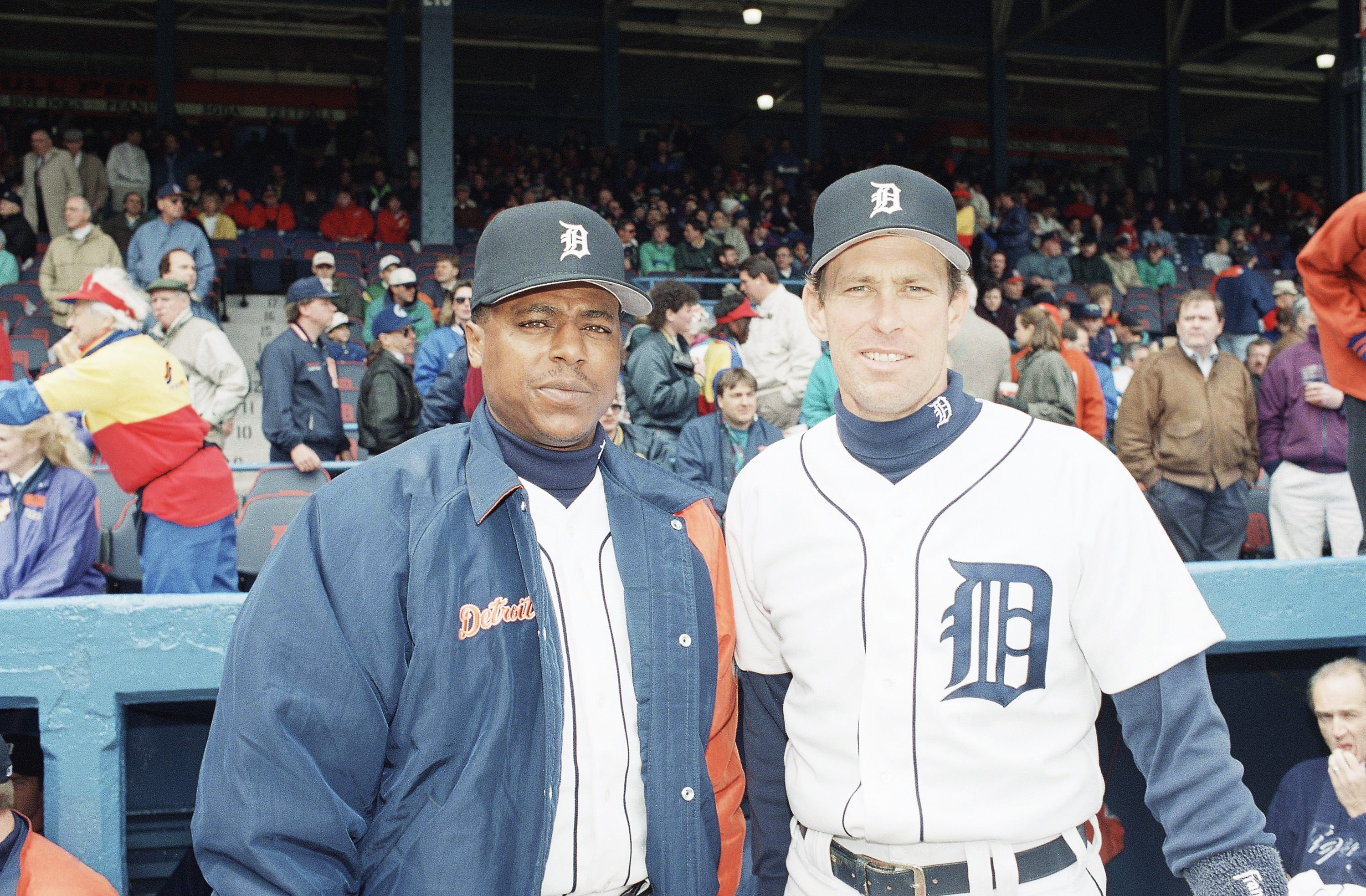
Will Lou Whitaker one day join Alan Trammell in Cooperstown? (Lennox McLendon / Associated Press)
Hey Jason, this is such a fun question. My list is longer than five, but I take requests, so five it is!
Before I start … I’m following your orders and leaving off everyone with PED clouds. I’m also not going to include Pete Rose, because he’s a column unto himself. Finally, I’m excluding every player who was on the Contemporary Baseball Era Committee ballot last month, because I served on that committee and I’m not permitted to reveal how I voted.
Is that too many exclusions? Sorry! That still leaves a slew of players I could put on this list. But you asked for only five, so here are the five players I think most deserve to be in the Hall of Fame but aren’t:
1. Curt Schilling — It’s not the Hall of Facebook. It’s not the Hall of X. It’s the Hall of Fame. So it’s absurd to keep out a three-time Cy Young Award runner-up like Schilling, who was a certifiable October monster (11-2, 2.23 ERA in 19 postseason starts, averaging seven innings a start). If you’re interested, I wrote more about Schilling in my ballot column in 2022, his final year on the writers’ ballot.
2. Lou Whitaker — I’m big on the idea that Chase Utley and Jimmy Rollins should go into the Hall together (and then be given plaques right next to each other on the wall). So it would bring me so much joy to see Alan Trammell and Whitaker finally be able to keep each other company in the plaque gallery. Whitaker’s 75.1 career wins above replacement are the seventh-most of any second baseman in history, according to Baseball Reference. Guess what the six above him have in common?
3. Jim Edmonds — Andruw Jones just got elected to the Hall. I think Edmonds actually had a better career. Edmonds won eight Gold Glove Awards, had a 132 career OPS+ and didn’t even make it to a second year on the ballot. Jones won 10 Gold Gloves and had a 111 OPS+. Edmonds’ case has been bugging me since he got bounced off the ballot 10 years ago. Let’s hope he shows up on an era-committee ballot soon. He hasn’t been eligible before now.
4. Lance Berkman — Like Edmonds, Berkman was one-and-done on the writers’ ballot. He might even be our worst one-and-done ever. Do you know who owns the best career OPS of any “clean” retired player who is eligible for the Hall? If you guessed Berkman (.943), you’re my kind of astute reader.
5. Johan Santana — Timing is everything. So if Santana had debuted on the writers’ ballot this year, instead of the overstuffed 2018 ballot, I bet he’d be raking in more votes than Félix Hernández. How about this for a seven-year peak: 106-48 won-lost record, .688 win percentage, 2.86 ERA, 156 ERA+, two Cy Youngs, four top-three Cy Young finishes, three strikeout titles, three ERA titles and four straight years leading his league in WHIP. Wow.
Santana is another one of our most embarrassing one-and-dones. But he, Edmonds, Berkman and Whitaker could tell you there’s nothing more overrated than a spot in the One-And-Done Hall of Fame.
Do I think an era committee will undo all these injustices and elect these guys someday? Not impossible. But connect those dots from the writers’ election to the era-committee elections at your own peril!
Cole Hamels and Félix Hernández have identical numbers. Why is Hernández a cinch and Cole a (question mark)? — Tony W
Hey Tony, great question. I wrote about this in my column explaining my Hall of Fame ballot, but I’m happy to lay this out again, just a little more succinctly.
Isn’t it possible for two pitchers to get to the same career numbers in two different ways? It obviously is, because Hamels and King Félix did that.
I voted for Hernández because there was a period — of six, eight, maybe even 10 years — where, if you asked, Who’s the best pitcher in baseball?, you had to include the King’s name. He had four top-four Cy Young finishes — and three top-twos — in a span of six years. Everyone who ever did that is either a Hall of Famer … or Clemens … or Félix. So I think he has a claim to historic greatness.
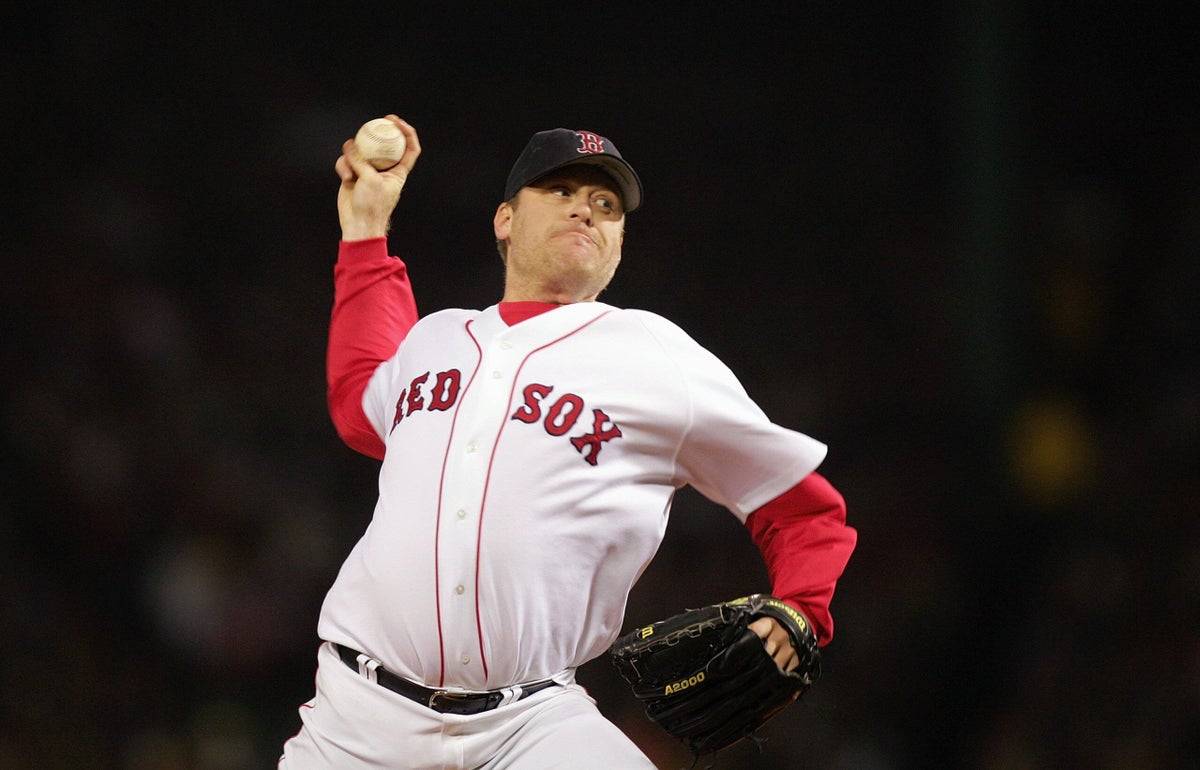
I think Hamels falls into a different category. To me, he’s more like Roy Oswalt, Tim Hudson or Josh Beckett. He was great, but was he historically great? Was he Hall of Fame great?
With “only” 163 career wins and just one fifth-place Cy Young finish, I couldn’t find any Hall of Famer who had a parallel career to Hamels’. So I just couldn’t get there. But I’m glad he’ll be back on the ballot next year, because the debut of Jon Lester will be a great reason to think about this again.
The big names next year are Lester and (Buster) Posey. Of those who carry over, who has the best chance to get in? — Brian O
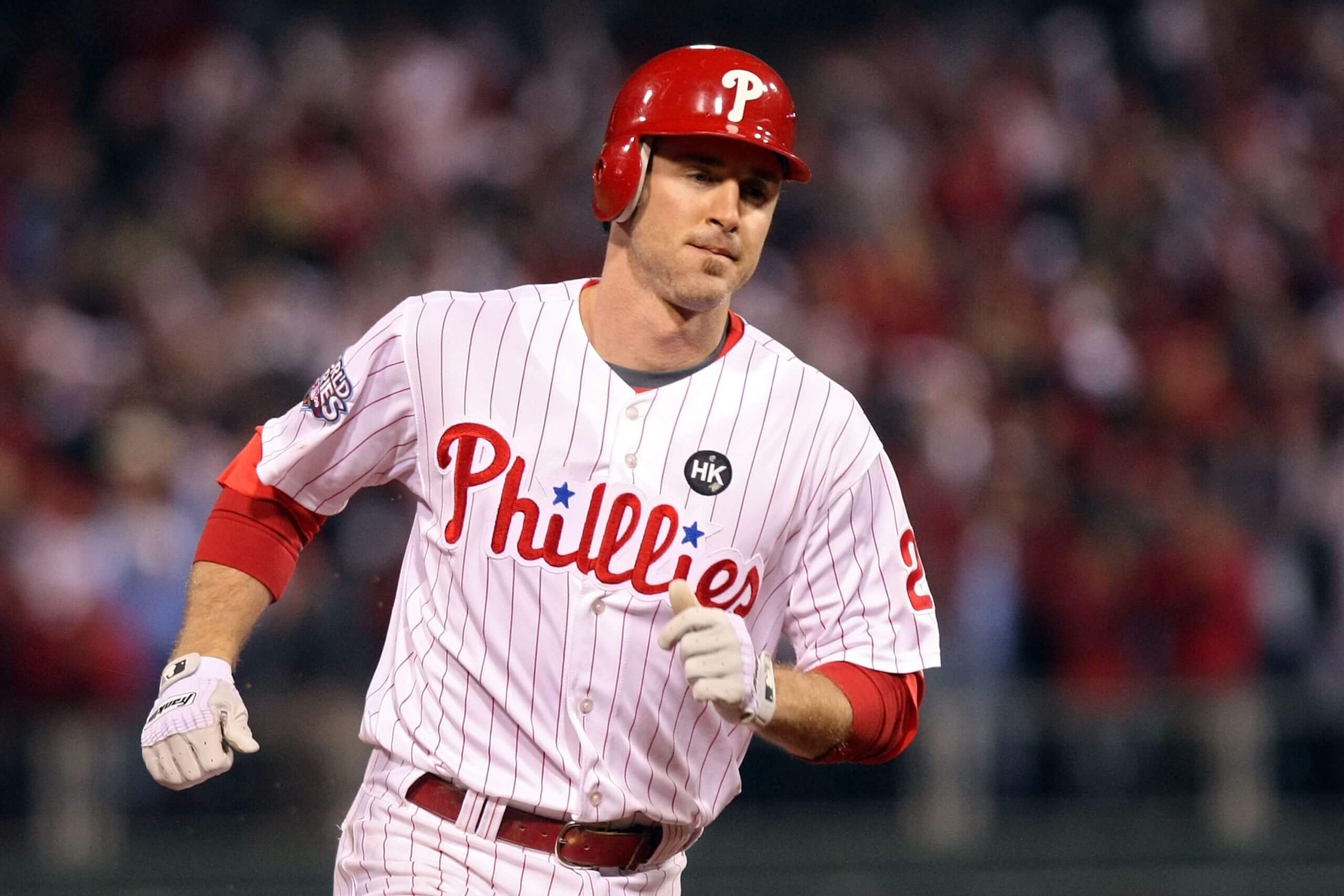
Will Chase Utley, who got 59.1 percent of the vote this year, make another big jump, to election, in 2027? (Nick Laham / Getty Images)
That’s a fascinating question, Brian — because none of those returning candidates is knocking at the door. And we haven’t had an election quite like that in a long time.
Chase Utley (59.1 percent) will be the leading returning vote-getter — but he hasn’t even reached 60 percent yet in his march toward the necessary 75 percent. How long has it been since we had an election in which nobody on the ballot has ever cleared 60 percent? It’s been over two decades — since 2004, when Bruce Sutter was coming off a 53.6 percent showing the year before.
Behind Utley, you won’t even find anyone who made it to 50 percent this year. Pettitte (48.5) and Félix Hernández (46.1) were the next two in line. So that makes it even more rare. We haven’t had an election like that — with only one returning player who had topped 50 percent — since 2001, when only Jim Rice (51.5) had done that.
So what does history tell us about what that portends for next year? I think it’s saying that nobody from this year’s ballot is likely to jump enough to get elected next year. At least that’s how it went in 2001 and 2004, when all four of the players who got elected those years were first-timers.
On the other hand, both Sutter and Rice did get elected eventually — Sutter two years later and Rice eight years later.
So if I were prognosticating, I’d predict that only Posey makes it to Cooperstown next year, in his ballot debut, with Utley just missing election and Pettitte and Hernández somewhere in the neighborhood of 60 percent. But … next year will be unusual in one other respect.
That’s because the average ballot contained just 5.8 names this year, even though the writers are allowed to vote for 10. So with both Beltrán and Jones exiting the ballot (plus Manny Ramírez), that means the average voter next year won’t even have four returning players whom they voted for in the past.
When that happens, it normally leads to big surges for multiple players, because even most “Small Hall” voters are looking for someone to vote for. Could that bring us a surprise, with Utley maybe making one more giant leap to election? Don’t rule out anything!
If you were told only one of these two players eventually gets into the Hall: Rollins or Hamels, which one gets in, and why? — Michael L
Why is Utley getting ready to waltz in, but his double-play partner, Rollins, is getting less than half of his vote total? And why is he behind Bobby Abreu? I watched those Phillies teams and Abreu is the definition of an empty stat. They got better the day they traded him, and Jimmy was the ringleader of that run, with an MVP, 4 Gold Gloves and the most hits in franchise history. What am I missing? — Randy D
Let’s get all the Phillies questions out of the way in one answer!
Utley — He’s the poster boy for how modern voters vote. We don’t care about stuff like 2,000 hits anymore. So if Utley’s 1,885 hits aren’t a thing that disqualifies him anymore, of course he’s a Hall of Famer. For about six years — and maybe as long as 10 — he was The Best Second Baseman in Baseball, period. He was a winner and a culture-changer. And he’s the only regular second baseman in the last 85 years who had five straight years with a .900 OPS. So I get it.
Rollins/Abreu/Hamels — I still think Rollins has a legit chance to get elected because he’s the only shortstop in history in the 2,400-Hit, 200-Homer, 400-Steal, 800-Extra Base Hit Club. And he won an MVP. And he won four Gold Gloves. And he was an elite defender, no matter what those unreliable, retroactive defensive metrics say. He has the best case of all of these guys as a historically significant player.
I just explained my feelings about Hamels. And Abreu is another one of those players who was great at a lot of stuff — just not historically great. Randy, you clearly remember, as I do, that when Pat Gillick became the Phillies’ general manager, he decided he needed to trade Abreu to let Rollins and Utley take over that team — because he wanted his two best players to be men who were driven by winning. Gillick never said Abreu wasn’t a winner, but when he traded him to the Yankees — for four non-prospects — I always felt he was telling me something, and I’ve never forgotten that.
Is it time to have a “Writers Re-Do” ballot for guys who may or may not have (been part of era-committee) discussions, as the writers have seemingly reassessed stats (for certain players and eras)? I think guys like Whitaker, Bobby Grich, Don Mattingly, etc., might benefit from the writers re-looking at their candidacies — more so than (having that done by) a relatively small committee. — Adam L
Hey, Adam. I actually love this idea. It’ll never happen, but there is precedent for it.
In 1985, the Baseball Writers’ Association of America and the Hall agreed to give a second look to 11 players who had fallen off the ballot earlier in their careers. Dick Allen and Ron Santo — both of whom were later elected by era committees — were on that list.
So were nine other players who were never elected: Ken Boyer, Curt Flood, Vada Pinson, Denny McLain, Dave McNally, Wilbur Wood, Harvey Haddix, Ron Fairly and Clay Carroll.
But that was in a time when no one seemed happy with the way the former Veterans Committees went about voting on players like that. The Hall now loves the era-committee process, so there’s pretty much no shot of it implementing your idea.
Too bad, though. Don’t you think players like Whitaker and Mattingly would sail in if the writers were voting on them? I do.
Do you see Félix’s vote trajectory over the next couple of years as a template for future pitchers from the post-steroid era who lack many traditional Hall of Fame stats (wins, innings pitched, World Series/playoff appearances) after the no-doubt (elections) of Clayton Kershaw, Justin Verlander and Max Scherzer? Most guys of the last decade do not have anywhere close to 150 wins or 100 wins … or even 1,000 innings pitched, but they have advanced analytics instead. — Lee B
Lee, you couldn’t be more right. I don’t know what a Hall of Fame starting pitcher is going to look like in 10, 15 or 50 years, but he definitely won’t look like, say, Old Hoss Radbourn.
Will 100 wins be the new 200? Will we even look at the wins column at all? That will have to be the direction we go in, or we’ll never see a Hall of Fame starter again.
But I have one point to make about this. I think this standard should only apply to pitchers whose careers began in, say, the last 10 years. I don’t think it should apply to pitchers whose careers began 20 years ago, like Hamels, for instance.
I talked about this on MLB Network a couple of times last week. Is the win “dead”? If it isn’t, it’s in the intensive care ward. But it wasn’t dead when men like Hamels, or Jake Peavy, or Beckett, were pitching, just to pick three examples. It was alive and well.
So I don’t think we should get ahead of ourselves and start holding the pitchers of yesterday to the standards of tomorrow. Should 140 to 170 wins earn a starter from that era a Hall of Fame plaque? I’m having a hard time with that. Am I wrong? If you think I am, you know where to drop your helpful comments.
The Rock and Roll Hall of Fame added a “Fan Vote” to the process (years ago), as many of the fans’ favorite artists who provided significant contributions were (being) overlooked. … Is it time for the Baseball Hall of Fame to adopt a similar process? — Shawn F
Shawn, this is brilliant. It’s also one of those ideas that is never, ever happening — at least until they put you and me in charge (which seems unlikely).
I love being a Hall of Fame voter, and I’m aware of the weight of every vote, for an honor that is literally life-changing. But for years, I’ve also been open to the idea of letting other people have a vote.
Why shouldn’t Bob Costas have a say? Or Joe Buck? Why shouldn’t a broadcaster like Brian Kenny, who emcees the induction ceremony and spends hours breaking down Hall candidates on MLB Network, have a vote?
So are fans next? I know how much you care about this stuff. Nothing I write about all year generates the passionate responses that my Hall columns inspire. So if there was a reasonable way to give fans a voice, I’d gladly consider that if I were ever appointed the emperor of the Hall of Fame.
But here’s the bad news: There’s a better chance that I’ll someday be the emperor of Mars than the emperor of the Hall of Fame.
Because I loved Zack Meisel and Sam Blum’s article from earlier in the week: Do you have a favorite case of a player receiving a single Hall of Fame vote? Is there a one-vote getter who you think maybe isn’t a Hall of Famer, but should’ve gotten a lot more love from voters? — Andrew M
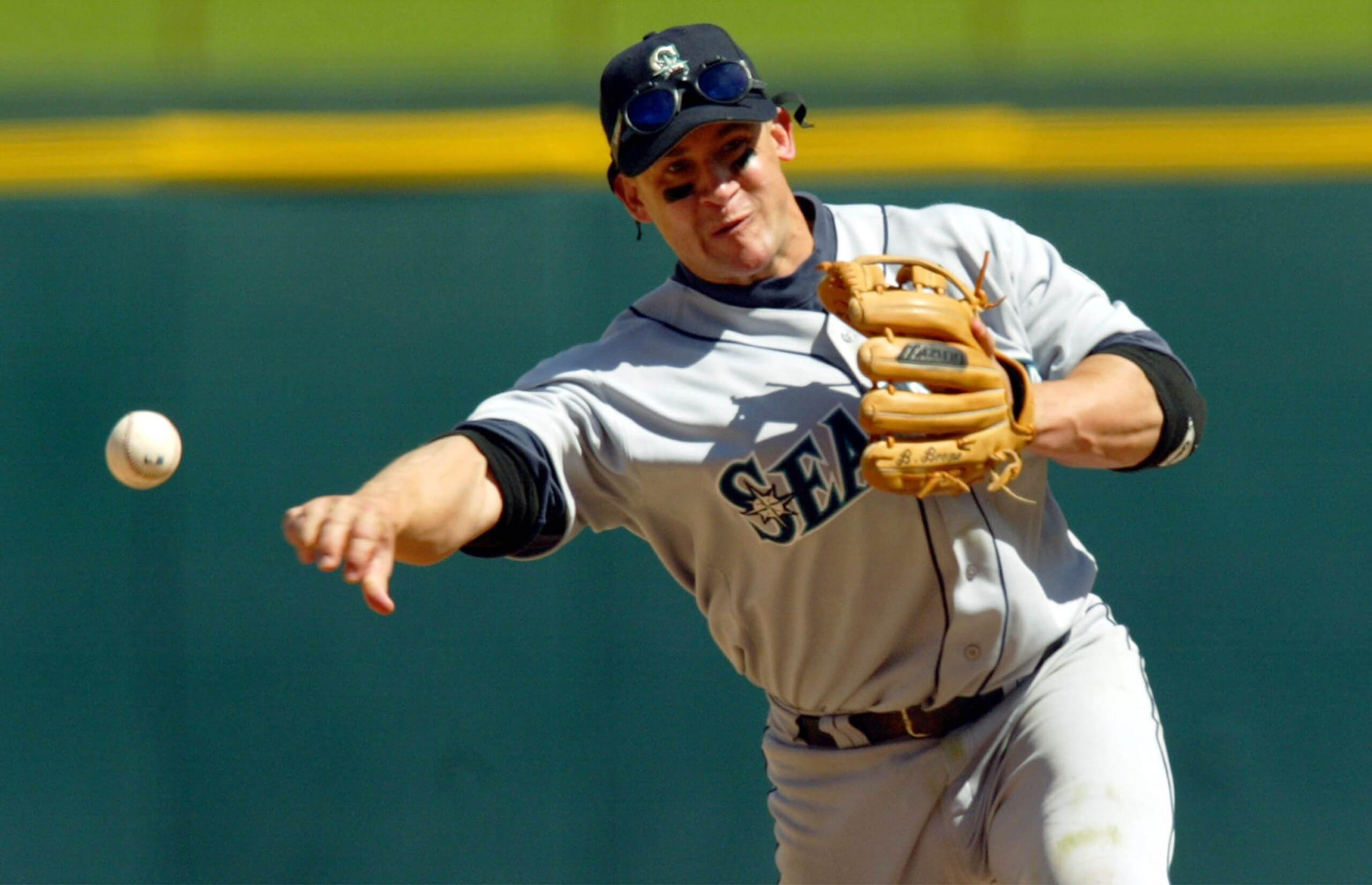
Starting at second base for the All-‘I-Got-Exactly-One-Vote-for-the-Hall-of-Fame’ team: Bret Boone. (Ronald Martinez / Getty Images)
Hey Andrew, thanks for this question. I loved that piece by Zack and Sam, too. For years, I’ve been rolling out the All-‘I-Got-Exactly-One-Vote-for-the-Hall-of-Fame’ team every time I get a chance. Thanks for giving me another shot to do that.
I’m not going to claim these guys are the best players in that pool, but are they the most fun? The most entertaining showmen? The guys I enjoyed being around and/or watching the most? Yep! So here they come, the one-vote legends.
1B — John Kruk
2B — Bret Boone
SS — Shawon Dunston
3B — Terry Pendleton
LF — Adam Dunn
CF — Darin Erstad
RF — Jay Buhner
C — Darren Daulton
DH — Raúl Ibañez
Starting rotation — Ron Darling, Mike Krukow, Jim Deshaies, Bronson Arroyo, Barry Zito
Cy Young relievers — Mark Davis, Steve Bedrosian
Legendary bullpen characters — Jesse Orosco, Al Hrabosky
I don’t know if that totally answered your question, Andrew. But what the heck, at least I had fun. Just one more way that Hall of Fame season is a reminder of everything that makes baseball great.