
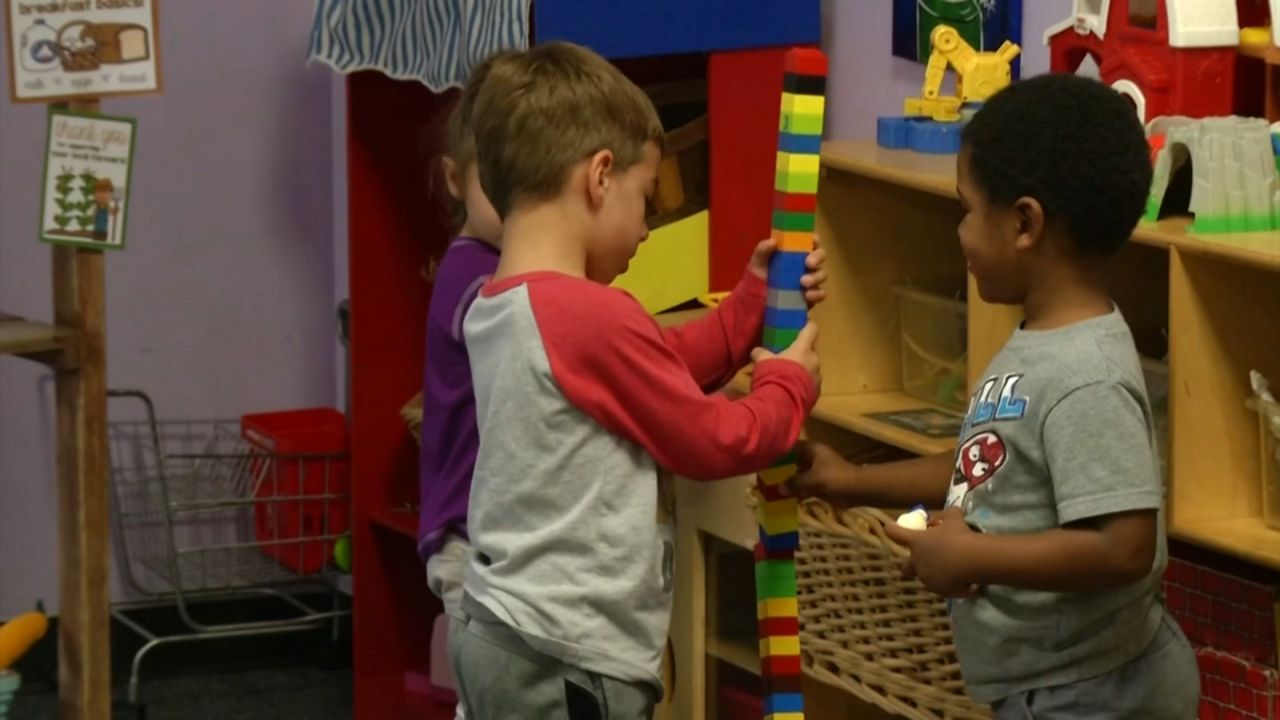
A group of New York lawmakers and child care advocates are pushing to prioritize better pay for the child care workforce in this year’s state spending plan to complement the significant investments Governor Kathy Hochul proposed in her executive budget.
Hochul’s plan includes funding for 2-care and more money for 3K in New York City, a full rollout of Universal Pre-K statewide, and universal child care pilot programs upstate along with an expansion of the Child Care Assistance Program.
At the annual child care funding advocacy day in Albany, State Sen. Jabari Brisport, chair of the Children and Families Committee in the Senate, teased ahead to the upcoming budget negotiation process when the state legislature will likely push Hochul to go further.
“The fight for universal child care is just warming up,” he said.
Andrew Hevesi, chair of the same committee in the state Assembly, gave credit to Hochul for her proposals and New York City Mayor Zohran Mamdani for his dedication, but Hevesi was among many who said the proposal needs to include a robust funding mechanism to better compensate child care workers.
“Two huge rounds of applause if I can, one for a governor and a second for a mayor, both of whom have prioritized child care to the tune of investing billions this year,” he said. “There is only one thing that solves this problem — only one. I give credit to the governor and the mayor, but they need our help to go an extra step, but you have to pay the workforce. The most important thing we need to do is make sure this is done this year.”
Workforce funding has been a long term issue for which advocates have sought a permanent solution well before the Mamdani era, and while Hochul’s proposal includes measures which would expand the workforce and address some issues, Assemblymember Sarah Clark stressed that decisive action is central to addressing the crisis.
“The reason people can’t get slots and people cant get into child care providers is because we don’t have a workforce that is compensated at the level they deserve,” Clark said.
For all the talk of progress, Pete Nabozny, director of policy for the Children’s Agenda, pointed out that a lack of funding in this year’s budget to address compensation directly would threaten the potential promised by expanding access for families.
“They’re now eligible for it, they qualify for it, they go out into the community and try to identify care that works for them, and it might not be there because there has been such a surge in demand from these programs and not enough investment in the workforce,” he said.
Upstate lawmakers like Assemblymember Jen Lunsford are also pushing for more in the budget to help upstate counties catch up to programming that already exists in New York City.
“There is a whole rest of this state where we don’t have universal Pre-K, or we don’t have drop-in centers; we don’t have after hours care,” she said.
Nabozny explained that the solution doesn’t have to be a radical rewriting of the governor’s plan this year, which focuses on pilot programs for birth to three years old in three counties: Dutchess, Monroe and Broome.
Instead, more assistance for upstate could come in the form of ensuring continued investments moving forward both in the three counties where programming has been proposed and elsewhere in the state.
“What we’re looking for is a sustained commitment to that birth to three program in every corner of the state — and some of that starts with committing to growing it in those communities where those pilots are being launched,” he said.
Last week, Hochul downplayed the idea of writing any sort of assurances of ongoing funding into the current proposal during her budget address.
“We can fund this expansion in the near term because the revenue is there. We are not pretending we can predict enrollment utilization or federal policy five years from now,” she said at the time.
Expanding upon the governor’s plan could require more revenue and a clash between Hochul and the legislature over raising taxes. Hochul is opposed and has touted being able to fund her plan without a tax increase as Mamdani and others continue to apply pressure in the other direction.
While Assembly Speaker Carl Heastie was reluctant to commit to include a tax increase on the wealthy in the Assembly’s one-house budget rebuttal last week, Senate Majority Leader Andrea Stewart-Cousins indicated Tuesday that the upper chamber likely will.
“If past is prologue, I would say that we would continue to push for a progressive taxation process,” she said.